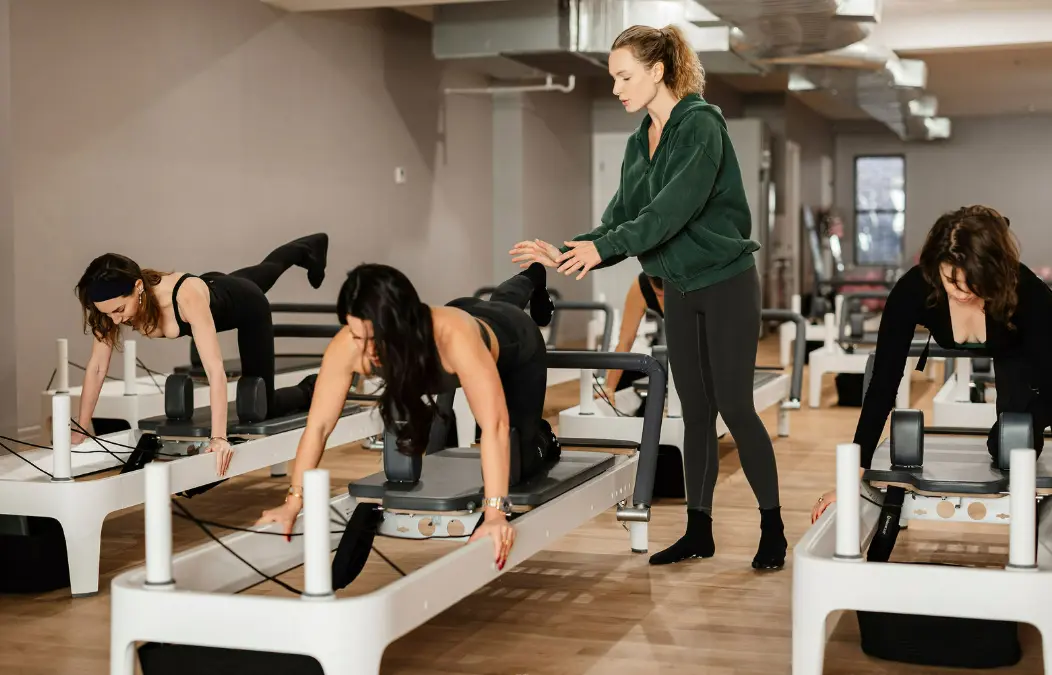

Why Your Breath Changes Everything in Pilates
In a city like New York – where movement never stops and stress follows you from the subway to your inbox – your breath becomes more than something automatic. It becomes a tool. A reset button. Proper breathing in Pilates is a great way to reconnect with your body to get the most out of every workout.
And then you come into a Pilates class… and for the first time that day, someone says:
“Take a deep breath.”
Only – you discover it’s not that simple.
Not because you’re stressed (although yes, that too), but because Pilates breathing works differently. It asks you to breathe with purpose. To use your ribs, not your belly. To control your movement from the inside out.
And when you get it right, something clicks. Your core turns on. Your spine feels supported. Movements become smoother, cleaner, and more mindful. Even your stress levels drop.
This article will walk you through the “how” and “why” behind Pilates breathwork and help you understand why our instructors at BK Pilates call it the backbone of every workout. If you want a refresher before you dive deeper, you can always learn the basics of Pilates first.
Stop Running on Autopilot
Throughout the day, we let our breathing happen automatically. The problem is, automatic isn’t always good. Many people take quick, shallow breaths. They lift their chest instead of really filling their ribs. In Pilates, this problem manifests itself very quickly – the shoulders start to rise, the neck tenses, but the core hardly has time to get involved.
Pilates breathing slows everything down. This requires you to breathe very purposefully. First, you need to expand your ribs and support your spine. This will allow your deep abdominal muscles to engage. When you breathe this way, every movement feels much more efficient.
Regular Breathing vs. Pilates Breathing
| Regular Breathing | Pilates Breathing |
| Shallow, chest-based | Deep, controlled lateral rib expansion |
| Belly rises on inhale | Core stays engaged |
| Movement is unconnected to breath | Breath guides movement |
| Creates tension in neck/shoulders | Reduces tension, supports posture |
| Minimal effect on muscles | Maximizes muscle engagement |
Our instructors often joke that once a client “learns how to breathe,” everything else becomes easier.
Expert quote
“When someone masters lateral breathing, you can instantly see their core switch on. Their movements look more supported, more precise. It’s like watching the body finally learn how to work smarter.”
— Sandra K., Senior Instructor at BK Pilates Flatiron
And here’s the secret – once you understand and feel the difference, you’ll never go back to breathing on autopilot.
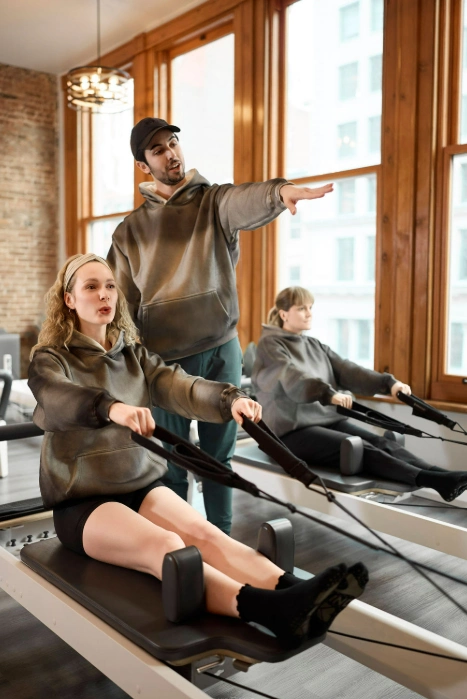
Why the Way You Breathe Matters So Much in Pilates
Breath in Pilates is more than a pattern – it’s a tool.
It sets the rhythm.
Your breath determines how fast or slow you move. Smooth inhales = smooth transitions.
It fires up your core.
The Pilates breath works by subtly contracting the transverse abdominis. Think of this muscle as your body’s natural internal corset – it’s the deep layer that wraps all the way around your torso. By engaging it with your exhale, you create the immediate foundation for all your strength.
It protects your spine.
A stable core keeps your movements safe, especially on the reformer.
It improves endurance.
More oxygen = more efficient muscles.
It reduces stress.
Proper exhalation can completely calm your nervous system. Many New Yorkers find that breathing in a Pilates-like manner helps them recover after a long day.
Four Key Pilates Breathing Techniques
These are the techniques we teach every day at BK Pilates studios:
1. Lateral (Side) Breathing
If Pilates had one recognizable way of breathing, this would be it.
On the inhale, the ribs open out to the sides and slightly into the back – almost like an umbrella expanding. The belly doesn’t pop forward; it stays fairly calm so the core can stay involved.
As you exhale, the ribs draw back in and the lower abs naturally pull inward, giving you that gentle, supported feeling through your center.
This breath keeps your spine supported and makes movements much more efficient.
2. Transverse Abdominis Breathing
Think of this as the deep inner core version of breathwork.
You’re recruiting the muscles that stabilize your entire trunk – the ones you can’t see but absolutely feel when they’re working.
3. Breath-to-Movement Connection
Pilates instructors often cue:
“Inhale to prepare. Exhale to move.”
This pairing turns your breath into your natural pacing mechanism.
4. Mindfulness & Relaxation Breathing
This is the softest, most calming type of breathing, and instructors often suggest it at the very beginning or end of a session.
It’s your essential tool for resetting the nervous system, allowing background tension to drop away, and bringing your focus entirely into the room. This calmer breathing pattern makes it much easier to feel present in your own body and transition smoothly into – or out of – the focused work of Pilates.
10 Real Benefits You’ll Feel When You Breathe Correctly
- Better core engagement
- Stronger spinal support
- Less neck and shoulder gripping
- Reduced anxiety + calmer mind
- Improved circulation
- Better posture
- Detoxification & improved lymph flow
- Relief from chronic tension or pain
- Sharper concentration
- More stamina in every workout
Not bad for something as simple as breathing – but that’s the power behind Pilates breathing beneficial techniques.

Breath as Your Built-in Metronome: Finding Your Pace
If you’ve ever taken a class at BK Pilates, you’ve probably heard your instructor say:
“Don’t rush – let your breath lead.”
Here’s why:
- When you inhale slowly, your body prepares and lengthens.
- When you exhale fully, your core tightens and supports the movement.
- When your breath stays steady, your movement stays clean.
This connection is what keeps Pilates from becoming sloppy or rushed.
It turns the workout into a flow – almost like a moving meditation.
Client review
“Honestly, breath was the missing piece for me. Once I stopped forcing the movements and started breathing through them, my form improved so much. It made Pilates feel… easier but more effective.”
— Julia, BK Pilates
If you want to dive deeper into movement patterns, explore our guide on mindful form.
Read more on the blog: The Benefits of Reformer Pilates
Take It Off the Reformer: Breathwork for Real Life
Pilates breathing isn’t something you leave in the studio.
It follows you into your everyday routines – especially when life gets hectic.
In the subway:
Slow, controlled exhales help bring your nervous system out of “rush mode.”
At your desk:
Lateral breathing opens tight ribs and reduces that midday upper-back ache.
During stressful conversations:
Breathing out longer than you inhale instantly calms your system.
Before bed:
Pilates breathwork helps you wind down and fall asleep faster.
This is what we call breathwork for daily life – a small practice with surprisingly big impact.
FAQ
How do you breathe correctly in Pilates?
You use lateral breathing – ribs expand on the inhale, core engages on the exhale. It keeps your spine stable and your movements supported. Crucially, your belly stays relatively flat and doesn’t fully relax.
What is lateral breathing in Pilates?
It’s a technique where you inflate the sides and back of the rib cage instead of the belly. This keeps the core engaged and protects your spine.
Why do you exhale on effort in Pilates?
Exhaling activates your deep abdominals, helping you move safely and with control.
How does this breathing actually switch on my core?
The exhale pulls the transverse abdominis inward, creating natural stability and improving posture.
Is Pilates breathing the same as diaphragmatic breathing?
Not exactly. Diaphragmatic breathing relaxes the belly. Pilates breathing keeps the belly stable and the core engaged. The primary movement is in the ribs. This ensures you maintain core engagement throughout the exercise, rather than relaxing your center.
Breath First, Movement Second
If you take one idea from this article, let it be this:
Breath is not the “extra” in Pilates – it’s the foundation.
It shapes your posture.
Supports your spine.
Helps your core work smarter.
Ready to experience how breath transforms your practice?
Book a class at BK Pilates and feel how the right breathing technique can change the way your whole body moves – one inhale at a time.