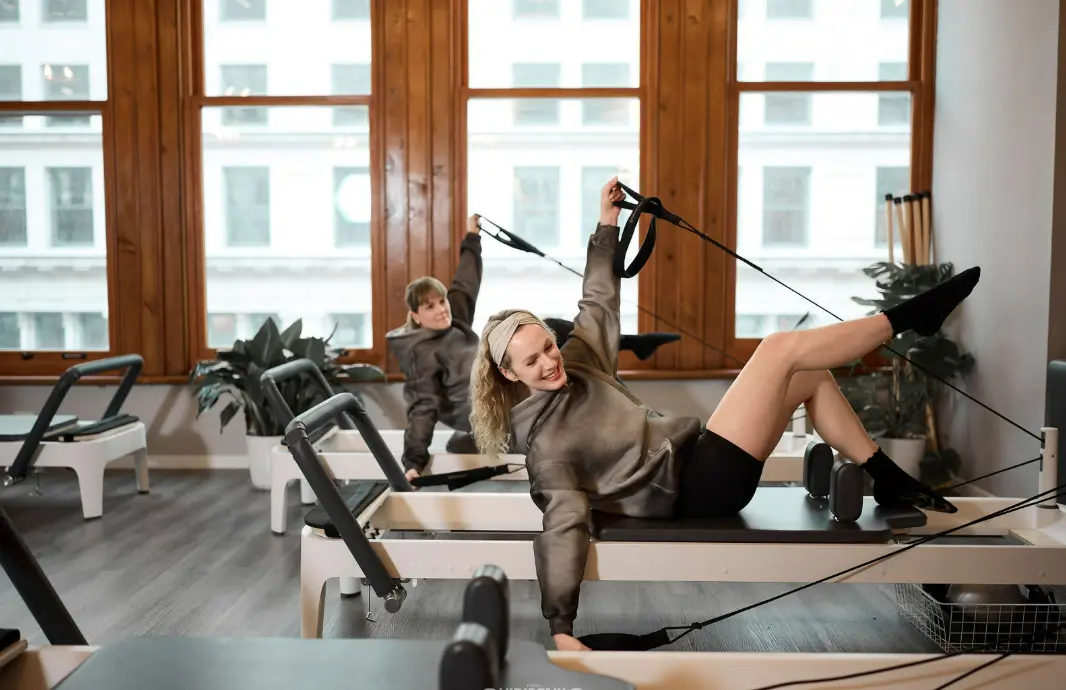
If you have a hypermobile body, you’ve probably heard compliments your whole life: “You’re so flexible.” You can drop into a split, extend your turnout, or reach deep into backbends with ease. And yet – you feel unstable. Your knees ache, your hips click, your lower back gets tired despite all that range.
This is the quiet contradiction of a hypermobile body. You look capable. You move easily. But inside the joints, there’s often a lack of control.
That’s why pilates for hypermobility isn’t about gaining more range. It’s about learning how to stabilize hypermobile joints so flexibility stops feeling fragile.
If you’re flexible but unstable, this isn’t about stretching more. It’s about building strength where your body has been borrowing support from ligaments instead of muscles.
What Is Hypermobility – and Why It’s Often Misunderstood
Let’s slow this down.
What is hypermobility, really?
Hypermobility means your joints move beyond what’s considered average range. It doesn’t automatically mean injury. It doesn’t automatically mean dysfunction. But it does mean your body plays by slightly different rules.
But hypermobility vs flexibility is not the same thing.
- Flexibility is muscular length.
- Hypermobility is joint range.
- A hypermobile joint may move far even without muscular support.
The key difference lies in passive range vs active control.
If you can lift your leg high and hold it there with strength – that’s active control.
If gravity pushes you into extreme range and you “hang” there – that’s passive range.
Many people with hypermobile joints rely heavily on ligaments rather than muscular stabilization. Over time, this creates joint instability and compensation patterns.
Your nervous system also plays a role. When stability is low, the body increases muscle tension around unstable areas. That’s why many hypermobile clients feel “tight” even though they are extremely flexible.
Hypermobility is not a diagnosis in this context – it’s a movement pattern. And it requires a specific training approach.
Flexibility vs Stability – The Missing Link
The conversation about flexibility vs stability is the conceptual core of this topic.
Mobility without strength equals vulnerability.
When you move into the end range without muscular support, joints become dependent on passive structures. Over time, this can contribute to micro-instability and irritation.
Joint stability doesn’t limit range. It protects it.
End range control is what allows dancers and flexible movers to:
- Hold extensions safely
- Land jumps with alignment
- Maintain turnout without collapsing knees
Stability creates a safe range. It teaches the body how to own its flexibility.
At BK Pilates, we often explain it this way:
“Flexibility is your potential. Stability is your control system.”
Without joint stability exercises, hypermobile hips and unstable knees may compensate under load. Over time, this compensation leads to fatigue, especially in the lower back and hamstrings.
If this resonates, you may enjoy our deeper exploration of alignment and control in Pilates Breathing – because breath and deep core engagement are foundational to stability.
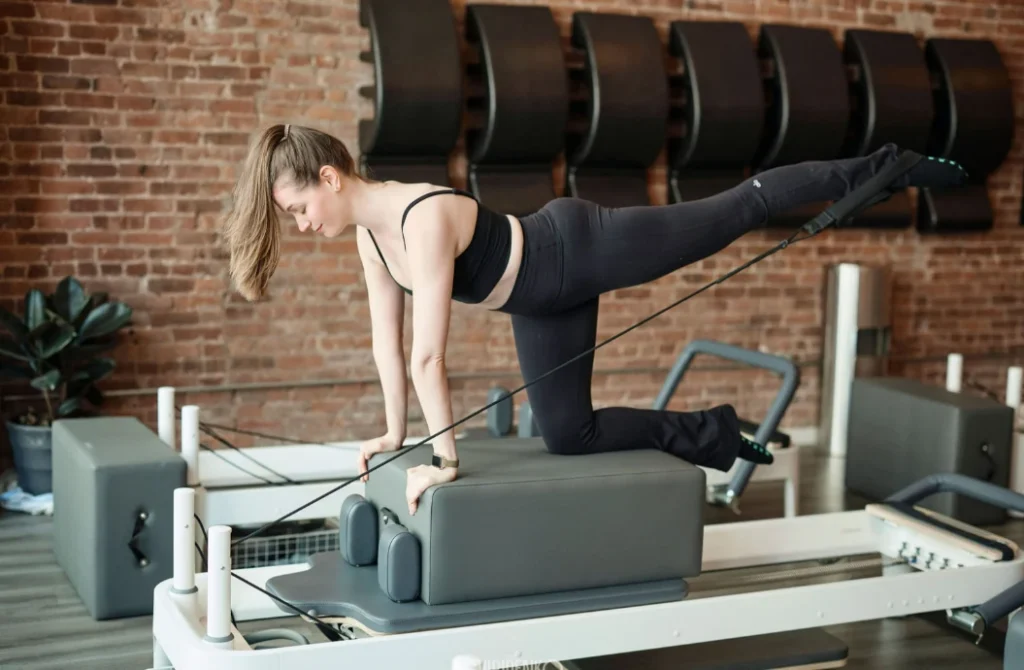
Why Dancers and Naturally Flexible Bodies Are at Higher Risk
Dancers with hypermobility face unique challenges.
- Repetition
Daily rehearsals reinforce extreme ranges. - Aesthetic-driven extremes
Higher legs. Deeper arches. More turnout. - Early training culture
Young dancers are often praised for flexibility before strength develops. - “More turnout” mentality
External rotation is often forced beyond active capacity.
Research in sports medicine shows dancers have higher rates of joint instability in dancers compared to general populations. Flexibility vs strength imbalance is one of the reasons.
When turnout comes from the knee instead of the hip, or when hypermobile hips collapse into anterior tilt, compensations build silently.
The result?
- Recurrent ankle sprains
- Hip impingement sensations
- Lower back fatigue
- Clicking knees
This is where stability training for dancers becomes critical.
Our article on Does Pilates Help You Lose Weight? also explains how muscle control changes body mechanics – and that principle applies directly to dancers seeking performance longevity.
Why Hypermobile Bodies Experience Pain (The Mechanism)
Why hypermobility causes pain is often misunderstood.
It’s rarely about “too much flexibility.”
It’s about lack of control inside that flexibility.
Three mechanisms are common:
1. Micro-instability
Small, repeated shifts in joint position create irritation over time.
2. Stabilizer overload
Deep stabilizing muscles work overtime to protect unstable joints. This causes fatigue.
3. Chronic tightness as compensation
Hamstrings, hip flexors, or calves may feel tight – not because they are short, but because they are guarding.
This muscle fatigue compensation pattern explains why stretching often provides only temporary relief.
Overstretching unstable joints may even worsen symptoms.
Instead, strengthening hypermobile joints with controlled resistance changes the internal support system.
How Pilates Builds Stability in Hypermobile Bodies
This is where pilates for hypermobility becomes transformative.
Pilates stability training does not remove flexibility. It organizes it.
There are four core mechanisms:
1. Deep Core Activation
True core stability for dancers isn’t about bracing. It’s about subtle engagement.
Pilates trains the transverse abdominis and deep spinal stabilizers so hypermobile hips aren’t forced to compensate for trunk instability.
When the center stabilizes, the limbs move safely.
2. Eccentric Strength
Hypermobility exercises in Pilates emphasize eccentric control – lengthening under tension.
Instead of collapsing into splits, you learn to:
- Lower with control
- Resist gravity
- Stabilize end range
This strengthens hypermobile joints safely.
3. Controlled Tempo
Fast, momentum-based movement increases instability.
Pilates slows everything down.
Tempo builds awareness. Awareness builds joint stability.
4. Alignment Awareness
Pilates trains proprioception – your body’s sense of position. Hypermobile clients often need improved joint feedback.
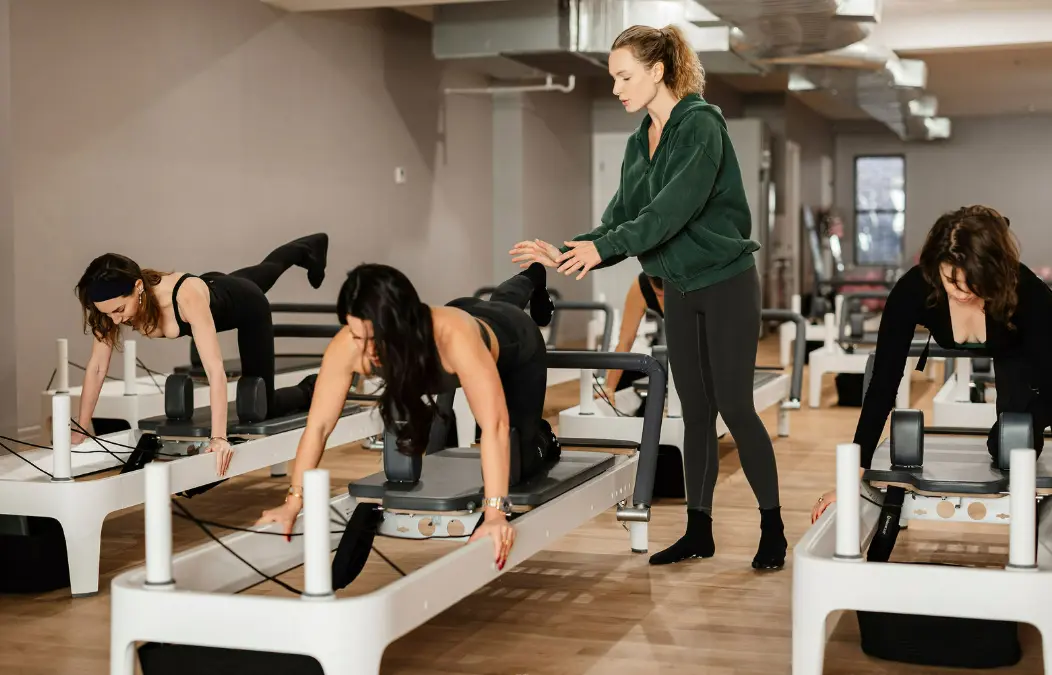
At BK Pilates, we cue alignment in detail because small corrections create major changes in joint loading.
Expert Insight – BK Pilates Instructor:
“For hypermobile clients, the goal isn’t to stretch more. It’s to create intelligent resistance. When control improves, pain decreases and performance becomes sustainable.”
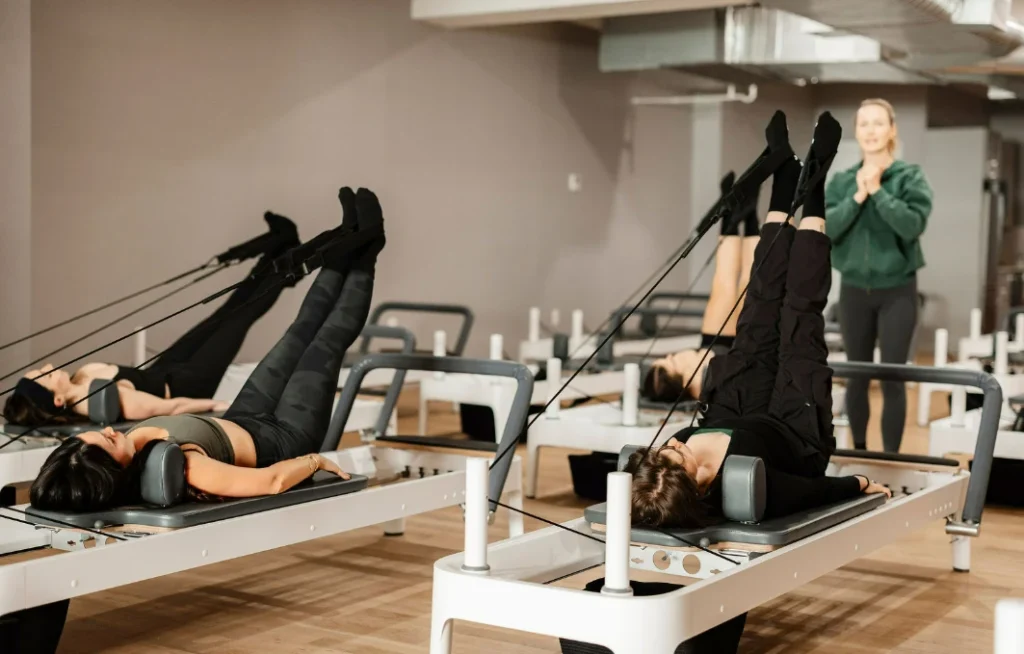
Reformer Pilates and Hypermobility
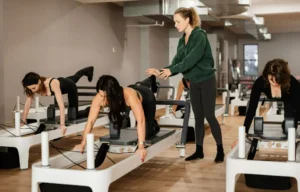
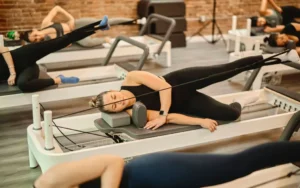
Reformer Pilates hypermobility training is especially effective.
The springs provide:
- Controlled resistance
- Immediate feedback
- Gradual load progression
Instead of hanging into range, the reformer encourages muscular support through the entire movement.
This is why many dancers at BK Pilates prefer reformer sessions when addressing joint instability and pilates for joint pain.
What Hypermobile Clients Should Avoid
Should hypermobile people stretch?
Sometimes – but carefully.
Avoid:
- Aggressive stretching
- Passive hanging in joints
- Pushing into end range without control
- Unsupervised extreme flexibility work
Stretching and hypermobility require balance.
If you constantly feel the urge to stretch, it may signal instability rather than tightness.
Overstretching joints can increase laxity and worsen instability.
Instead, combine gentle mobility with joint stability exercises.
Signs You Might Need More Stability – Not More Stretching
You may need pilates for hypermobility if:
- You feel unstable in balance
- Your joints click frequently
- You have chronic hamstring “tightness”
- Your lower back fatigues quickly
- You experience recurring ankle sprains
These are classic signs of unstable knee exercises being more appropriate than deeper stretching routines.
Is Pilates Safe for People with Hypermobility?
Yes – when programmed correctly.
- When the focus is on control
- When guided by a knowledgeable instructor
- When treated as strength training – not a stretch session
Pilates for joint pain can be highly effective because it retrains neuromuscular control.
Stretching and hypermobility require discernment.
If something always feels “tight,” it may actually need stability.
At BK Pilates, sessions are tailored for dancers, athletes, and flexible movers who want longevity – not just aesthetic extremes.
FAQ
1. Can Pilates help hypermobility?
Yes. It builds control and strengthens hypermobile joints.
2. Should hypermobile people stretch?
They may stretch gently, but stability training should be the priority.
3. Is hypermobility a problem?
Not inherently. It becomes problematic when control is lacking.
4. Can Pilates reduce joint pain in flexible people?
Yes. By strengthening stabilizers and improving alignment, pain often decreases.
5. How often should hypermobile people train?
2–3 stability-focused sessions per week is typically effective.
Conclusion: Stability Is What Makes Flexibility Powerful
Flexibility is a gift. Stability is what makes it sustainable.
If you are a dancer or naturally flexible mover, you don’t need less range – you need more ownership of it.
Pilates doesn’t take away your range – it gives you ownership of it.
Pilates for hypermobility reframes training from “how far can I go?” to “how well can I control it?”
At BK Pilates, we specialize in helping hypermobile bodies move with intelligence, strength, and confidence – whether you’re performing on stage or simply wanting pain-free daily movement.
Ready to build strength inside your flexibility?
Book a personalized session at BK Pilates and discover how stability training can transform your movement.
Your range is powerful – let’s make it sustainable.