When someone searches mat pilates vs reformer pilates, it usually doesn’t start with curiosity. It starts with doubt.
You’ve already decided to do Pilates. You’re motivated. Maybe even excited. And then the question appears: What if I choose the wrong one?
Is reformer pilates better than mat?
Which pilates is more effective?
Will I see results faster on the machine?
Here’s the honest answer – and it may surprise you:
The difference between mat and reformer pilates is not about which one works better. It’s about how your body learns.
At BK Pilates NYC, we see this every week. Clients come in thinking they need the “advanced” option. What they actually need is the right feedback at the right time.
Let’s unpack this properly.
Why We Keep Comparing Them
We live in a results-driven culture. Faster. Stronger. More efficient.
So when you compare reformer vs mat pilates, you’re really asking:
Which one gives me the best return on my effort?
But Pilates wasn’t designed as competing formats. Joseph Pilates created mat work first. The equipment came later – not to replace it, but to refine it.
The method stayed the same. The sensation changed.
That distinction matters.
The Principles Don’t Change
Whether you’re on a reformer carriage or lying on a mat, you’re still working with:
- Core stability
- Breath control
- Alignment
- Precision
- Controlled movement
Those Pilates principles are the real foundation. The equipment is simply a teacher.
At BK Pilates, we don’t treat mat Pilates NYC classes as “basic” or reformer Pilates NYC sessions as “advanced.” They are two expressions of the same language.
And your body responds to principles – not to marketing labels.
The Real Difference: Feedback
If we strip away the noise, the conversation around mat pilates vs reformer pilates comes down to one word: feedback.
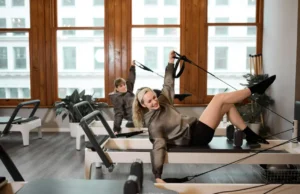
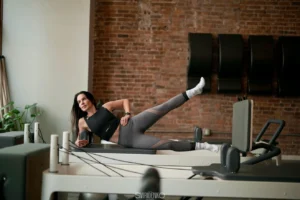
The reformer gives you external feedback.
The mat demands internal awareness.
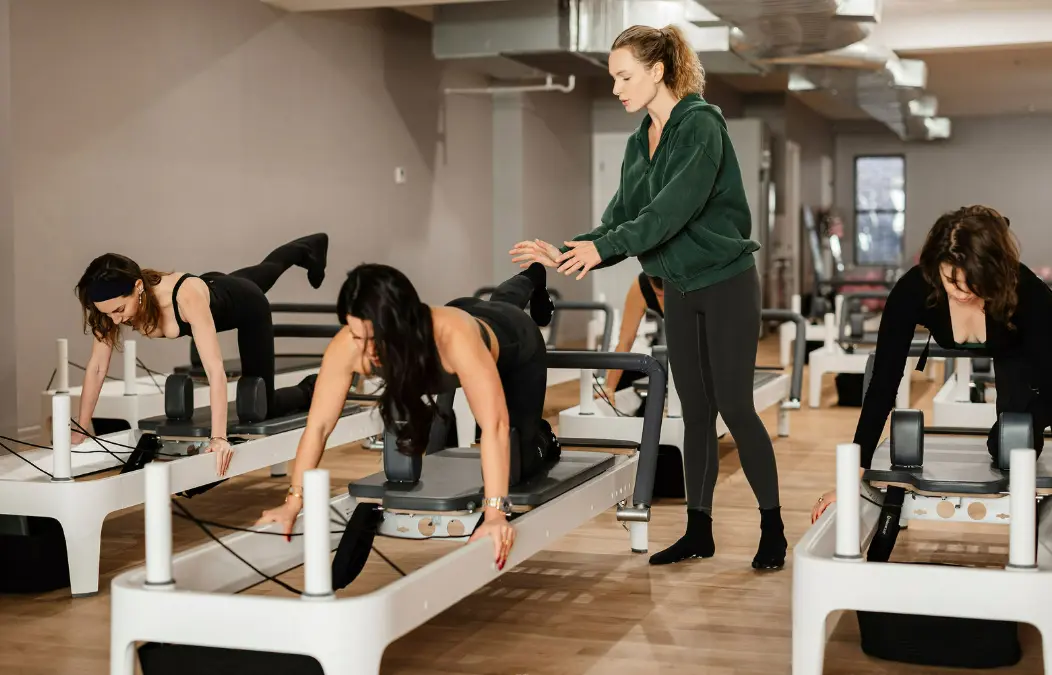
On the reformer, spring resistance guides the carriage. It can assist your movement or challenge it. You feel the tension immediately. Your body receives information through resistance.
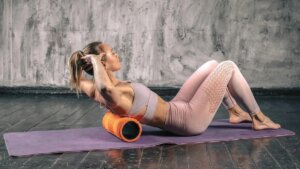
On the mat, there are no springs. Just gravity.
Your deep core muscles – especially the transverse abdominis – must organize movement without help.
One isn’t smarter than the other. They simply teach you differently.
As one of our instructors at BK Pilates puts it:
“The reformer tells you where you are. The mat asks you to know.”
That subtle difference changes the learning experience entirely.
How Resistance Changes the Experience
People often assume the reformer is harder because it looks more technical. In reality, difficulty depends on how the exercise is programmed.
Spring resistance can:
- Support joint stability
- Assist movement in early stages
- Add progressive load for strength
- Keep the workout low impact
Mat work can:
- Intensify stabilization demands
- Increase anti-rotation challenges
- Build intrinsic joint support
- Improve deep core endurance
Regular Pilates practice is 31 percent effective in improving muscle strength, 25 percent effective when it comes to flexibility and 30 percent effective in promoting balance and dynamic stability for non-athletes (Steele, et al., Journal of Sports Medicine and Physical Fitness). So, instead of which Pilates type is better, you might ask: Which type of resistance allows me to learn control more effectively at this point in my life?
A Side-by-Side View
For clarity, here’s a simplified comparison:
| Element | Mat Pilates | Reformer Pilates |
| Resistance Type | Bodyweight + gravity | Adjustable spring resistance |
| Feedback | Internal awareness | External mechanical feedback |
| Core Demand | High intrinsic stabilization | Adjustable load with support |
| Joint Support | Self-stabilized | Spring-assisted when needed |
| Best For | Deep control & body awareness | Guided strength & progression |
This table doesn’t declare a winner. It shows context.
Core Activation: Clearing the Biggest Myth
A common belief is that reformer pilates activates the core more because it uses equipment.
But EMG studies measuring deep core muscles show that mat Pilates can create equally high activation when executed with precision.
In fact, some mat pilates core workout sequences feel more intense because there’s no spring assistance.
Reformer pilates core training, however, allows progressive overload in a controlled way — which can be ideal for long-term strength development.
So which pilates is more effective for core strength?
Both. When taught well.
What About Beginners?
Mat or reformer pilates for beginners is less about ability and more about comfort.
Some beginners feel safer with guided resistance. The reformer offers structure. The carriage moves on a track. The springs provide tactile feedback.
Others prefer the simplicity of mat work. No machine. Just learning how to connect breath to movement.
At BK Pilates, we introduce beginners to both gradually. Starting Pilates should feel good, not scary. You probably want good teaching, not just the machines, when looking for classes near you.
Safety and Injury Prevention
Both formats are considered low impact exercises.
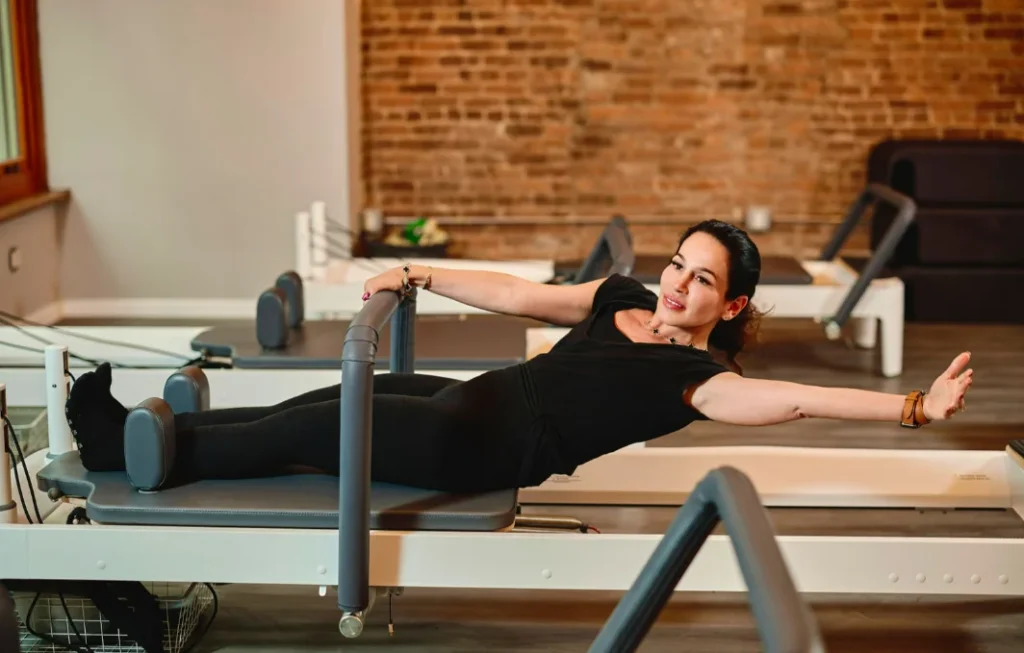
Reformer Pilates may feel more joint-friendly because springs reduce compression and allow assisted movement patterns.
Mat Pilates builds joint stability from within. It improves muscular balance and postural alignment – key elements in injury prevention Pilates programs.
For clients managing back discomfort, supervised Pilates has been widely recommended in rehabilitation settings.
Again, the method remains the same. The tool adjusts the pathway.
If your body feels tight not from weakness but from stress, our guide on Pilates for Stress Relief explains how breath and controlled movement calm the nervous system.
Results: Where Will You See Change Faster?
Let’s talk honestly about reformer vs mat pilates results.
Visible change depends on:
- Consistency (2–4 sessions weekly)
- Progressive challenge
- Movement quality
- Recovery and lifestyle habits
Most clients begin noticing posture improvements within 3–4 weeks. Muscle tone becomes more defined around the 6–8 week mark. If you’re unsure how often you should train to see sustainable results, read our guide on How Often Should You Do Pilates?
Client reflection:
“I thought the reformer would give me faster results. What surprised me was how much adding mat classes improved my waist definition and overall control.” – Rachel S., NYC
Pilates body transformation is cumulative. It’s not tied to springs or floor space.
Why Advanced Clients Rarely Choose Just One
Experienced practitioners often combine mat and reformer intentionally.
Advanced Pilates isn’t about complexity. It’s about refinement.
Mat sharpens control.
Reformer expands resistance options.
Together, they create progressive Pilates training that prevents plateaus.
That’s why at BK Pilates – often considered among the best pilates studio NYC options – we encourage integration rather than separation.
You Don’t Have to Pick a Side
If you’ve been debating mat pilates vs reformer pilates, hoping for a definitive winner, here’s the truth:
You don’t need one.
You need intelligent programming and instructors who understand how to layer resistance, refine alignment, and build strength progressively.
Different tools.
Same principles.
Smarter results.
FAQ
What is the difference between mat and reformer pilates?
Mat uses bodyweight and gravity. Reformer uses adjustable spring resistance. Both follow the same Pilates principles.
Is reformer Pilates better than mat?
Nope. What really counts is finding a good teacher and doing it consistently, not the equipment you use.
Which Pilates is best for weight loss?
Neither one will magically make you lose weight. But if you do either regularly and eat well, you’ll tone up and your body will work better. For a deeper breakdown of fat loss, metabolism, and realistic expectations, explore our article on Does Pilates Help You Lose Weight?
Mat or reformer Pilates for newbies?
Either is fine to start with. The reformer gives you more help, but mat work gets you really aware of your body.
When will I see changes?
After a month or two of sticking with it, you’ll likely register better posture and some muscle definition.
Before You Decide: A Different Way to Think About It
Talking about mat versus reformer Pilates can get confusing. Springs. Resistance. Core activation. Stability.
But when clients reflect on their progress months later, they rarely talk about equipment.
They talk about:
- Standing taller without thinking about it.
- Feeling stronger carrying groceries.
- Moving without lower back tension.
- Recognizing when their posture collapses – and correcting it.
That’s movement intelligence.
The reformer may introduce resistance more visibly.
The mat may challenge you more quietly.
But neither creates change on its own. Change happens when:
- You show up consistently.
- You move with precision.
- You allow progression instead of rushing.
At BK Pilates, we don’t see mat Pilates NYC and reformer Pilates NYC as categories. We see them as chapters in the same training story.
Sometimes the mat teaches you control.
Sometimes the reformer teaches you strength.
Together, they build longevity.
And that’s the real goal.
Curious to feel the difference yourself?
Book a session at BK Pilates NYC and experience how mat and reformer work together to build strength, clarity, and control – without choosing sides.