Maybe you’ve had this moment before. You leave a hard gym workout feeling more swollen and exhausted than strong. Your shoulders are tight, your hips feel stiff, and instead of looking “toned,” you just feel run down.
That’s one reason so many people eventually find their way to Pilates.
Not because it’s easy. And not because it magically changes your body overnight. But because it trains strength differently – with more control, more awareness, and usually a lot less punishment.
Suppose your goal is to feel leaner, stronger. And, more supportive of your body without chasing bulky muscle growth, Pilates can absolutely help.
Quick Answer: Does Pilates Tone Your Body Without Adding Bulk?
Yes. Pilates will help you tone your body without concentrating on heavy muscle growth.
Pilates, however, uses controlled resistance, muscular endurance, posture work and full-body engagement that work together to give the body a leaner, more balanced look—not pushing the body toward maximum muscle size.
Most people see the changes in small ways first. Standing taller. Feeling less tight through the hips and shoulders. Looking more supported through the waist. Clothes fitting differently.
Then the visible definition starts to follow.
What People Actually Mean When They Say They Want a “Toned” Body
Most people do not actually want huge muscles when they say they want to get “toned.” Usually, they mean:
- feeling firmer
- looking leaner
- having more visible definition
- improving posture
- feeling strong without looking bulky
Fair point – chasing size like a bodybuilder aims for something totally unlike these objectives.
Most times, looking fit comes down to how muscles work together, the way you carry yourself, along with fat levels – not just building bulk.
Because it focuses on steady progress, Pilates fits those avoiding intense routines. Strength comes quietly here – woven into movement across every part, not isolated in one spot.
Not rigid. Not overly aggressive. Just strong and supported.
Why Pilates Builds Strength Differently Than Traditional Weight Training
Traditional weight training and Pilates are both effective. They simply train the body differently.
Heavy lifting often focuses on increasing load over time to maximize strength and muscle growth. Pilates focuses more on controlled resistance, muscular endurance, alignment, and movement quality.
You still work hard in Pilates. Sometimes surprisingly hard. But the feeling is different.
Instead of forcing the body through heavy compression and high-impact movement, Pilates asks muscles to stay engaged longer with precision and control.
That changes the experience – and often the aesthetic result too.
| Traditional Weight Training | Pilates |
| Often focused on muscle size and max strength | Focused on control, endurance, and alignment |
| Heavy external loads | Spring resistance and body weight |
| Can isolate muscle groups | Full-body engagement |
| Higher joint impact | Low-impact toning |
| Intensity-driven | Precision-driven |
For some people, the gym feels energizing. For others, it eventually starts feeling exhausting.
Pilates tends to attract people looking for something they can actually sustain.
Functional Strength vs Muscle Size
One of the biggest differences is that Pilates emphasizes functional strength. That means training the body to move better, not just lift heavier.
You notice it in everyday life:
- carrying groceries feels easier
- your lower back feels less strained
- you stop collapsing into one hip while standing
- sitting at a desk feels less uncomfortable
Those changes may sound small. But together they can completely change how the body feels. And looks.
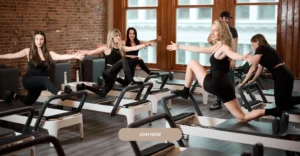
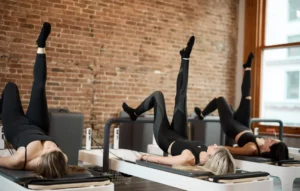
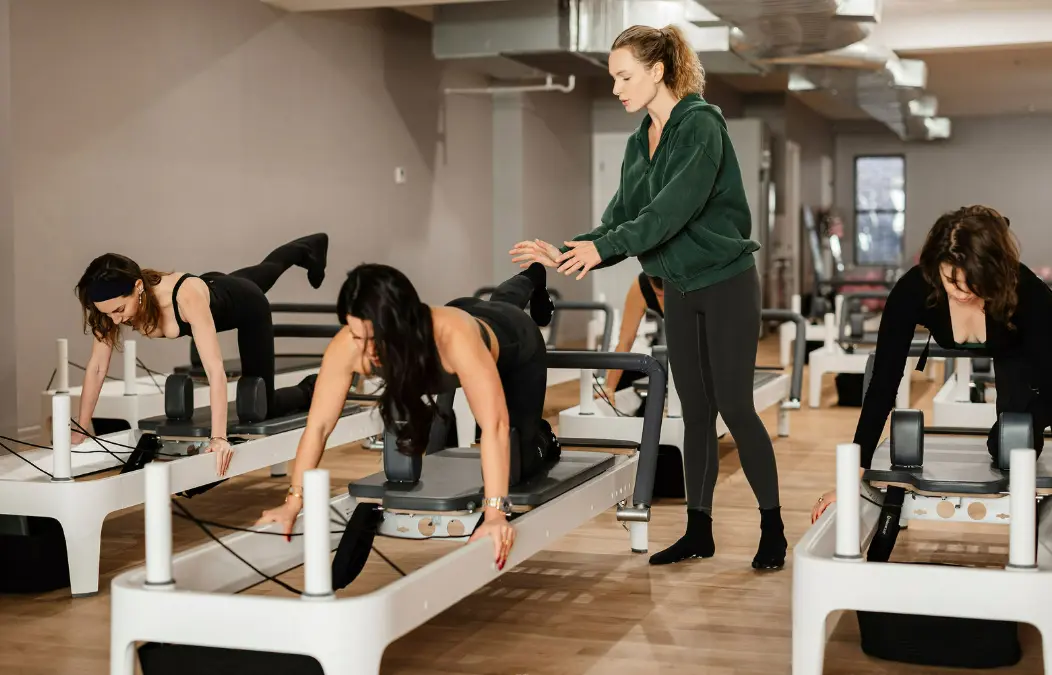
Why Reformer Pilates Feels Challenging Without Heavy Weights
People are often shocked the first time they try reformer Pilates.
The weights are not heavy. The movements look controlled. Sometimes even graceful.
Then class starts.
The reformer uses spring resistance that keeps muscles working during the entire movement. Especially during the slow return phase that most people usually rush through in regular workouts.
That constant tension creates a very different kind of challenge.
You are controlling the movement the whole time. That’s why reformer Pilates can feel intense without relying on heavy impact or extreme loading.
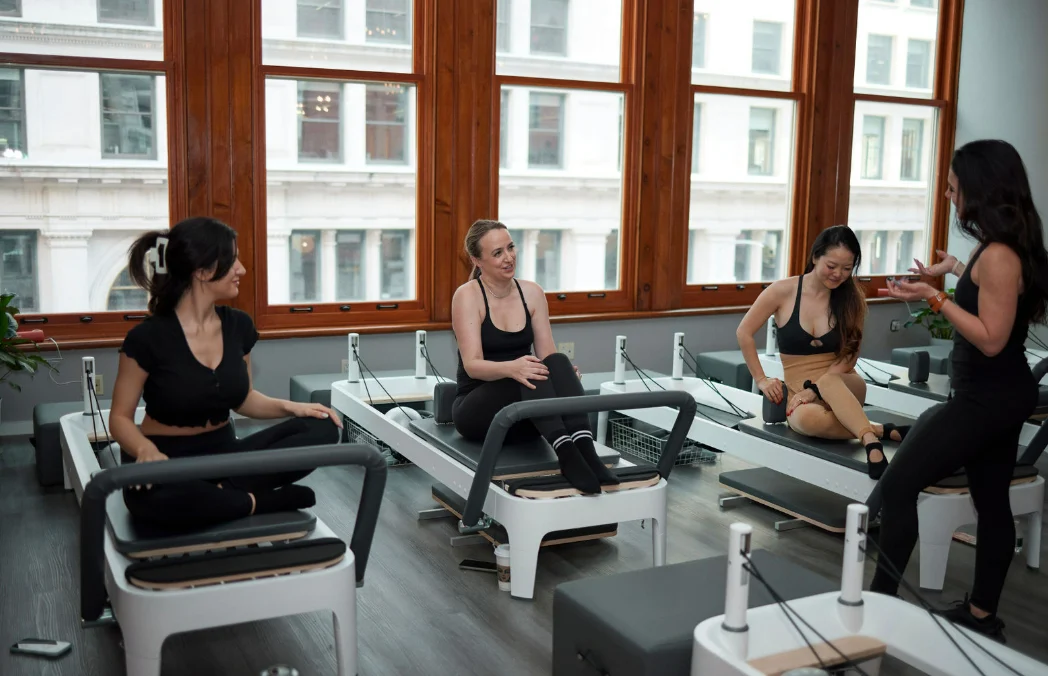
At BK Pilates, many beginners say they feel muscles shaking during exercises that barely look dramatic from the outside. That’s usually a sign the deeper stabilizing muscles are finally being recruited.
How Posture Can Make Your Body Look More Toned
This is probably the most underestimated part of the whole conversation. A lot of the “Pilates body” effect comes from posture. Not magic. Not fake “long lean muscles.” Just better alignment.
When the body is more supported through the core and spine, people naturally stand differently. The shoulders stop rounding forward so much. The neck relaxes. The waist can appear more defined simply because the body is not collapsing into itself anymore.
The interesting part? Sometimes these visual changes happen before major body composition changes do. According to the Cleveland Clinic, Pilates may help improve posture, flexibility, core strength, and body awareness.
And posture changes everything visually.
“Many clients think they’re seeing weight loss right away, but often it’s posture first. They’re standing taller, holding tension differently, and moving with more support.”
– BK Pilates Instructor
Why Better Alignment Changes the Way Clothes Fit
This is one of the first things people mention. Not the scale. Their clothes.
Jeans sit differently. Jackets pull less through the shoulders. The waistline feels more supported. Even the way someone carries themselves in photos can shift.
And honestly, that tends to feel more motivating than obsessing over numbers.
Especially for people who are tired of extreme fitness culture.
Why Many Beginners Notice Posture Changes First
Posture changes usually happen faster because Pilates increases body awareness very quickly.
After a few sessions, people start noticing habits they never paid attention to before:
- locking the knees while standing
- clenching the shoulders
- arching the lower back
- collapsing into the couch after work
Pilates slows movement down enough for those patterns to become obvious.
That awareness alone can create huge changes in how the body feels day to day.
Can Reformer Pilates Build Lean Muscle Without Bulk?
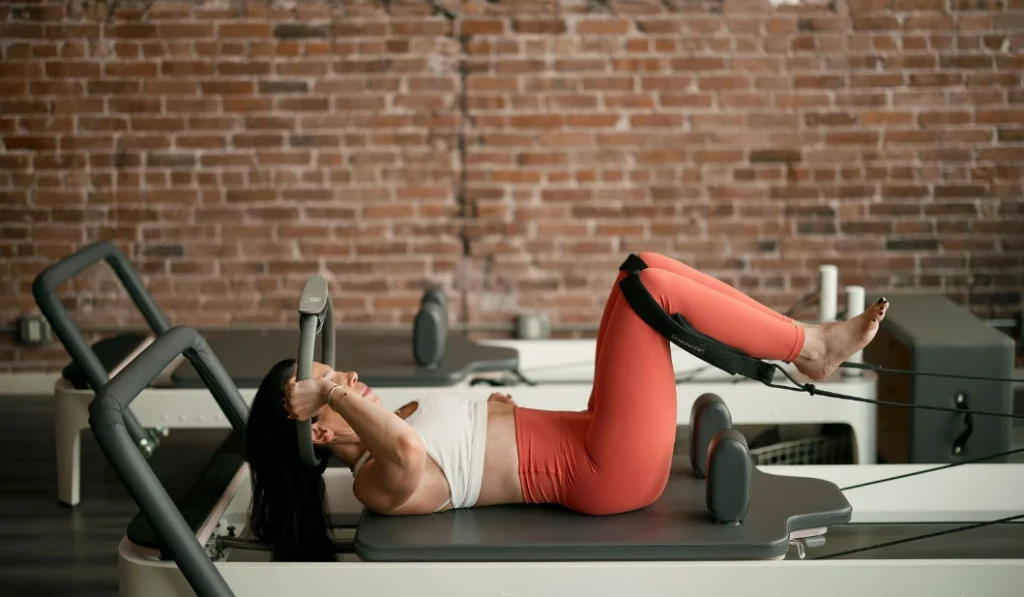
Yes! And this is one of the biggest reasons people stick with it.
Reformer Pilates absolutely builds strength. But it usually does not create the kind of heavy hypertrophy associated with intense bodybuilding programs.
The focus is different from the beginning.
Pilates relies more on:
- controlled resistance
- muscular endurance
- stability
- coordination
- time under tension
So instead of chasing maximum load, the body develops strength in a more balanced way.
What “Lean Muscle” Actually Means
“Lean muscle” is one of those phrases the fitness world overuses constantly.
The muscle itself is already lean tissue.
What people usually mean is:
- visible definition
- firmness
- strength without excessive size
That’s the look many people associate with Pilates.
Not because Pilates creates special “long muscles,” but because it improves muscle engagement, posture, and overall body composition without focusing on heavy bulk-building protocols.
Why Pilates Focuses More on Endurance Than Maximum Load
Muscles are under moderate resistance and are active for longer periods of time instead of short bursts of maximum effort. The motions are slower. More disciplined. Sometimes deceptively easy.
This will improve the control of movement and muscular endurance.
Research published through the National Institutes of Health has linked Pilates training to improvements in flexibility, core endurance, posture and balance.
For many people that mix provides just the sort of toned look they were looking for in the first place.
Why Some People Feel Less “Puffy” After Switching to Pilates
Some people reach the point where instead of feeling energized after every workout. They feel sore, inflamed, tight or exhausted.
That doesn’t mean hard training is bad. But it does mean it may not feel sustainable forever.
Pilates tends to feel different because it combines strength with mobility and recovery instead of separating them completely.
You still work hard. But you usually leave class feeling more open in your body rather than beaten down.
That’s a huge reason burned-out gym people transition into Pilates.
“I used to think harder always meant better. Pilates changed that for me. I still feel challenged, but I recover so much better now.”
– BK Pilates client
And recovery matters more than people think.
Because the best workout routine is usually the one your body actually wants to return to consistently.
How Long Does It Take to See Toning Results From Pilates?
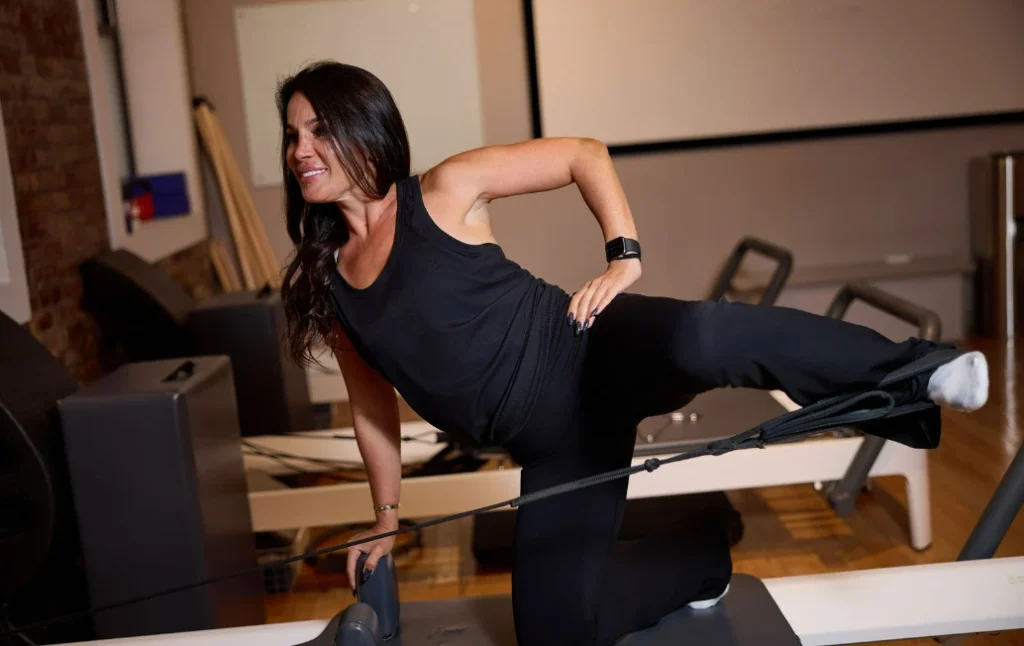
This depends on consistency more than perfection.
Some people notice posture and mobility changes within the first few weeks. Visible muscle definition usually takes longer.
But most beginners start feeling different before they fully look different. That’s important.
It’s obviously not a scientific formula. Still, many people find the general idea surprisingly accurate.
What Beginners Usually Notice in the First Few Weeks
Early Pilates changes are often subtle:
- stronger core awareness
- standing tall
- less lower back tension
- better mobility
- feeling more connected to movement
- less stiffness after long workdays
Sometimes friends notice posture changes before anything else.
Why Consistency Matters More Than Intensity
This is where Pilates really stands out.
You do not need to completely destroy yourself to see progress.
Three consistent sessions a week done with focus and control will usually do more than random bursts of extreme motivation followed by burnout.
That’s one reason Pilates works well for busy adults. It is a challenge, but not so difficult that it would never be part of real life.
The BK Pilates Blog has additional beginner-friendly guides on posture, recovery, and maintaining fitness.
Is Pilates Better Than Heavy Workouts for Toning?
Maybe not. When building muscle size or raw power, standard weight training works well. Yet feeling more solid, steady, loose, and shaped – without bulk – might come easier through Pilates. The choice leans on what strongly feels like to you.
A lot depends on personality too.
Some people love pushing heavy weights. Others want movement that feels challenging without feeling punishing. Neither approach is wrong.
In reality, many trainers and athletes combine both.
But for people looking for a more sustainable relationship with exercise. Pilates often feels easier to maintain long term.
Frequently Asked Questions
Does Pilates tone your body?
Absolutely! Pilates is a great way to tone your body as it builds up muscle endurance in a balanced and uniform way. The exercises usually involve a combination of shortening and lengthening of muscles against varying spring resistance, which effectively challenges your muscles.
Does Pilates make you bulky?
No, Pilates does NOT bulk you up. The training structure is based on lower loads and higher muscular endurance versus the progressive heavy overloads needed for extreme muscle hypertrophy.
Can reformer Pilates build lean muscle?
Yes, it builds lean muscle through the deep stabilizing muscle systems under controlled, continuous tension, developing definition without adding bulk.
Why do people look slimmer after Pilates?
The immediate “slimming” effect is often due to massive improvements in posture and spinal alignment. Keeping your core strong and lowering your shoulders can change your silhouette.
How long does Pilates take to tone your body?
Many people notice posture and strength improvements within a few weeks. Visible toning changes often appear after a couple of consistent months.
Is Pilates enough for toning without the gym?
Absolutely, a well-rounded Reformer Pilates routine can work all your body muscles, offer resistance to your muscles, and at the same time give you a cardiovascular workout that will shape your body without using any conventional gym machinery.
Final Thoughts: Toned Doesn’t Have to Mean Extreme
Somewhere along the way, a lot of people started believing fitness only “counts” if it leaves you exhausted.
Pilates pushes back against that idea a little. It still builds strength. It still challenges the body. But it also encourages control, recovery, alignment, and consistency.
And for many people, that combination creates the exact kind of toned, leaner-looking body they were searching for all along.
Not because they trained harder. Because they trained smarter.