In a city like New York, motivation rarely disappears because of laziness. It fades because of isolation. Long workdays, remote schedules, and endless to-do lists quietly disrupt routines. You start a fitness plan with the best intentions – and then miss one class, then two. Before long, staying consistent with pilates feels harder than it should.
This is where group pilates motivation changes everything.
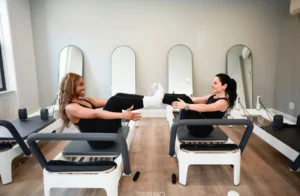
Group Pilates classes are not simply workouts. They are structured social environments designed to support accountability, shared progress, and emotional connection. Within a strong pilates community, motivation becomes reinforced externally – through rhythm, instructor guidance, and collective energy.
At BK Pilates, we’ve seen it repeatedly: people do not return only for exercises. They return for the feeling of belonging, progress, and being seen. When group pilates classes motivation is built into the structure, consistency stops feeling forced – it becomes natural.
Why Motivation Fades When You Train Alone
Many people assume workout motivation is purely internal. If you “really wanted it,” you would stay disciplined. But behavioral science shows otherwise.
Self-discipline alone is rarely a sustainable strategy. When you train solo:
- There is no external reinforcement.
- Progress feels invisible.
- Skipping once becomes easier the second time.
The psychology of solo workout vs group dynamics is clear: without visibility, habits weaken. Habits require stable context and cues to form. Solo training lacks consistent external triggers.
This explains why staying consistent with pilates at home often fails. The absence of structure creates decision fatigue. Every workout requires fresh motivation. And motivation, by nature, fluctuates.
In contrast, group pilates motivation leverages built-in accountability. When others expect your presence – even subtly – adherence increases. Not from pressure, but from shared commitment.
Read more: How Often Should You Do Pilates?
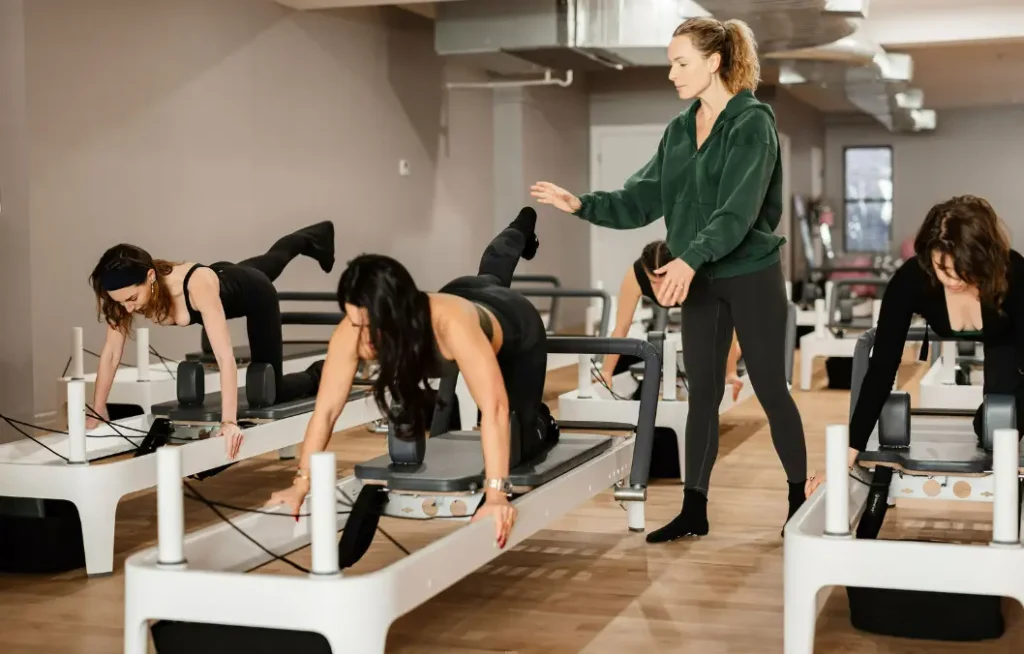
The Science of Social Motivation: Why We Try Harder Together
Why group fitness works is not a mystery – it is measurable.
1. Social Facilitation Effect
Studies from the American Psychological Association show that individuals perform better on tasks when others are present. Effort increases. Focus sharpens. Energy rises.
2. Accountability Loop
When attendance is visible, consistency improves. A study in Nature Communications found that social influence significantly increases exercise adherence.
3. Identity-Based Habits
Behavior becomes lasting when it becomes part of identity. Saying “I attend group Pilates every Tuesday” reinforces identity faster than “I try to work out.”
These are not abstract ideas. They are the foundation of group pilates classes motivation.
The social benefits of exercise extend beyond mood. They influence long-term behavioral sustainability. Fitness accountability grows naturally when community is present.
At BK Pilates, small group settings allow members to feel both supported and autonomous – a balance essential for long-term pilates consistency.
The Unique Psychology of Group Pilates Classes
Not all group workouts create the same psychological effect. Pilates is uniquely suited for structured social reinforcement.
Synchronized movement creates rhythm and shared focus.
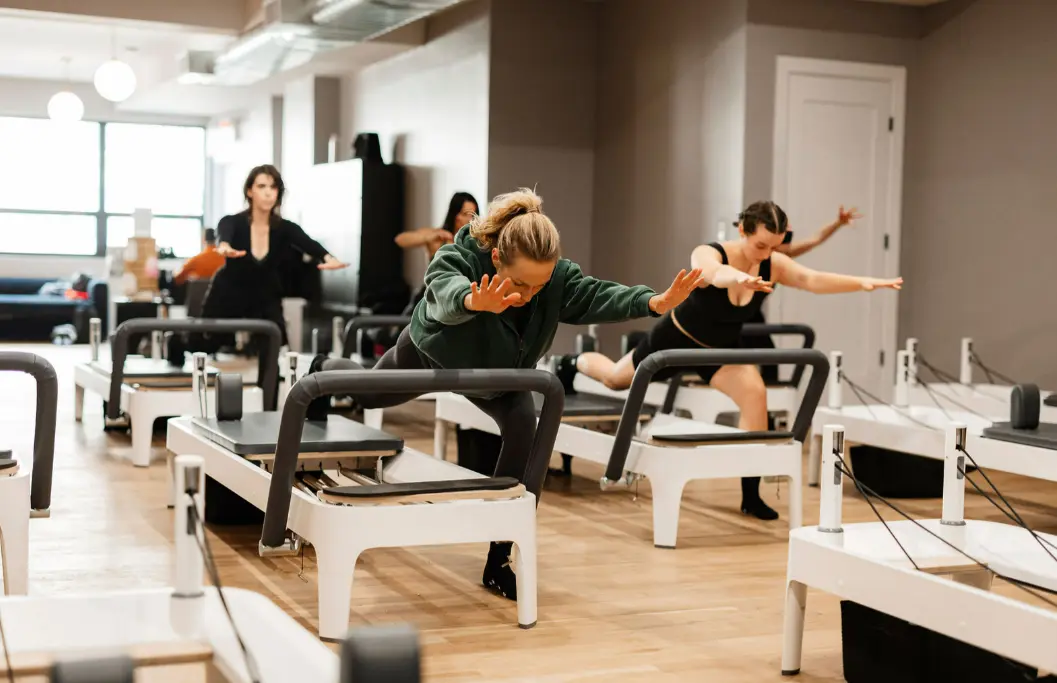
Small group pilates classes ensure visibility without overwhelm.
Instructor-led corrections provide immediate feedback.
Calm but focused energy reduces intimidation.
Group pilates motivation thrives in this balanced atmosphere. Unlike high-intensity bootcamps, Pilates fosters precision and presence. The result is pilates accountability without competition.
Members often report that simply seeing familiar faces weekly strengthens their commitment. That familiarity builds a micro-community – one of the core benefits of group pilates classes.
Why Instructors Anchor the Community Experience
A boutique fitness community is only as strong as its leadership.
“In a group class, my role isn’t just to cue movement,” says Instructor at BK Pilates. “It’s to notice subtle progress, adjust form, and help clients feel confident enough to return.”
Pilates instructor support matters because:
- Micro-adjustments prevent injury.
- Personalized feedback increases trust.
- Consistent tone creates psychological safety.
A supportive studio environment reduces fear of judgment. Clients feel seen – not evaluated.
This emotional anchoring strengthens group pilates motivation more than intensity ever could.
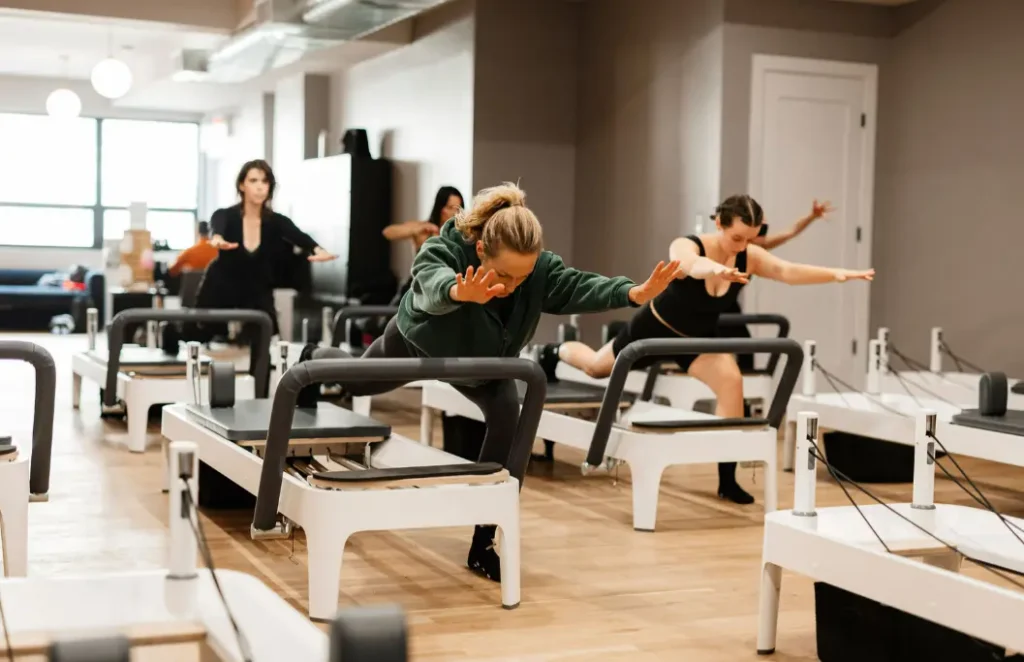
Community in a Big City: The Boutique Studio Effect
New York City is vibrant – and isolating. Urban studies consistently highlight the paradox of dense cities producing social loneliness.
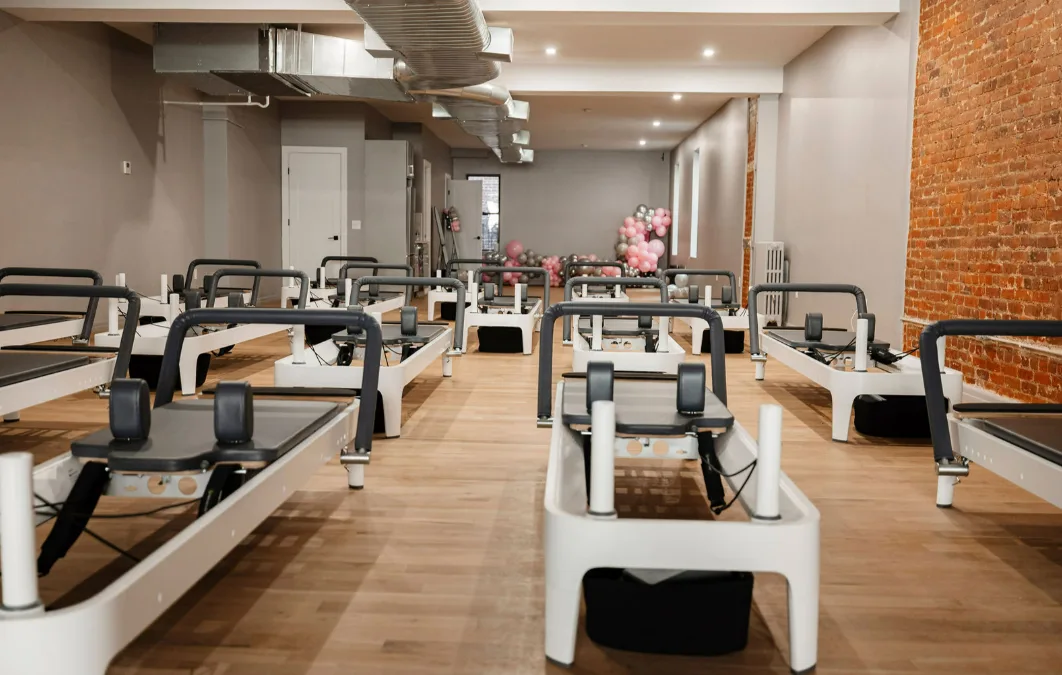
Boutique studios act as “third places” – spaces outside home and work that foster belonging. At BK Pilates in Brooklyn and Manhattan, members often describe their class as the most consistent weekly ritual in their schedule.
Fitness community NYC environments work because they:
- Offer routine.
- Create predictable connection.
- Reduce decision fatigue.
- Encourage social connection through exercise.
Unlike large gyms, boutique settings make attendance visible and valued. That visibility strengthens workout accountability and group fitness motivation organically.
Read more: Pilates for Stress Relief
Accountability Without Pressure: The Energy of a Small Group
One common fear: “What if I feel judged?”
In reality, healthy visibility increases consistency in exercise without creating competition. In small group pilates classes:
- Progress is shared.
- Struggle is normalized.
- Energy is collective.
Group pilates motivation grows not from comparison, but from subtle mutual reinforcement. When someone completes a challenging set beside you, effort feels contagious.
This is group vs solo workout psychology in action.
Group vs Private Pilates: Which Builds Long-Term Consistency?
Both formats have value.
| Private Pilates | Group Pilates |
| Technique refinement | Behavioral sustainability |
| Highly personalized | Community reinforcement |
| Flexible pacing | Structured schedule |
| Deep corrections | Identity-based commitment |
Private sessions excel in technical progression. But for staying consistent with pilates long-term, group structure often wins.
Many members at BK Pilates combine both – leveraging the benefits of group pilates classes for consistency and private sessions for refinement.
Read more: Reformer Pilates for Beginners
What Happens After 4 Weeks in a Group Class
Week 1: Uncertainty
You observe more than participate.
Week 2: Recognition
Faces become familiar. Confidence grows.
Week 3: Visible Progress
Movements feel stronger. Pilates consistency improves.
Week 4: Identity Shift
You no longer “try to exercise.” You are someone who attends Pilates.
This transformation reflects the power of pilates community. Group pilates experience gradually shifts behavior into identity — the most sustainable form of motivation.
Client Testimonial:
“I used to search for pilates classes near me and quit after a month. At BK Pilates, the group energy kept me coming back. It feels like my Tuesday ritual now.” – Sarah L., BK Pilates Park Slope
Is a Group Pilates Class Right for You?
Group Pilates may be ideal if:
- You struggle with workout motivation.
- You’ve stopped and restarted fitness routines.
- You want structured support.
- You are new to beginner pilates classes.
If you’ve ever searched for pilates classes near me hoping for more than just exercise, you’re likely seeking community.
The benefits of group pilates classes extend beyond physical strength. They build consistency, connection, and confidence.
What Research Says About Group Exercise and Consistency
A study from the Journal of Sport & Exercise Psychology shows that participants in group programs experience greater adherence to fitness than those exercising alone. In another study from Oxford University, data showed that synchronized group activity increases pain tolerance and social bonding – testament to how many benefits we can derive from group exercise beyond psychological resilience. Research on social motivation supports the daily reality: community sustains commitment.
FAQs About Group Pilates and Motivation
Are group Pilates classes intimidating for beginners?
Small group formats reduce overwhelm. Instructors guide each participant carefully.
Is group Pilates effective without private sessions?
Yes. Group structure strengthens pilates consistency, though private sessions can refine technique.
How often should you attend group classes?
2–3 times per week builds routine without burnout.
Can introverts benefit from group Pilates?
Absolutely. Community does not require extroversion – only shared space.
Do small classes make a difference?
Yes. Smaller classes increase pilates accountability and instructor attention.
Conclusion
Motivation rarely survives in isolation.
Group pilates motivation transforms routine into identity by reinforcing consistency and connection. Within a supportive pilates community, accountability becomes natural rather than forced.
At BK Pilates, our boutique fitness community is designed to help you stay consistent, feel seen, and grow stronger – physically and emotionally.
Consistency is not built alone. It is built together.
Ready to experience the power of group pilates motivation?
Join a class at BK Pilates and discover how community transforms consistency.
Book your session today and take the first step toward sustainable strength.