You know that feeling when you should do cardio… but really don’t want to?
Many people think that cardio is just running, jumping, and surviving discomfort or pain as well. You hurt your knees; your back is getting tighter, and you’re tired instead of refreshed.
So you skip it. Or postpone it. Again.
But here’s the shift more people are discovering: cardio doesn’t have to feel aggressive to be effective.
And that’s exactly where Jumpboard Pilates comes in.
It gives you everything you expect from low impact cardio – elevated heart rate, calorie burn, endurance – but without that heavy, jarring impact. Just controlled, intelligent movement that actually feels… good.
What Is Jumpboard Pilates (And Why It Feels So Different)
At first glance, jumpboard Pilates almost looks too easy.
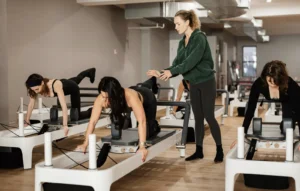
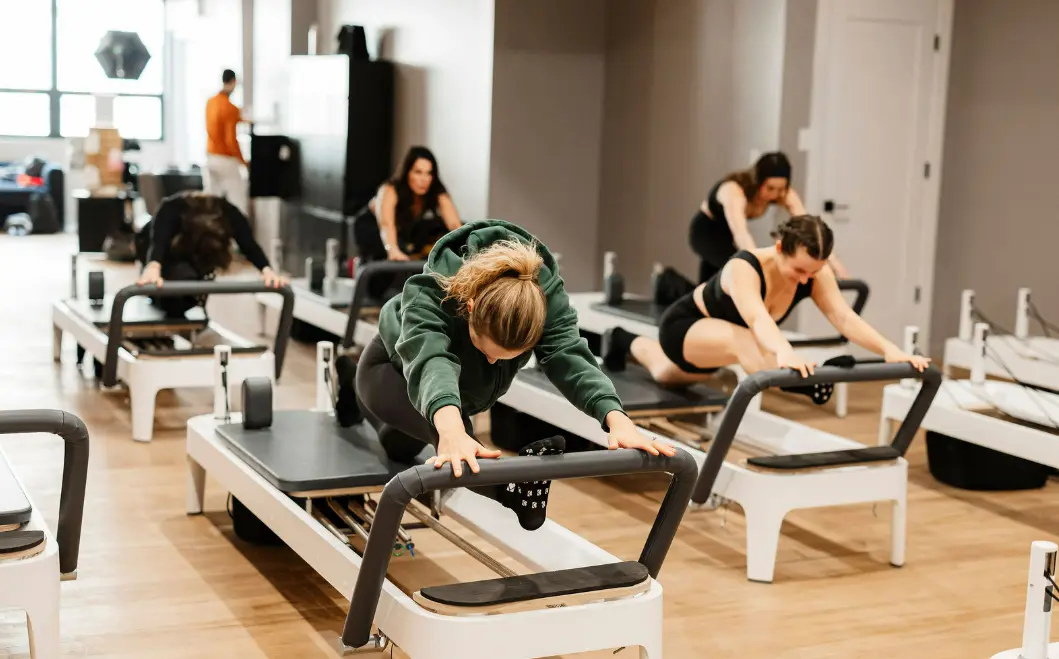
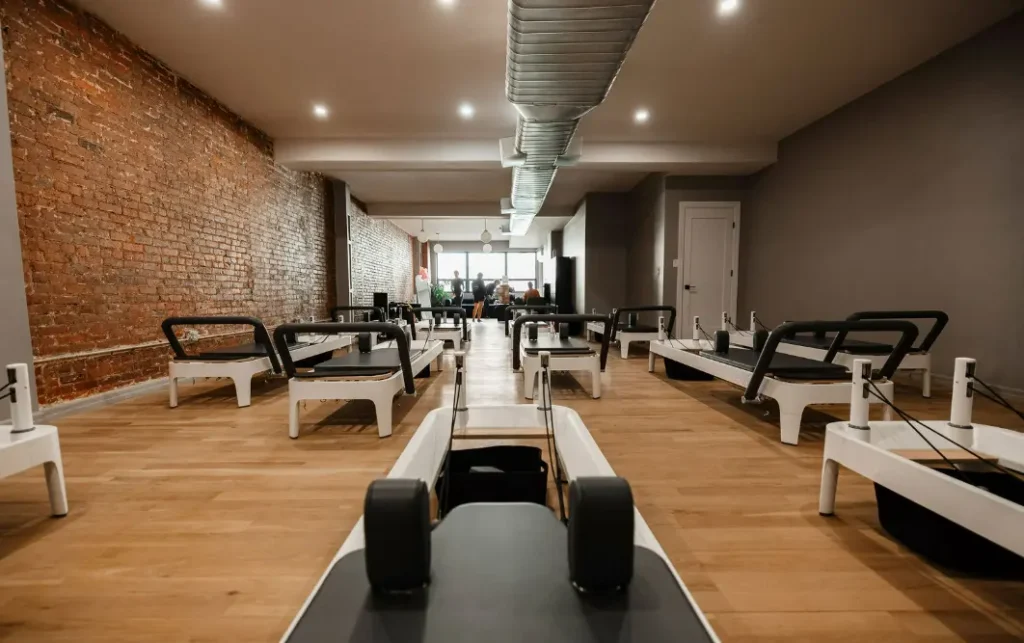
You’re lying down on a reformer machine, feet pressing into a padded platform. Instead of jumping up and down, you’re pushing away and returning – like a horizontal jump.
But within a few minutes, something shifts.
Your breathing deepens legs start working. Your core turns on almost automatically. And your heart rate rises not suddenly, but steadily.
That’s the magic of a jumpboard workout.
The reformer supports your body while adding resistance, which means your muscles are constantly engaged. At the same time, the movement stays smooth and controlled, making it completely different from traditional cardio.
At BK Pilates studios – whether you’re in Flatiron, NoMad, Chelsea, Park Slope, or South Brooklyn – this is often the moment clients realize: this feels different… in a good way.
“It’s one of those workouts where you don’t notice how hard you’re working until you stop,” says a BK Pilates instructor. “Your body is supported, but fully engaged the entire time.”
Is Jumpboard Pilates Really Cardio?
That’s a reasonable question, considering that if you have always related cardio exercise to jogging or aerobic training classes, you might think otherwise.
However, cardio exercise, in essence, is straightforward. It simply entails maintaining an elevated heart rate through constant motion.
That’s precisely what happens here. With jumpboard Pilates, you don’t abruptly stop and restart the motion as you would in HIIT training, nor do you repeatedly stress your body as you do while jogging.
That’s why many people are surprised by how effective it is as a Pilates cardio workout.
You’re not chasing exhaustion – you’re building endurance.
And interestingly, that often leads to better consistency. Which, in the long run, matters much more than any single intense workout.
Why Low-Impact Cardio Actually Works
It is generally assumed that if a training session does not feel difficult, it is likely not effective. However, this is not true since the human body does not operate on such terms.
Instead, it depends on the frequency of attendance, the quality of recovery, and the ability to continue without exhaustion.
This is where low impact cardio becomes incredibly powerful.
Because it’s gentler on your joints and nervous system, you’re far more likely to stay consistent. And consistency is what drives real results – whether that’s improving cardiovascular health, building stamina, or using a low impact exercise for weight loss.
According to the American Council on Exercise, moderate, sustainable cardio plays a key role in long-term fitness and fat loss – especially when it’s something you can actually maintain.
And that’s the difference: this isn’t about pushing harder. It’s about moving smarter.
What Makes Jumpboard So Effective
What makes jumpboard Pilates stand out is how much is happening beneath the surface.
The action flows smoothly, almost rhythmically – but you never stop working. Your heart keeps beating fast; your muscles remain contracted; and all the while your core holds you together.
Read more Why You Feel Sore After Pilates Even Without Heavy Weights
It’s also worth mentioning the lack of tension involved.
Your joints aren’t absorbing impact. Your spine stays supported. And instead of finishing the workout feeling depleted, you feel… balanced.
That’s why many people describe it as effective, but not exhausting.
And yes – you’re still able to burn calories with Pilates, especially when sessions are done consistently.
Jumpboard vs Running (And Traditional Cardio)
Running and high-intensity workouts absolutely have their place.
But they’re not the right fit for everyone – especially if your body is already dealing with stress, tightness, or past injuries.
Jumpboard Pilates offers a different approach.
Instead of repetitive impact, you get controlled resistance. Instead of loading your joints, you support them. But rather than separating strength training from cardiovascular exercise, you get the best of both worlds.
It’s a whole new way to move for those who have trouble with conventional workouts or need cardio for bad knees.
Not easier, just more intelligent.
Who Is Jumpboard Pilates Best For?
Jumpboarding Pilates has an effectiveness that will surprise most people as it is widely effective because of the fun aspect of jumping while working out.
Good news with Jumpboarding Pilates, especially for people new to fitness or needing help returning to an old fitness regimen!
At BK Pilates, many clients come in thinking they “don’t like cardio” – and leave realizing they just hadn’t found the right kind yet.
“I used to avoid cardio completely,” shares one client from the NoMad studio. “This is the first time it actually feels sustainable.”
What a Jumpboard Class Actually Feels Like
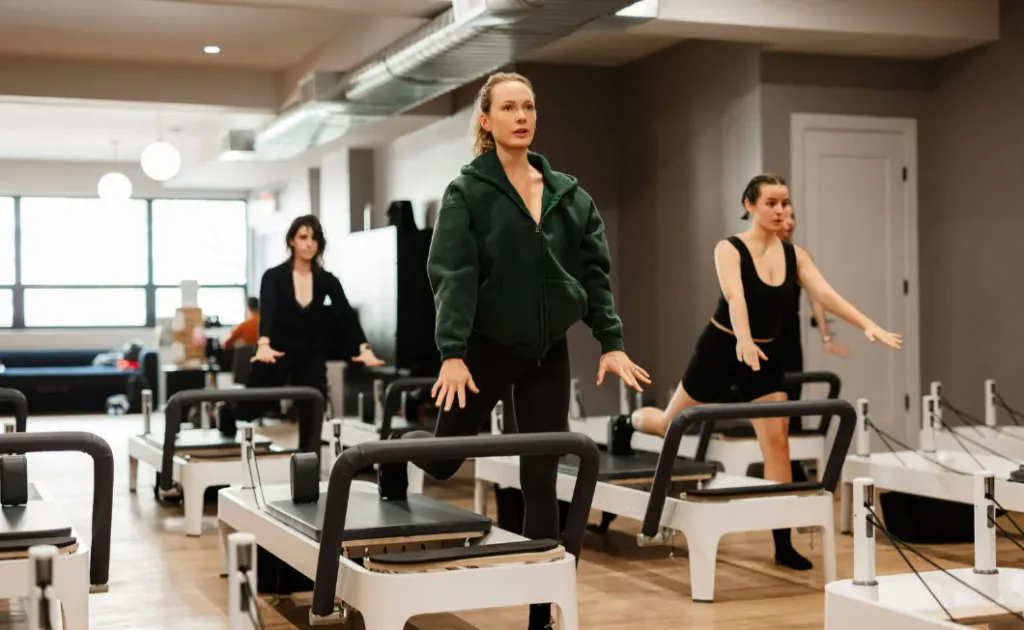
A jumpboard class doesn’t start with intensity. It builds into it.
You ease into the pace, finding the rhythm. The reformer dictates, the springs push back, your breath flows, finding its own time. And then, almost without noticing, you’re in it.
Your legs are working, core is active. Your heart rate is up. But you’re not overwhelmed.
There’s a sense of flow to it – something that’s hard to find in more traditional workouts.
It’s engaging, but not chaotic. Challenging, but not aggressive.
And that’s what makes the experience so different.
How Jumpboard Fits Into Your Pilates Routine
Jumpboard Pilates isn’t meant to replace everything else you do. It is part of the whole story.
In a balanced Pilates program, it will bring in the aspect of cardio into an otherwise strength-based workout.
On some days, you might just do strength-based work. Other days, adding a jumpboard brings in that dynamic, energizing layer.
This is the type of balance at which classes at BK Pilates operate. Your body will get what it requires without being overburdened.
The Bottom Line: Cardio That Works With Your Body, Not Against It
Traditionally, cardio training has always been about pushing yourself further, harder, and even enduring some discomfort. This doesn’t have to be the case, however.
Through Jumpboard Pilates, you can see cardio for what it should truly be – an activity that complements your body, enhances strength, and builds endurance. And last but not least, it will be something you won’t hesitate to return to.
That is because the best exercise routine is the one that can be sustained.
FAQ
Is jumpboard Pilates good for weight loss?
It can be, especially if you remain consistent with it. Jumpboard Pilates will enable you to maintain a higher heart rate by using major muscles. What actually does the trick, however, is that you will not feel tired when you engage in this workout, making it easier for you to return to it repeatedly.
Is jumpboard Pilates suitable for beginners?
Yes, this is actually one of the benefits. The exercises are instructed by the reformer, ensuring that you will not feel unsupported in building your muscles both strong and flexible. Cardio is typically known to be difficult for starters, whereas the Pilates classes are more accommodating.
But what if I have knee/back injuries?
It’s usually okay. It doesn’t put much pressure on joints as it is a low-impact exercise. However, it is still better to consult an instructor, who can modify the exercises if needed, especially in the studio environment such as BK Pilates.
How often should I do jumpboard Pilates?
Everyone can benefit from incorporating it into their fitness program 2 to 3 times weekly. It complements strength-oriented Pilates exercises very well.
Does it really count as cardio?
Yes, since heart rate goes up, it’s constant and the body works rhythmically. While it is less grueling than high-intensity interval training (HIIT), that is exactly why it is sustainable.
CTA
Curious how cardio can feel when it actually works with your body?
Try a jumpboard Pilates class at BK Pilates – in Flatiron, NoMad, Chelsea, Park Slope, or South Brooklyn – and experience a smarter, more sustainable way to move.