Short version: no, you don’t need a reformer to get real results from Pilates at home – but there’s a ceiling to what home practice can do, and it’s worth knowing where that ceiling is before you decide where to spend your time and money. This isn’t really a Pilates at home vs studio debate with one clear winner; if you’re still getting oriented on what Pilates actually involves, that’s worth a quick read before deciding either way. It’s a question of what you’re trying to get out of it.
What You Actually Get From Practicing at Home
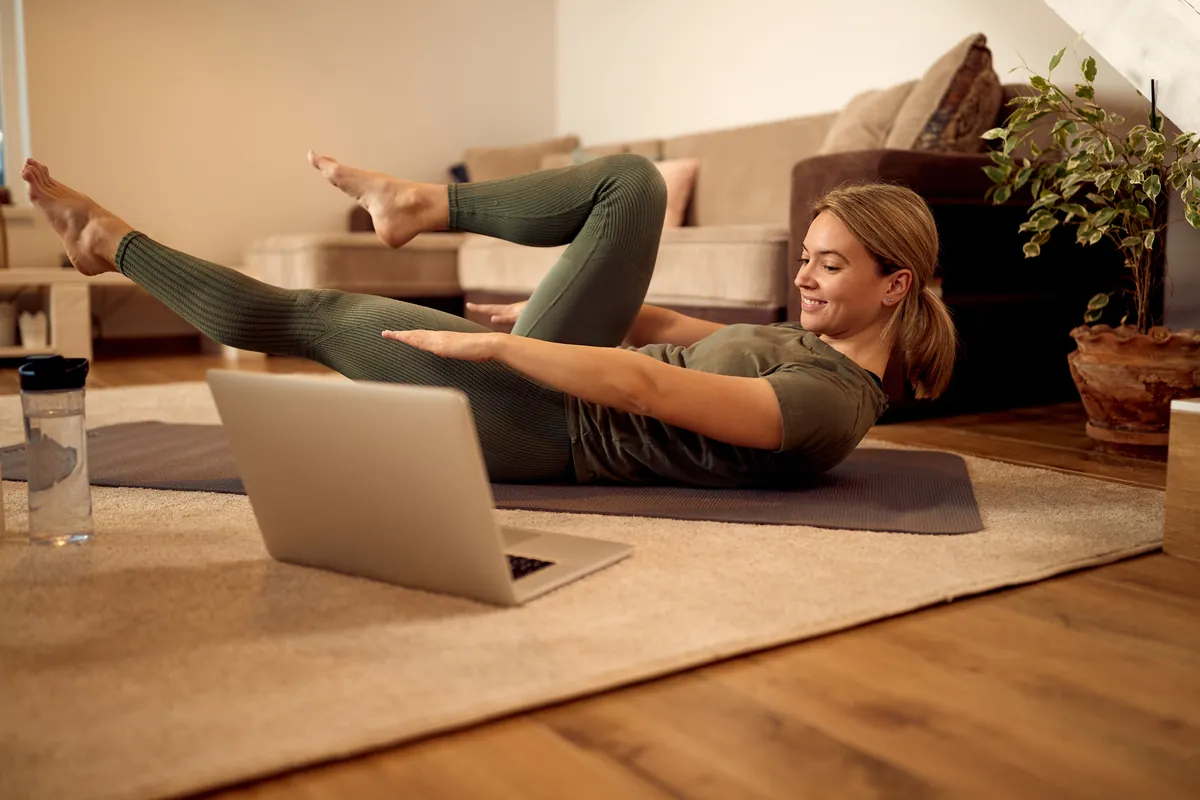
A Pilates workout at home, done consistently, builds real core strength, flexibility, and body awareness – the fundamentals don’t require a machine. Any solid Pilates at home workout using just a mat can cover the vast majority of classic Pilates exercises at home: the Hundred, Roll Up, planks, leg work, all of it. An at home Pilates workout like this is also just easier to stick with for a lot of people, since there’s no commute, no class schedule to work around, and no cost per session once you know what you’re doing. Home Pilates workout routines offer that same flexibility, minus the pressure to fit into anyone else’s calendar.
The real limitation is feedback. At home Pilates exercises rely entirely on your own sense of what “correct” feels like, and in the beginning, that sense is often wrong. A rounded lower back during a roll-up, hips that tilt during a leg lift – these are exactly the kind of small form errors that a mirror and your own judgment tend to miss, and that repeat for months without anyone catching them.
What a Realistic Home Routine Actually Looks Like
Concretely, a solid Pilates workout at home takes about 20 to 30 minutes: a few minutes of breathing and pelvic tilts to warm up, five or six core exercises like the Hundred, Roll Up, and Leg Circles, a couple of glute and hip moves like Bridge and Side Leg Lift, and a short stretch to finish. Done three times a week, that’s enough structure to build noticeable strength within a month – the trick is repeating the same core sequence consistently rather than chasing a new routine every session, which is where a lot of home Pilates workout attempts quietly fall apart.
A thirty-second phone video of your roll-up or bridge, watched back once a week, catches more form issues than months of guessing based on how a move feels. It’s not a replacement for an instructor’s eye, but it closes part of the feedback gap that makes home practice harder to self-correct.
What the Reformer Actually Adds
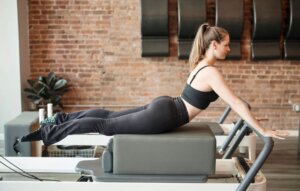
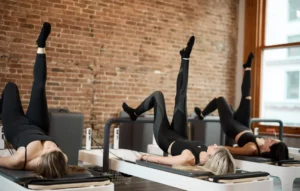
This is where Pilates workout at home for beginners specifically starts to hit a wall that more experienced practitioners don’t. The reformer’s spring resistance does two things a mat can’t: it adds load in a controlled, adjustable way, and it provides physical support through movements your body isn’t yet strong enough to control alone. Reformer Pilates for home use exists for exactly this reason – some people want that support and resistance without leaving the house.
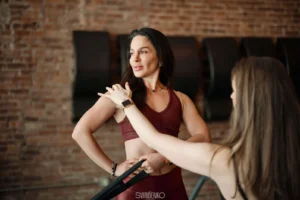
Home Pilates is fully capable of building strength. What it can’t easily replicate is an instructor watching your specific compensations in real time and adjusting a spring or your position mid-movement. That kind of feedback loop is hard to get from a video, no matter how good the instructor on screen is.
A few signs home practice alone has hit its ceiling:
- Progress has stalled for several weeks despite consistent practice
- You suspect a specific move feels “off” but can’t identify why
- You’re dealing with a real injury or chronic pain rather than general stiffness
- You’ve been doing the same handful of exercises for months without variation
None of these mean home practice failed – they just mean it’s solved the problem it’s good at solving, and a different kind of input is what’s missing now.
Is Reformer Pilates Worth It?
Depends entirely on your goals and your relationship with structure. Is reformer Pilates worth it if you’re already disciplined about home practice, know your form is solid, and just want variety? Maybe not – you might get more value from a few private sessions to check your form periodically instead of a full equipment investment. Is reformer Pilates worth it if you’re recovering from an injury, brand new to exercise generally, or someone who needs external structure to actually show up? Almost certainly yes – the guided resistance and studio environment solve exactly the problems home practice struggles with.
The Home Reformer Question
Pilates reformer at home is its own category worth addressing directly, since it sits between the two options above – if you want the deeper mechanics of how the equipment itself compares, our mat vs. reformer breakdown covers that separately. A home reformer Pilates setup gets you the spring resistance and support without the studio environment or instructor feedback, which solves one problem (equipment) while leaving the other (feedback) exactly where it was. Reformer at home also means a real financial and space commitment – a decent machine typically runs somewhere between $2,000 and $5,000 depending on the brand and features, takes up a permanent footprint in a room, and costs roughly what a year or two of studio classes would. That math only works out if you’re confident you’ll use it consistently for years, not just through an initial few months of motivation.
Reformer Pilates workout at home routines make the most sense for people who’ve already learned proper form in a studio setting and want to continue with equipment on their own schedule afterward, rather than as a starting point for someone brand new to pilates. Starting with reformer Pilates at home before you’ve had any instructor feedback means you’re teaching yourself a new movement pattern on a machine, with no one to tell you if you’re doing it wrong.
Which Situation Fits You
If you’re brand new to Pilates: Pilates for beginners at home is a fine way to explore whether you like it, but a few studio sessions early on – even just three or four – will save you months of practicing small form mistakes uncorrected. A Pilates workout at home for beginners without any initial guidance tends to plateau faster than one that started with a bit of instruction.
If you already know your form: Home Pilates workout sessions are enough for maintaining and building strength, especially if you occasionally check in with an instructor to catch anything that’s drifted.
If you have a specific goal or condition: Rehab, chronic pain, or a performance goal usually benefits from the reformer’s adjustability and an instructor’s eyes, at least until you understand exactly what your body needs.
The Practical Verdict
For most people, the answer isn’t home or studio – it’s home most of the time, with studio sessions used deliberately rather than as the default. That gets you the flexibility and low cost of home Pilates workout sessions plus the periodic feedback that catches problems before they become habits. If reformer workout at home appeals to you specifically for the equipment rather than the environment, renting time on a studio reformer before buying one is worth trying first – it’s a much smaller commitment than buying a machine you might not use consistently. And if calorie burn factors into your decision, our breakdown of mat vs. reformer calories shows the actual gap between the two.
Frequently Asked Questions
Can I get a full workout with just Pilates exercises at home? Yes – a well-structured mat routine covers strength, flexibility, and core work completely. What you lose is external feedback, not effectiveness.
Is it worth starting with reformer Pilates at home if I’ve never done Pilates before? Not usually. Learning form on a machine with no instructor feedback means mistakes get built into your movement pattern from day one – better to start in a studio, even briefly, first.
How much does home Pilates save compared to a studio? A mat and consistency cost close to nothing. A home reformer typically costs what a year or more of studio classes would, which only pays off if you’ll actually use it for years.
Should I switch entirely to home practice once I’ve learned proper form? Not necessarily – most people who stay strong long-term keep at least occasional studio sessions in the mix, even once they’re comfortable at home, simply because it’s easy to drift into small compensations without noticing over time.
Whether home practice, studio sessions, or some mix of both fits you depends on details a general answer can’t cover. If you want a second opinion on what makes sense for your specific situation, check our class schedule to try a studio session and see how it compares to what you’re already doing at home.