For many people today, work happens almost entirely in a chair. Whether it’s at the office or at home, being seated for an extended period has silently been incorporated into our lifestyle. The presence of screens seems to dominate our day. Meetings tend to blend into each other. Even physical movement seems limited to a walk between offices or stations.
With the passing of time, this way of working manifests in the body. Lower back pain, tight hips, sore shoulders, and a stiff neck become such a normal occurrence that people assume that this is just what happens when you reach adulthood. Even energy levels suffer – your body feels tired, yet not truly exercised. This is the reality for thousands of office-based professionals across NYC.
The good news is that your body isn’t “broken”. It’s responding logically to long periods of sitting. The right kind of movement can reverse much of this stress without requiring exhausting workouts or aggressive training. This is where the benefits of Pilates become especially relevant for people who sit all day.
At BK Pilates, we work with desk workers, creatives, developers, marketers, and entrepreneurs who want to feel better in their bodies – without pushing through pain or burnout.
Why Sitting All Day Affects Your Body
Sitting looks like doing nothing but it asks for steady work from the body. If you remain on a chair for hours, certain muscles stay shortened and others switch off completely. The hip flexors stiffen, the glutes stop firing plus the deep core muscles forget how to brace the spine. At the same time the head drifts toward the monitor adding load to the neck and upper back. A life spent mostly seated as a result ends in ache rather than rest. Research from the National Institutes of Health links long stretches of sitting to pain in the muscles but also joints, less freedom of movement and a slumped posture. Because the damage gathers a little at a time, many people do not feel it until the soreness or stiffness turns long term.
Movement that restores balance – rather than adding more stress – is essential. Pilates was designed with exactly this kind of intelligent correction in mind.
Pilates for Desk and Office Workers: How It Helps
Pilates doesn’t aim to exhaust the body. Instead, it retrains it to move efficiently. That’s what makes Pilates for desk workers and Pilates for office workers so effective.
Unlike training individual muscles, benefits of Pilates involves understanding how the body moves in concert. Pilates helps in improving the overall strength, flexibility, and coordination of the body. Moreover, it also strengthens the spinal column. People who lead a sedentary lifestyle will also have the effects of slouching corrected.
Below are some common problems associated with office work and how Pilates helps in resolving these problems:
| Common desk-job issue | How Pilates helps |
| Weak or inactive core | Re-engages deep stabilizing muscles |
| Tight hips from sitting | Restores length and controlled mobility |
| Rounded shoulders and posture | Improves alignment and body awareness |
| Low energy and stiffness | Enhances circulation and breathing |
This is why Pilates for a sedentary lifestyle isn’t about pushing harder – it’s about moving smarter.
Read more: Pilates vs Yoga: Whats the real difference
Key Benefits of Pilates for People With Desk Jobs
Better Posture and Alignment
The tendency to adopt slouched sitting is a result of an imbalanced muscle group, not some bad habit that needs correcting. This is due to the fact that while seated, the body is inclined to stretch forward, especially in your chest and shoulder areas, thereby weakening these supposed muscles to make you sit upright.
Pilates focuses on slow, controlled movements in order to strengthen those muscles, holding your spine in its most natural position. Enhancing your ability to recognize how you are positioned day-to-day is another component of Pilates.
With improved posture from Pilates, it will become less about the concept of “sitting up straight” and more about an effortless alignment.
Relief From Back, Neck, and Shoulder Pain
Back, neck, and shoulder pain is one of the common reasons why desk workers are turning to Pilates. In most cases, the pain occurs from repetitive strain or a muscle working over-exertedly in one area while the opposite muscle remains inactive, resulting in the rickety ability to stay upright.
With Pilates specifically regarding back pain caused by sitting for long periods of time, it aims to stabilize the spine by engaging the deep core instead of through compression or force on the spine. Additionally, it also aims to increase shoulder-and upper-back mobility, which directly relates to the deeper cause of neck pain, instead of just covering the symptoms.
Instructor Insight – BK Pilates
“Many desk workers are surprised by how safe Pilates feels. We prioritize support first, then gradually rebuild strength so the body can move without pain”.
Improved Mobility and Muscle Balance
Spending long hours sitting can create stiffness in the hips and decreased pelvic mobility. When this occurs, normal activities – walking, standing and even sleeping – can feel constricted.
The use of underused muscles and the release of tension in overworked areas help to bring balance back into the body through Pilates. For those with tight hips from sitting or weak cores from desk jobs, this middle-of-the-road approach offers a stabilizing, not restrictive, stability.
Stress Reduction and Mental Reset
Pilates isn’t only about physical alignment. Breath plays a central role in every movement. Coordinated breathing helps regulate the nervous system, which is why many clients experience noticeable Pilates stress relief after sessions.
For office workers navigating deadlines and screen fatigue, Pilates for office stress provides a mental reset as well as physical release. Many report better focus, improved sleep, and a calmer response to daily pressure.
Read more: Why Pilates Breathing is the Core of Your Workout
Reformer Pilates vs Mat Pilates for Desk Workers
Both mat and reformer Pilates offer value, but many people with desk jobs find reformer sessions especially supportive.
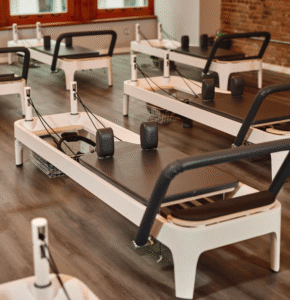
The reformer uses adjustable springs and guided movement to provide resistance and assistance at the same time. This makes reformer Pilates benefits particularly relevant for beginners or those returning to exercise after discomfort.
Reformer Pilates for desk workers allows:
- Controlled, supported movement
- Reduced joint strain
- Better feedback for posture and alignment
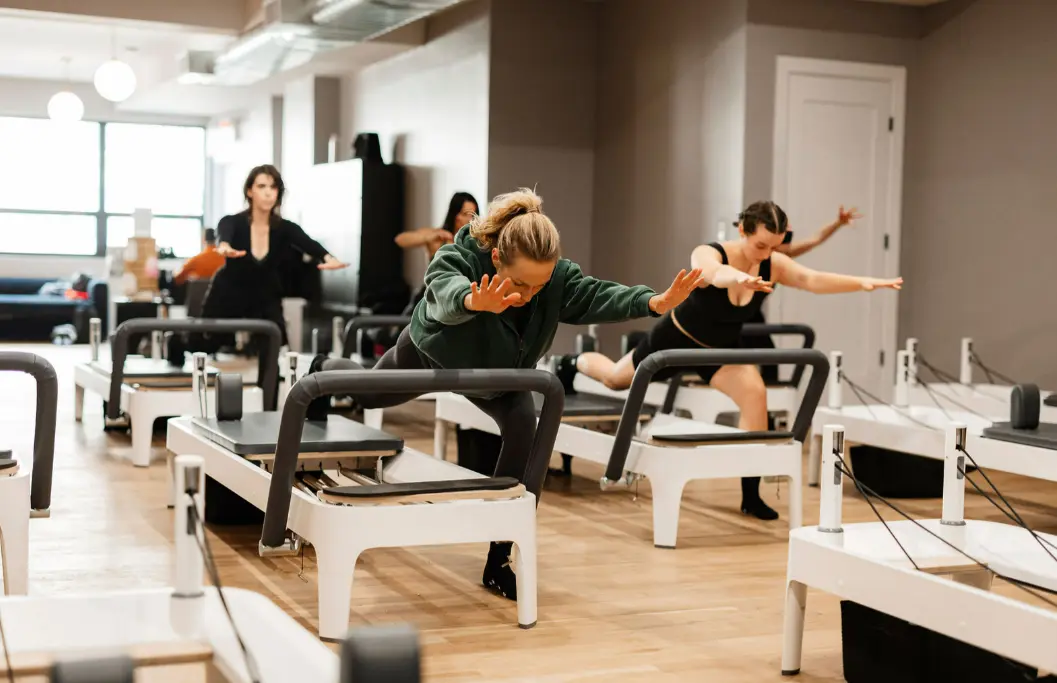
At BK Pilates, reformer classes are designed to meet the needs of modern, desk-bound bodies – stiff, tired, but ready to move better.
How Often Should Desk Workers Do Pilates?
The question that is most often posed is, “How many days a week should you perform Pilates to achieve results?” The answer is more a matter of consistency than intensity. To build the strength, mobility, and reduce the pain in their muscles that comes from sitting at a desk every day, people need to perform Pilates twice to three times a week. People would like to perform their Pilates daily. The answer becomes positive when trainers deliver proper guidance during sessions. These include carefully planned training programs.
Is Pilates Suitable for Beginners With Desk-Related Pain?
Absolutely. Pilates is a very friendly form of exercise that will allow people to learn how to do this technique. For people who are not able to move around so well, there might be some modifications in performing the routine exercise. The safety of Pilates for back pain patients depends on the quality of their instruction. The BK Pilates center offers sessions which focus on correct posture and personalized support to help people who doubt their physical abilities find success in Pilates.
What Clients Say About Benefits of Pilates at BK Pilates
“I work remotely and sit most of the day. Pilates helped relieve my back pain without exhausting me. I finally feel balanced again”.
– Anna, Brooklyn“Reformer Pilates at BK Pilates completely changed my posture. I feel taller and more comfortable at my desk”. – Daniel, Manhattan
Conclusion: Smarter Movement for Desk-Based Lives
Your body requires support, not punishment, if you sit all day at work. Pilates is one of the best exercising methods for people who have sedentary lifestyles, as many people who work at desks require benefits.
Pilates is an effective long-term fix for people with desk jobs to alleviate pain, improve body positioning, and create positive movement patterns. It is all about maximizing movement to make your body better for you than just relying on external exercise.
FAQ
Can Pilates help your posture if you sit in a chair all day?
Sure, Pilates will help make postural muscles stronger and bring more awareness to alignment because of the sustained seated posture.
Can Pilates reverse any or all of the bad effects of sitting?
Pilates reinflames your muscle systems and/or assists with non-of-the-hot-after-a-while stiffness that comes from sitting too much.
Is reformer Pilates driven especially for office workers?
Reformer Pilates is particularly good for many different types of office workers as you can use it for more support & more control over your movements.
Is Pilates a good whole body workout for people who are inactive?
Yes, it is a great workout for all the muscle groups without any risk of injury like other high-impact exercises and that makes it perfect namely for those who are sedentary.
What will Pilates do for someone who sits at a desk?
Pilates will improve strength, posture, mobility and overall movement quality.
Can Pilates help to loosen up tight hips from sitting all day?
Well, yes, Pilates uses controlled movement to restore your mobility and balance further more.
Your body deserves movement that supports – not overwhelms – it.
Discover how Pilates can help if you sit all day.
Book your first session at BK Pilates and start moving with ease.