Modern stress rarely looks dramatic.
It’s not panic attacks or obvious burnout. It’s waking up already tired. Tight shoulders before you’ve even checked your phone. A jaw you catch yourself clenching while answering emails. Especially in New York, where the body is almost never truly off duty.
Many people try to relax the “right” way. Meditation apps. Breathing techniques. Yoga classes. And still, something doesn’t land. The missing piece is usually not effort. It’s physiology.
Stress isn’t a mindset problem. It’s a nervous system state. When the nervous system is stuck in survival mode, stillness alone can feel impossible.
This is where Pilates for stress relief works differently. Not by asking your body to calm down – but by showing it how.
Why Stress Isn’t Just “In Your Head”
We tend to talk about stress as if it lives in our thoughts. But the body experiences it first.
When the nervous system senses pressure – deadlines, noise, emotional load – it activates the fight or flight response. Muscles subtly brace. Breathing shortens. Attention narrows.
The problem isn’t that this happens. Many would argue that stress would not completely be eliminated but, rather, simply rechanneled into another form of arousal. The ability to adjust from active to passive mode does not happen as seamlessly as it used to; therefore, the parasympathetic system that should allow the body to settle down is thrown off balance and can’t catch up to reestablish homeostasis.
This is why trying to tell yourself to relax can actually be counterproductive. The body doesn’t feel safe enough yet.
What Happens to Your Body When You’re Stressed
Chronic stress leaves physical traces.
You may notice:
- Shallow breathing that never quite slows
- A tight jaw you clench without thinking
- Shoulders that feel heavy or lifted
- Lower back discomfort
- Restlessness paired with exhaustion
- Having difficulty sleeping despite being tired
People often say stress lives in the body. What they usually mean is that the body keeps holding on – even when there’s no clear reason to.
Over time, this means
- Tension reinforces shallow breathing
- Shallow breathing signals danger
- The nervous system stays alert
Breaking that loop requires more than mental effort. It requires a physical experience of safety.
How Pilates Helps the Nervous System Reset
So – does Pilates help with stress?
Yes. But not because it “burns stress away.”
Pilates helps because it offers the nervous system something it understands: clear, steady information.
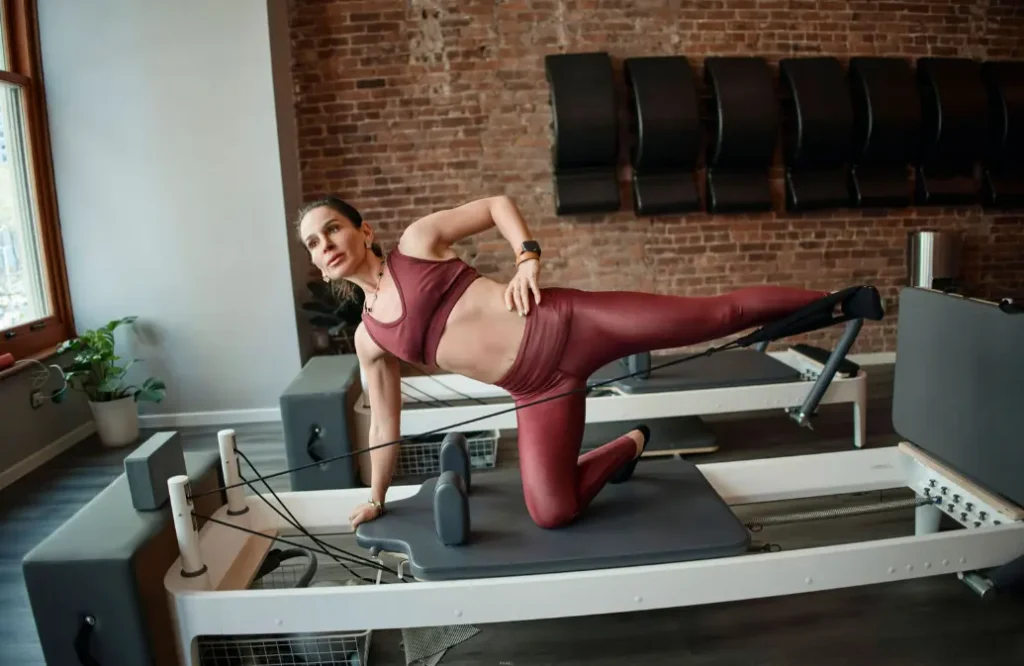
Controlled movement creates predictability. Predictability tells the nervous system that nothing sudden is about to happen. Breath adds rhythm. Rhythm builds trust.
In Pilates, nothing is hurried. There is a beginning, middle, and end to every movement. The body is taught that it can move without contracting.
With time, this helps regulate the nervous system in a very practical way:
- Muscles soften
- Breathing deepens without being forced
- Mental noise decreases because the body isn’t signaling danger anymore
This is why Pilates and stress relief are so closely connected. The calm doesn’t come from trying harder. It comes from doing less – more intentionally.
Breathwork + Movement: The Real Power Duo
Breathing on its own can be helpful. Movement can be very grounding in itself. The combination of them affects the nervous system response.
The Pilates breathing technique for relaxation involves slow and deep exhaling. This stimulates the vagus nerve in a gentle manner to enter the parasympathetic state.
When breath is paired with movement:
- The body has something to organize around
- The mind doesn’t need to “empty out”
- Calm becomes a physical experience, not an idea
For people who struggle with traditional breathwork, this combination often feels more accessible.
👉 Read more: Why Your Breath Changes Everything in Pilates
Pilates vs Other Stress Relief Methods
There is no good way to handle stress. No one’s nervous system reacts the same to any given stimulus. Yoga is very chill. Meditation increases awareness and concentration. Meditation is a struggle, especially for those whose nervous system is already overdriven. Pilates offers something slightly different.
Because it involves movement with structure, it helps regulate the body first. For many people dealing with anxiety, this makes Pilates for anxiety feel more supportive than methods that require immediate stillness.
It’s not about doing more. It’s about doing what your body can actually receive.
Best Pilates Exercises for Stress Relief
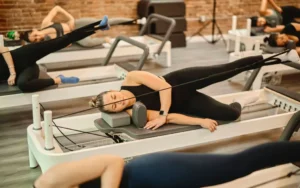
Stress relief doesn’t require complex choreography. A small number of well-chosen movements, done slowly and with attention, is often enough.
Breathing-Focused Movements
- Pelvic curls coordinated with exhale
- Supine arm movements with controlled breath
- Gentle rib expansion exercises
These help reconnect breath with movement and reduce shallow breathing patterns.
Core & Shoulder Tension Release
- Scapular mobility work
- Light abdominal engagement without gripping
- Controlled spinal rotation
Stress often lives in the shoulders and core. These movements release tension without overwhelming the system.
Mobility for Nervous System Reset
- Cat–cow variations
- Slow spinal articulation
- Gentle hip mobility
Mobility restores fluidity — something stressed nervous systems tend to lose.
👉 Read more: Is Pilates Beneficial for Seniors?
Gentle nervous system support matters at every stage of life.
Real Stories from the Studio
At BK Pilates, many clients arrive focused on physical goals and discover unexpected mental benefits.
“I came in because my neck and shoulders were constantly tight after work. I didn’t expect anything beyond that. But after a few weeks at BK Pilates Flatiron, I realized I wasn’t holding my breath all day anymore. My body just felt calmer — especially in the evenings.”
– Emily R., Flatiron
“I’ve tried meditation and yoga, but stillness actually made my anxiety worse. Pilates felt different. At BK Pilates NoMad, the movement gave my mind something to focus on without overwhelming me. I leave class feeling grounded, not drained.”
– Lauren M., NoMad
“Living in New York, I didn’t even notice how tense I was — it felt normal. After a few months at BK Pilates Park Slope, my sleep improved and I stopped waking up with a tight jaw. Nothing dramatic happened. My nervous system just… softened.”
– Samantha K., Park Slope
These changes aren’t instant. They’re gradual, cumulative, and deeply personal.
How Pilates Supports Stress Relief
| What’s happening in your body | What Pilates does | Why it matters |
| Shallow, rushed breathing | Slows the exhale and restores rhythm | Signals safety to the nervous system |
| Constant muscle tension | Encourages controlled, non-reactive movement | Muscles learn they don’t need to stay “on guard” |
| Nervous system stuck in fight or flight | Activates parasympathetic pathways | Supports recovery and sleep |
| Mental overwhelm | Brings attention back into the body | Reduces mental noise without forcing stillness |
| Difficulty relaxing | Creates structure and predictability | Calm becomes accessible, not forced |
FAQ:
Does Pilates really help with stress? Or is it just another workout?
This is usually the first question – and it’s a fair one. Pilates can help with stress because it’s regulating.It is slow enough for the nervous system to be aware of what is happening, and it is predictable enough for the nervous system to feel safe. For many it has taken an effort to realize that they feel good in class and feel good about leaving. This is often the first indication that something is awry.
How many times a week should I do Pilates to see results?
You don’t have to do Pilates every day. Most people can get away with that two or three times a week. The key is to be regular and consistent. Your nervous system is all about routine and will settle down when you follow a routine.
Is Pilates better for stress relief than yoga and meditation?
This will depend on what your nervous system is doing while you are still. Yoga and meditation are good stress-relieving activities. However, if your nervous system is crazy while you are sitting still, then Pilates is the best exercise for you. Pilates provides your nervous system with something to work with, and often, calm is more accessible. It’s not Pilates or yoga or meditation. It’s about choosing what your body can receive right now.
Read more about Pilates vs Yoga: What’s the Real Difference?Can Pilates help with anxiety, not just everyday stress?
Many people first come to Pilates because something in their body doesn’t feel right — constant tension, aches, or that heavy, worn-down feeling. What surprises them is what happens next. Alongside the physical changes, they often notice that their anxiety softens. It’s not something they expect or even look for at first. But over time, as movement becomes more familiar and breathing starts to slow down, the nervous system responds. Thoughts feel less urgent. The body stops bracing so hard. That’s usually why people stick with Pilates.
What type of Pilates is good for me if I am feeling stressed or overwhelmed?
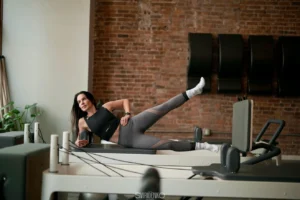
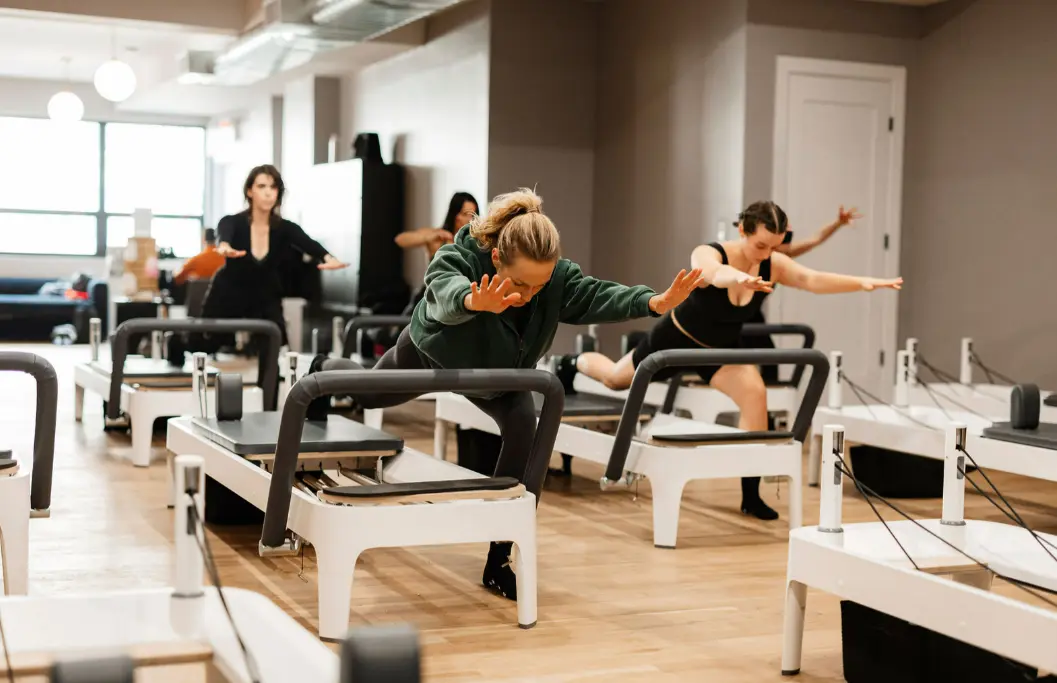
Slower is better. Classes that focus on breathing, control, and flow are going to be the most beneficial. Reformer Pilates can be very helpful because the equipment provides resistance, which can be very grounding for nervous systems. High-intensity formats are great – just not when your goal is stress relief.
Conclusion: When Calm Starts in the Body
Most people don’t need reminding to do that. What they need is a sense of safety in their body, a sense of security, and permission to let down the guard. Stress is in the breathing, the muscles, and the nervous system’s response to life.
Pilates is effective because it directly addresses stress at the same place in the body where stress resides – in the body – and changes the dialogue.
The nervous system, through mindful movement and breathing, realizes that it doesn’t have to be in a constant state of high alert. Not because you tried harder. But because your body finally got the right signals.
If stress has been quietly living in your shoulders, your breath, or your sleep, Pilates for stress relief can be a supportive place to start.
Your body doesn’t need to be pushed – it needs to be supported.
Experience how mindful Pilates movement can help your nervous system slow down and recover.
Join a BK Pilates class designed for calm, balance, and resilience.