What grabs attention when comparing pilates to the gym? Speed. People want results they can see – tighter abs, leaner hips, changes that show up fast. Progress measured by how clothes fit. Not numbers on paper.
Fewer folks pause to wonder – what shape might my body take one year from now, two, maybe five, if nothing changes?
If you’re curious about how Pilates and gym training change how your body looks, we break that down separately.
This article focuses on how your body functions and holds results over time.
Read more about body differences between Pilates and gym in our article
Many workouts change how your body looks short-term.
Fewer changes how your body works long-term.
If you’ve ever been stuck in the cycle of gym – pain – break – restart, or if you’re worried about injuries, posture, or maintaining results as life gets busier, this comparison of pilates vs gym is for you. This article isn’t about trends or “before & after” photos. It’s about sustainable body changes, long-term fitness results, and choosing a system you can actually live with.
Pilates vs Gym: What “Long-Term Body Changes” Really Mean
Before comparing pilates or gym, we need to redefine what long-term results truly are.
Long-term fitness results are not just muscle size or weight loss. They include:
- How efficiently your body moves
- Your posture and joint health
- Muscle balance and coordination
- The ability to maintain fitness results without pain or burnout
- How your body supports you in everyday life
Achieving fitness isn’t just how you look after weeks of effort – it shows up in what your body can do. Appearances fade when movement feels stiff, sore, or strained day after day.
Sustainable body changes are the ones you can maintain for years – not just during a motivated phase.
How Gym Training Changes Your Body Over Time
Training in the gym plays a big role nowadays in modern fitness, and for which it does a number of things well. Knowing what lifts can do – and where they fall short – shapes smarter moves ahead. Where it lands in your plan depends on that balance.
Strength and Muscular Growth: What the Gym Does Well
Most workouts at gyms aim to build bigger muscles or boost raw power. Progress often shows up through heavier weights lifted over time. Sometimes more reps become possible too. Gains are tracked using personal records set during lifts.
The gym may be great for people looking to develop their body muscles or achieve short-run goals. This is why pilates vs weight training is often framed as a debate between “toning” and “real strength.”
However, strength is more than load.
Why Gym Results Often Don’t Last Without Structure
Without a well-designed program, gym results can become hard to maintain:
- Muscle imbalances due to isolated training
- Increased injury risk from repetitive loading
- Joint stress and overtraining injuries
- Burnout from constant intensity
For example, one would need to increment the weight at all times to achieve the same outcome, which may not be an easy task if one is aging, has hectic schedules, or has injuries.
Those people who have been regular at the gym for many years will find it hard even to maintain their results.
How Pilates Changes Your Body Over Time
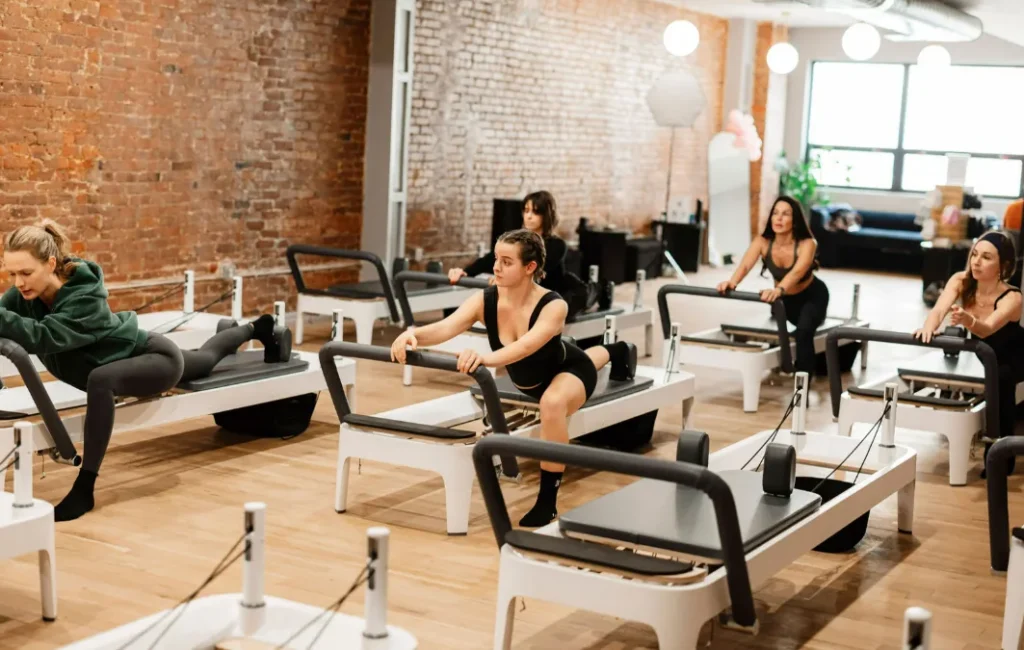
It has been a gym fad to try and change the body part by part, whether it is the stretches for the legs, shoulders or abs, sides, or whatever focus the workout is on. However, with Pilates, the focus is on the whole body system and the overall movement, and that’s a completely different approach.
Building Strength Through Control, Not Load
In the pilates vs strength training conversation, Pilates is often misunderstood as “easy.” In reality, Pilates develops strength through:
- Deep core activation
- Precision and control
- Alignment-based movement
- Progressive overload using resistance, leverage, and tempo
Rather than overpowering muscles, Pilates teaches them to work together efficiently.
“Real strength isn’t just about how much you lift — it’s about how well your body supports itself in motion,”
— Anna K., Senior Instructor at BK Pilates
Why Pilates Supports Sustainable Results
Pilates is particularly effective for long-term body changes because it focuses on:
- Low-impact strength training that protects joints
- Posture correction and spinal health
- Improved mobility and coordination
- Nervous system regulation
These factors allow people to train consistently — the most important ingredient for long-term results.
Learn more about posture-focused training in our article
Read more: Pilates for posture
Pilates vs Gym: Sustainability and Consistency
Consistency beats intensity every time.
A sustainable fitness routine is one you can realistically do 2–3 times a week for years, not weeks. This is where the difference between pilates vs gym becomes clear.
Pilates sessions tend to be:
- Easier to recover from
- Less taxing on joints and nervous system
- Adaptable to different life stages
That’s why many people return to Pilates after injuries, pregnancy, or long periods of sedentary work.
| Aspect | Pilates | Gym Training |
| Focus over time | Movement quality, control, alignment | Load, intensity, muscle output |
| Impact on joints | Low-impact strength training | Often high-impact or repetitive load |
| Injury risk long-term | Reduced through balance & mobility | Higher without structured programming |
| Ability to maintain results | High, even with 2–3 sessions/week | Requires constant progression |
| Effect on posture & mobility | Core focus, spinal alignment | Often secondary or ignored |
| Sustainability | Designed for long-term practice | Can lead to burnout if unmanaged |
| Best for | Pain-free strength, longevity | Short-term strength or muscle gain |
Which Is Better for Long-Term Body Changes?
There is no universal winner in the pilates or gym debate — only the right choice for your goals.
Choose the Gym If…
- Your main goal is muscle mass
- You enjoy high-intensity training
- You’re working toward short-term performance goals
- You have a structured, balanced program
Choose Pilates If…
- You want strength without bulk
- You value posture, mobility, and control
- You want pain-free movement
- You’re thinking long-term
If your concern is “Should I do pilates or gym?”, the answer lies in how you want your body to feel in the future, not just how it looks now.
Can You Combine Pilates and Gym for Better Long-Term Results?
Yes, when done intentionally.
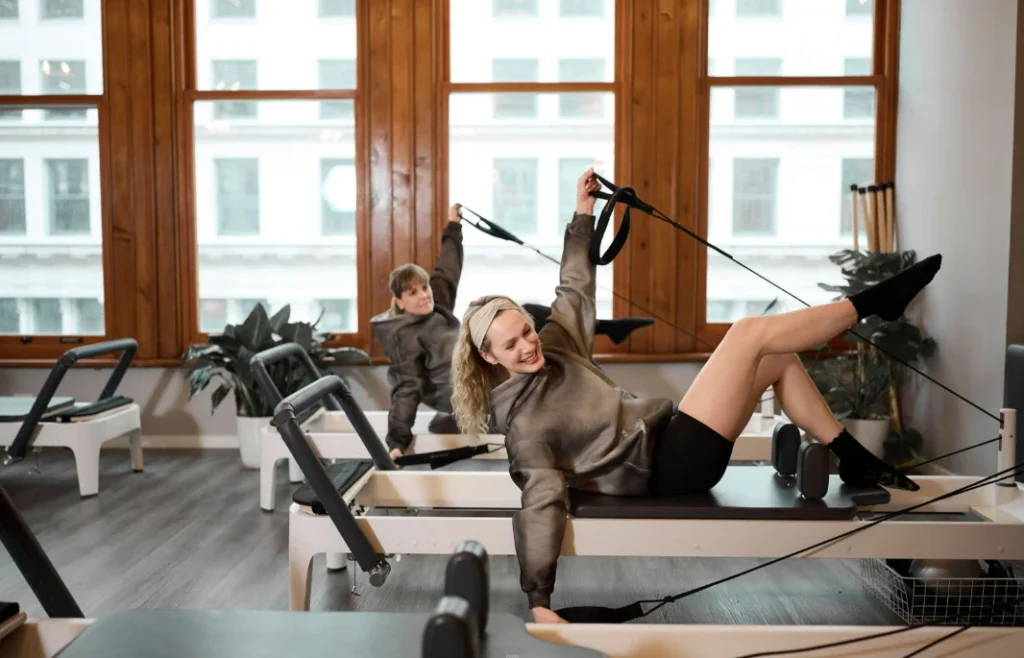
Many clients at BK Pilates use Pilates as their foundation, with gym training as an optional layer. This approach supports:
- Better movement mechanics
- Reduced injury risk
- Improved performance in weight training
In the pilates vs gym discussion, combination often delivers the most sustainable workout plan – as long as Pilates isn’t treated as an afterthought.
Pilates vs Gym: Common Myths About Long-Term Results
“Pilates isn’t real strength”
Pilates develops functional, transferable strength that supports daily life and other sports.
“The gym is the only way to change your body”
Body change depends on movement quality, consistency, and recovery — not just load.
According to research published by Harvard Health and Boston University, low-impact, alignment-focused training significantly improves long-term mobility and injury prevention.
Client Experiences at BK Pilates
“I trained at the gym for years. My back pain never went away. But after six months of Pilates, I feel stronger and more balanced than ever.” – Emily, 38
“Pilates helped me maintain fitness results without constantly pushing harder. My body feels younger.” – Daniel, 41
FAQ
Would I be losing strength by preferring Pilates over the gym?
No, in Pilates, control, resistance, and progressive levels of difficulty are how functional strength is developed. Especially in stabilizing muscles and core muscles that are not always developed at the gym.
Pilates might be a fit for lasting results – how does it stack up against regular gym workouts?
Pilates sticks around longer in the system compared to standard gym workouts when it comes to reshaping how the body moves. Changes in stance and ease of motion without discomfort show up more clearly over time. While typical routines fade fast, this method holds its ground through subtle shifts day by day. Body awareness grows quietly yet steadily week after week.
Can Pilates help me maintain my levels of fitness with aging?
Yes. Pilates routines are made to accommodate changing bodies and promote joint and balance functions that are essential for retaining results.
Do You Have Back or Joint Problems? How About Pilates or the Gym?
Although generally safer due to its low impact and alignment focus, it is important to seek personalized instruction.
Final Thoughts: Long-Term Results Require the Right System
The real difference in pilates vs gym isn’t effort – it’s design.
Gym workouts can build impressive short-term results. Pilates builds a body that lasts.
If your goal is a body that feels strong, balanced, and capable for years – Pilates is designed for that. Long-term fitness results don’t come from harder workouts – they come from smarter systems.
Ready to experience sustainable body changes?
At BK Pilates, we focus on long-term fitness results that support real life – not just short-term goals.