A tale of two mats
You’ve probably noticed it – some friends swear by yoga, others can’t stop talking about their Pilates classes. Both promise better posture, less stress, and a stronger, calmer you.
Both are powerful mind-body workouts that have reshaped the fitness scene – offering strength, flexibility, and calm for busy New Yorkers on the go. Whether you’re new and wondering “is pilates like yoga?”or “what is pilates vs yoga?”, or already comparing the two for your next class, this guide has you covered. At BK Pilates, we’ll help you figure out which path matches your vibe – whether you’re looking to power up physically or slow down mentally. Let’s take a look at the difference between pilates and yoga.
What Pilates is really about
Pilates is all about control – not chaos.
Created by Joseph Pilates more than a century ago, it was designed to rebuild strength and mobility in recovering soldiers.
Today, it’s become a must-try for anyone living the busy NYC life – especially here in BK Pilates, where long hours at the desk are part of the routine.
Unlike high-impact workouts, Pilates moves are slow, focused, and intentional. Every exercise starts from your core – your “powerhouse” – that magical zone of abs, glutes, hips, and lower back that supports everything you do.
The beauty of Pilates? It fits you where you are. Every move can be adjusted, whether you’re recovering from an injury or pursuing a more challenging challenge.
As Joseph Pilates famously said,
“Physical fitness is the first requisite of happiness.”
At BK Pilates, we see that truth every day – clients walk in tired and leave taller, lighter, and stronger.
And what about yoga?
Yoga is where movement meets mindfulness.
It’s an ancient practice from India that’s now part of daily life in New York — especially here in BK Pilates, where people rush from subway to studio just to catch a moment of calm.
When you sit in meditation, yoga gives you the opportunity to breathe and relax. It builds flexibility, balance, and calm, but it also softens the edges – the tension in your shoulders, the tightness behind your breath, the rush you carry from one thing to the next.
Regular practice can ease anxiety, improve sleep, and help the nervous system unwind. You don’t need fancy poses to feel the difference – just a mat, a bit of quiet, and the willingness to breathe.
Modern science agrees: studies shared by Cleveland Clinic show that yoga supports mental health, lowers stress hormones, and even improves heart function.
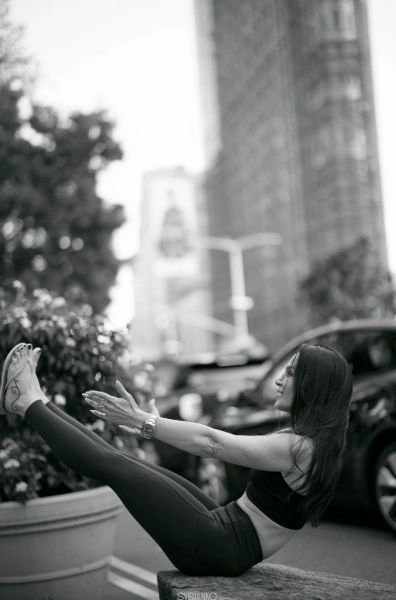
The key differences Pilates vs Yoga — at a glance
| Aspect | Pilates | Yoga |
| Main goal | Strength, posture, body awareness | Flexibility, balance, relaxation |
| Focus | Precision, control, muscle activation | Flow, mindfulness, presence |
| Equipment | Reformer machine, springs, mat | Mat, blocks, straps |
| Breathing | Lateral breath to activate core muscles | Deep belly breathing for relaxation and focus |
| Energy | More structured, athletic and physical | Often includes mindfulness or meditation |
| Results | Stronger posture, lean tone | Improved flexibility, stress relief |
How it feels in class
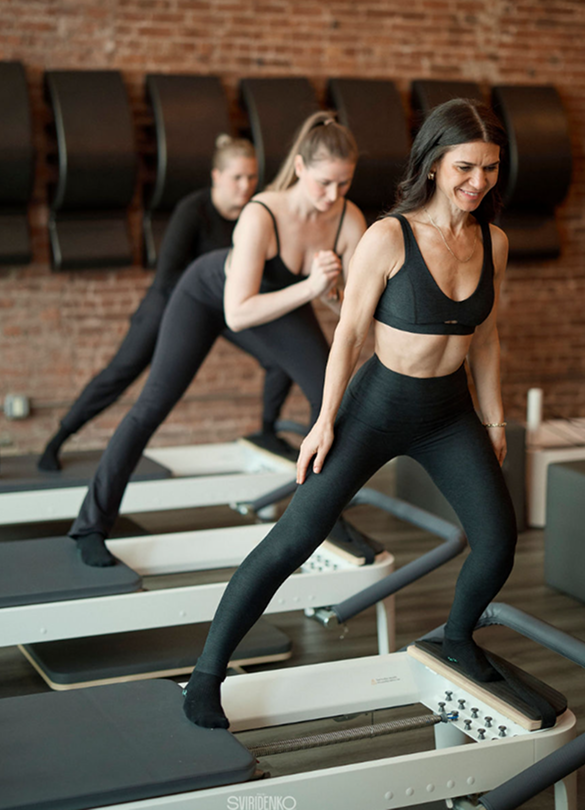
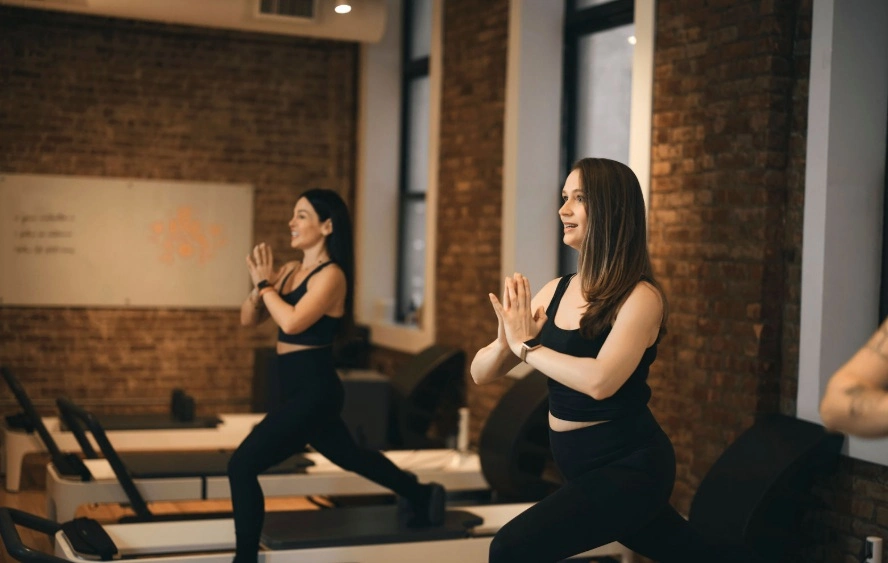
A pilates class feels focused and technical — your instructor will guide you through small, controlled movements. You’ll learn to stabilize your core before you move your limbs. Every inch matters.
A yoga class feels more like a flow. Movements follow your breath. You might hold poses, stretch, or sit quietly for a few moments of reflection.
Pilates vs yoda isn’t “harder” than the other — they just train your body and mind in different ways.
The benefits you’ll notice
Give it a few weeks, and your body starts to whisper thank you.
With Pilates, that thank-you feels deep — in your spine, your core, your posture. Movements that once felt stiff become easy again. You sit taller without thinking about it. Your back stops complaining after long hours at the desk. It’s quiet strength — the kind that supports you all day, even when you’re not working out.
Yoga delivers a different kind of transformation. It opens you up — literally and mentally. You leave class feeling stretched, steady, and centered.
As you practice, stress gives way to strength. It’s this core benefit that proves both disciplines are highly effective at honing balance, coordination, and body awareness. But together, they are pure harmony.
Pilates gives you structure. Yoga gives you space.
Together? They’re unbeatable — pilates gives precision, yoga adds flow, and your body thanks you for both. You can read more about breathing techniques in Pilates here.
What experts say
“Yoga has much more of a spiritual aspect to it, while Pilates is more about an approach to rehab,” says Dr. Goldfarb from Cleveland Clinic. “People come to Pilates often because of an injury — or because they want to prevent one.”
Real stories from BK Pilates students
“After eight weeks of reformer classes at BK Pilates, my lower back pain disappeared and I feel taller. The reformer changed how I move — I feel strong but light.”
— Sarah, BK Pilates client“I mix two Pilates classes with one yoga session each week. Pilates keeps my posture perfect, yoga helps me breathe again after long workdays.”
— Michael, BK Pilates member
Pilates or Yoga – which one should you choose?
Let’s be honest – you don’t really have to pick a side. Both Pilates and yoga do wonders for your body; they just speak slightly different languages. If your body feels tired and heavy – your shoulders up to your ears, your lower back always tight – start with Pilates. Let’s look at the difference between yoga and Pilates.
Choose Pilates If You Are Looking To:
- Focus on targeted core stability and functional strength.
- Rehabilitate or prevent chronic back and joint pain.
- Achieve a lean, toned physique using resistance from a reformer machine.
To understand more about how the reformer transforms your body, check out our detailed piece “The Benefits of Reformer Pilates”
Choose Yoga If You Are Looking To:
- Seriously boost your flexibility and make everyday movements feel easy and light.
- Use simple breathing and meditation techniques to switch off stress and quiet down the busy thoughts.
- Build a lasting balance where your physical health works in harmony with your inner peace.
The best answer to pilates or yoga is often “both.” Many athletes combine both to get the stability of pilates and the flexibility of yoga.
You can find pilates at BK Pilates Studio.
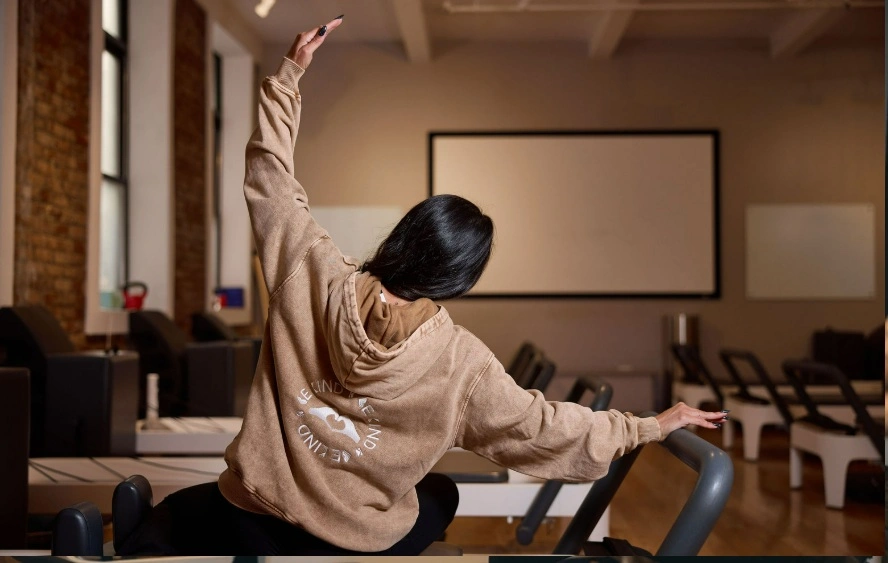
Your 8-week journey pilates vs yoga— simple, real, doable
Forget the strict “program” idea for — think of this as a rhythm your body can follow. Eight weeks to find strength, calm, and a routine that actually sticks.
Weeks 1–2 — Start slow, learn the basics
Try one reformer pilates class and one yoga session each week.
Spend time learning how to properly engage your core, master controlled breathing techniques, and start catching yourself when your posture slips — even when you’re just standing or sitting!
Weeks 3–4 — Solidify Your Routine
Add a second Pilates class if you can. This is when your body starts to understand what you’re asking from it — deeper core work, smoother movements, fewer aches.
Yoga stays gentle — think stretching, longer exhales, less noise in your head.
Weeks 5–6 — Find your flow
Now you can mix it up. Maybe a faster reformer session midweek, and a grounding yoga class on the weekend. You’ll notice more energy, better balance, maybe even a little confidence sneaking in.
You’re not just moving better — you’re feeling better.
Weeks 7–8 — Settle into your version of balance
By now, the routine feels natural. Your body trusts the movement; your mind trusts the quiet.
This is your foundation. From here, you can play — add intensity, try new classes, or simply keep this steady rhythm going.
No rush, no guilt, no “shoulds.”
Just a few hours a week to take care of the only home you’ve got — your body.
Should you encounter any specific difficulties with your routine, the instructors at BK Pilates are ready to step in.
FAQ — Quick Answers About Pilates vs Yoga
Is pilates better than yoga for beginners?
Not better. They are just different. As with yoga, pilates can be modified for easily adapted for any fitness level. So your choice depends on your individual goals.
Can I combine pilates vs yoga?
Absolutely. In fact, the two work beautifully together.
Pilates gives you strength and alignment. Yoga adds recovery, breath, and ease.
Try two Pilates reformer sessions a week and one yoga class to stretch, unwind, and reset.
That mix gives your body both structure and space — the best of both worlds.Do I need to be flexible for pilates?
No, you don’t need to be flexible. You just need an openness to new possibilities for your mind and new body transformation.
What will help me strengthen my deep core muscles faster?
Definitely pilates. It was designed specifically to centralize strength and stabilize the spine. Our reformer classes at BK Pilates provide the targeted resistance needed to quickly strengthen the “Powerhouse”.
What practice is best for stretching and flexibility?
Yoga uses long, static poses. They’re ideal for stretching connective tissue and muscles. Yoga is ideal for increasing passive flexibility and range of motion.
Will pilates help with my back pain?
Very often, yes. When done right, it teaches your body how to support itself.
A lot of people come to us after years of sitting at a desk or carrying stress in their lower back — and after a few weeks, things start to shift.
Final thoughts
You don’t have to pick sides. Pilates and yoga both build strong, aware, and resilient bodies — just in different ways.
Pilates gives you harmony and strength. Yoga offers openness and peace.
Yoga serves as your primary tool for flexibility, refining balance, and achieving deep stress reduction. Pilates helps fortify muscles and restore proper alignment.
No rush. No pressure. Just your body, your breath, and a bit of space to feel good again.
Your mind and body will thank you.