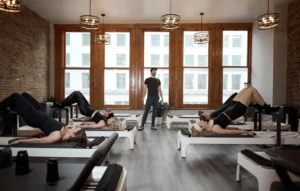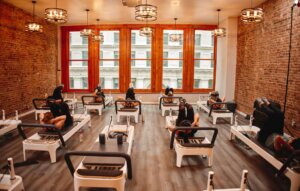
The before and after reformer Pilates photos are everywhere – flatter stomach, longer posture, more defined arms. The real question isn’t whether the results look good. It’s whether the machine is actually doing something different, or whether that’s just studio marketing. It does. But not for the reasons most studios advertise.
In this article you’ll find out exactly how reformer Pilates changes your body at the mechanical level, what realistic results look like on a timeline, and what separates people who transform from those who plateau after eight classes.
What Is Reformer Pilates and Why Does the Machine Matter
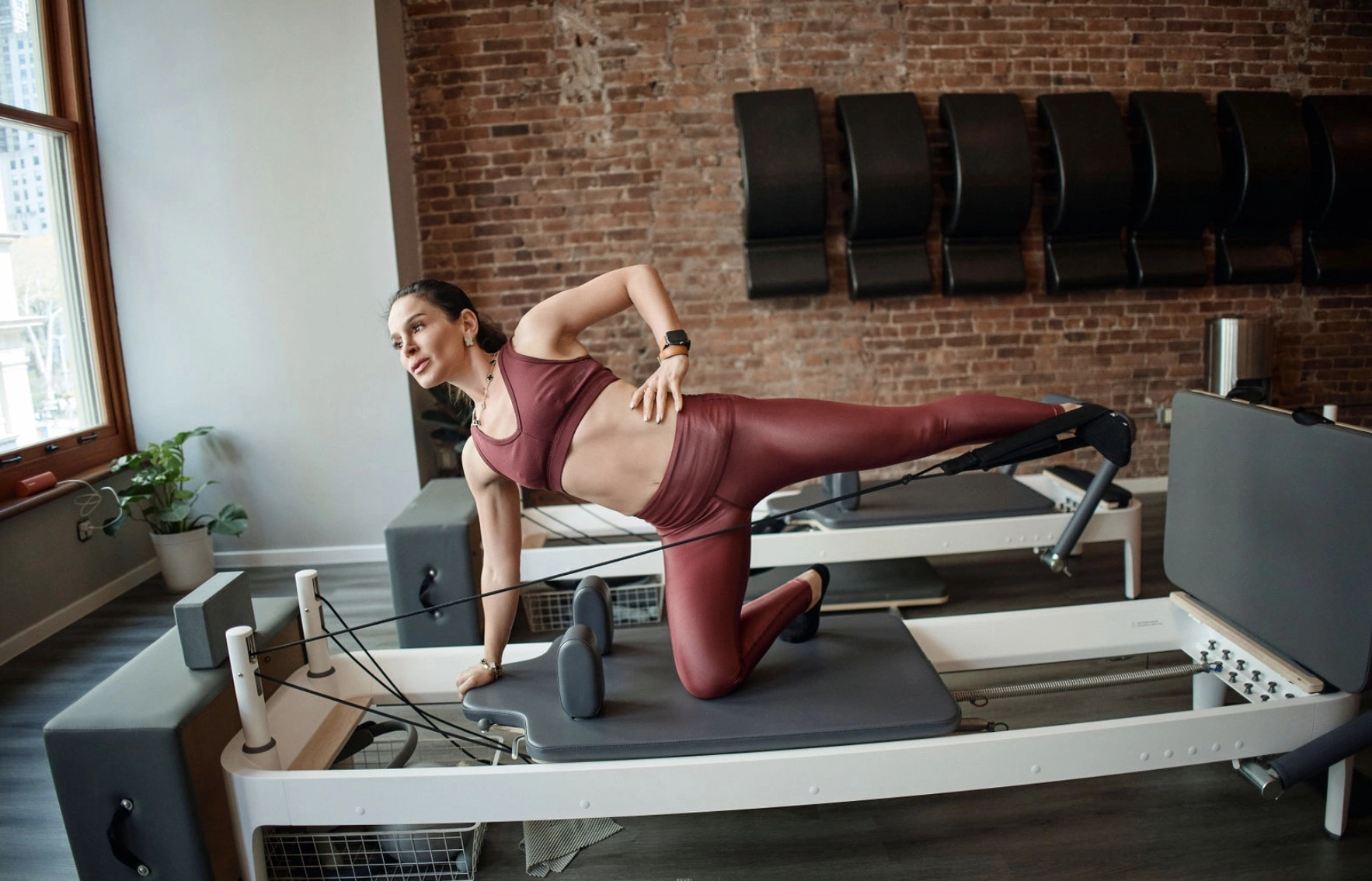
The reformer is a sliding carriage mounted on rails, controlled by a spring-resistance system. You push or pull the carriage with your legs, arms, or core – while the springs simultaneously resist and assist the movement depending on the direction.
That spring dynamic is what sets it apart. Unlike free weights that only create resistance in one phase of a movement, the reformer loads both the pushing and returning phase of every movement – including the eccentric phase that most gym equipment skips entirely. That’s the same principle used in tendon rehabilitation protocols. It’s not a coincidence that reformer Pilates started as rehabilitation equipment, not a fitness class.
The other factor: position variety. A single reformer session can move through supine, prone, kneeling, standing, and lateral positions – often within 45 minutes. That’s a neuromuscular challenge most gym machines simply can’t replicate.
How Reformer Pilates Changes Your Body: The Mechanics Behind the Transformation
Spring Resistance Creates Length and Strength Simultaneously
Most resistance training shortens the muscle under load. The reformer doesn’t. Because the spring tension decompresses the joints while the muscle works, you can strengthen without the compressive force that causes the “thick” muscular look people often try to avoid. That’s why reformer Pilates body transformation tends to produce a leaner, more elongated appearance rather than bulk – even when the workout is objectively hard. The Pilates reformer body changes differently than a body trained on machines or free weights: joints decompress, posture shifts, and the silhouette lengthens over time.
The Moving Carriage Forces Stabilizer Activation
The carriage is unstable by design. Every push-through on footwork, every long stretch, every arm pull – your stabilizers are working overtime just to keep your pelvis neutral and your spine aligned. Those are the small, deep muscles (think transverse abdominis, multifidus, rotator cuff) that most people never access in a conventional gym setting. Activating them consistently is what produces the visible core definition in reformer Pilates before and after results – and it’s the mechanism behind Pilates reformer body transformation that no amount of crunches or planks replicates.
The Body Can’t “Cheat” the Way It Does on the Mat
On a mat, if your hip flexors are dominant, they compensate. On the reformer, the carriage will tell on you immediately – it’ll shoot, wobble, or resist in a way that makes compensation impossible to ignore. That feedback loop forces proper muscle recruitment patterns. In practice terms: you’re not just doing more exercise, you’re doing it correctly, which is the actual prerequisite for transformation.
Reformer Pilates Results: What Changes and When
This is what typically happens – not the best-case scenario:
| Timeframe | What most people notice |
| Weeks 1–3 | Improved awareness of posture, reduced lower back tension, better sleep in some cases |
| Weeks 4–6 | Visible improvement in posture; core activation becomes more automatic; some reduction in bloating |
| Weeks 8–12 | Measurable changes in muscle tone, especially in core, glutes, and upper back; reformer Pilates before and after photos start showing real differences |
| 3–6 months | Full body recomposition for consistent practitioners; significant strength gains in stabilizer muscles |
The caveat that’s rarely mentioned: frequency matters more than intensity with reformer pilates. Two focused sessions per week outperforms one brutal class followed by five days off. The nervous system adaptation – learning to recruit the right muscles – is cumulative. You can’t compress it.
What Affects Your Reformer Pilates Transformation
Not everyone progresses on the same timeline. The variables that actually matter:
- Starting point – someone with poor body awareness and dormant stabilizers often sees faster visible change in the first 8 weeks than someone already fit, because there’s more room to improve
- Session frequency – 2–3x per week is the threshold for consistent reformer Pilates results; once a week maintains but rarely transforms
- Spring configuration – heavier isn’t better. Miscalibrated spring loads shift work to the wrong muscles. A good instructor changes your springs mid-class; if they never do, notice that.
- Instructor cueing quality – this is the biggest variable nobody talks about. The reformer only delivers results if you’re actually using the right muscles. Verbal and tactile cueing makes the difference between a workout and a transformation
- What you do outside class – walking, sleep, hydration, protein intake. The reformer creates the stimulus; the body rebuilds during recovery
How Does Reformer Pilates Change Your Body Compared to Mat Work
Both mat and reformer Pilates work. But they’re not equal for everyone.
The mat builds foundational body awareness and requires no equipment. The reformer amplifies the signal – it gives feedback the mat physically can’t. Research on populations with lower back pain consistently found that reformer-based programs produced faster symptom relief and functional improvement than mat-only programs. This isn’t surprising: the spring system allows movement in non-weight-bearing positions that the mat simply doesn’t offer.
In practice, the most effective Pilates transformation programs use both. Mat work teaches you to control your body without any support. The reformer takes that control and loads it. The combination produces the fastest results across all fitness levels. Practitioners who use both consistently describe Pilates reformer transformation as something that compounds – each mat session feeds the reformer work and vice versa.
That said, if you’re choosing between them purely for transformation speed – reformer Pilates gets you there faster, particularly for body composition and postural change.
Starting Reformer Pilates Classes: What to Know Before Session One
- Book an intro or private session first. Group reformer classes assume you know how to find neutral spine, work with straps, and manage spring changes. Without a foundation, your first few classes will be spent surviving rather than training.
- Wear fitted clothing. Not for aesthetics – so your instructor can see your alignment. Loose shorts make it impossible to spot whether your knee is tracking correctly or your hip is rotating.
- Wear grip socks. The footbar and carriage surface are slippery. Grip socks are standard in every reformer studio for a reason.
- Tell your instructor about injuries before class starts. The reformer is exceptional for working around injury – but only if the instructor knows what to modify. Lower back issues, shoulder impingement, knee problems – all of these have reformer-friendly alternatives.
- Don’t add speed to compensate. When an exercise feels hard, the instinct is to speed up. On the reformer, speed usually means the carriage is doing the work instead of your muscles. Slow is the mechanism.
- Plan for delayed onset muscle soreness after sessions 2–4. You’re recruiting muscles that haven’t been asked to work before. This is normal and usually fades by week three.
Before and After Reformer Pilates: What the Photos Don’t Show
The reformer Pilates before and after images circulating on Instagram tend to highlight the visual – posture, muscle definition, waist shape. What they don’t capture:
- The disappearance of chronic lower back pain that many practitioners report within 6–8 weeks
- Improved hip mobility that makes everyday movement feel easier
- Better breathing mechanics – the reformer’s spring system naturally teaches rib expansion and diaphragmatic control
- Stronger pelvic floor function (relevant for postpartum clients and anyone over 40)
- Reduced neck tension from learning to let the scapular stabilizers do their job
These functional changes are often more life-altering than the aesthetic ones – and they tend to happen first.
If You’re Ready to Start
If you’re looking for reformer Pilates classes, prioritize studios where class sizes stay under eight people (so the instructor can actually see you), and where instructors vary spring settings throughout the session rather than keeping the same configuration start to finish. Those two details separate a real reformer experience from one that just borrows the equipment.
Frequently asked questions:
How soon can you see Pilates reformer results? Most people notice postural and functional changes within 3–4 weeks. Visible body composition changes typically show in reformer Pilates before after comparisons at the 8–12 week mark with consistent training.
How many times a week should you do reformer Pilates? Two to three sessions per week is the effective range for body transformation. Once a week produces benefits but rarely drives significant reformer Pilates body transformation on its own.
Can beginners do reformer Pilates? Yes – the spring support system makes the reformer more accessible for beginners and people recovering from injury than mat work in some respects.
Find the Right Reformer Pilates Classes for Your Goals
The method works. What varies is the quality of instruction and how well the program is matched to your body. If you’re not sure where to start – or you’ve tried reformer Pilates classes before and didn’t see the results you expected – Book a class and we’ll work out what’s missing for your body specifically.
Try Reformer Pilates at BK Pilates in NYC
Put this into practice in a class at one of our five New York City studios: reformer Pilates in Flatiron, NoMad, Chelsea, Park Slope and Sheepshead Bay, Brooklyn. New to BK Pilates? Start with Camp Pilates: 7 days of unlimited classes for $89.