Why This Comparison Matters
If you’re going back and forth between reformer pilates vs. personal training, you aren’t the only one. So many people who come into BK Pilates have already invested in their health – they’ve had a personal trainer, followed programs, still feel stuck. Progress feels slow. Pain appears where it never used to be. Motivation drops.
This comparison matters because reformer pilates or personal training is not a question of “better or worse”. It’s about which model of individual training actually supports your body, goals, and lifestyle right now. Some bodies thrive on progressive load. Others need smarter movement first. Knowing the difference can save you time, money and avoidable stress – all while leaving you stronger, more aligned and feeling confident about your training decision.
Reformer Pilates vs Personal Training: Key Differences
What Reformer Pilates Is
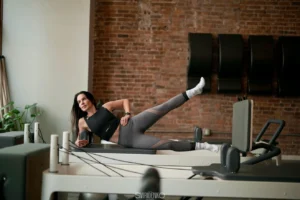
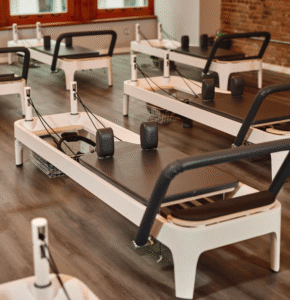
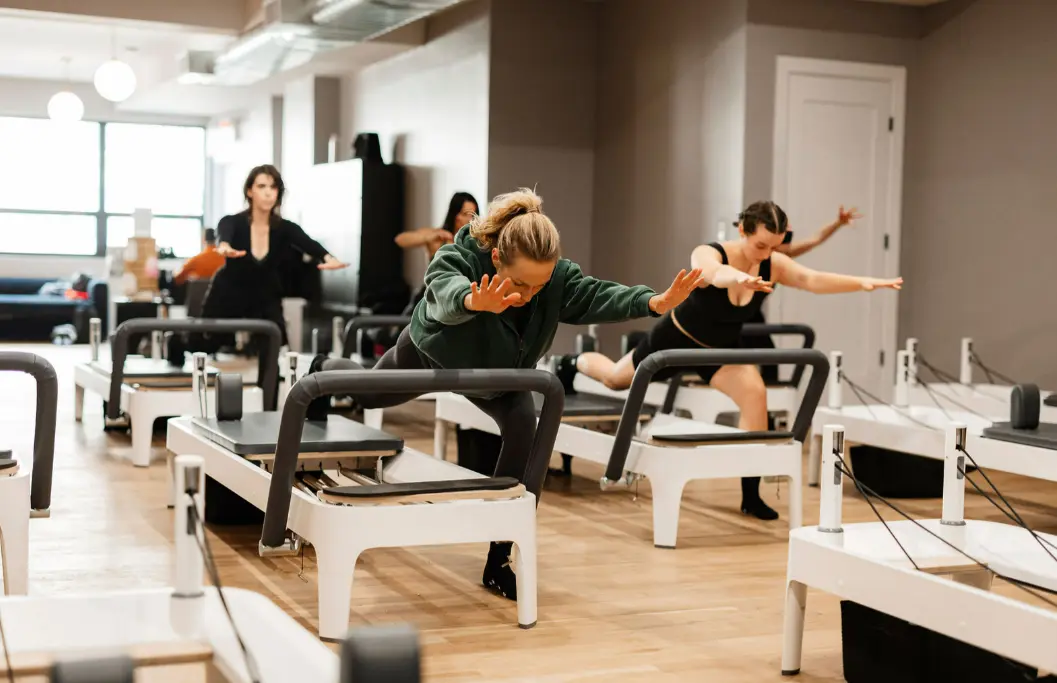
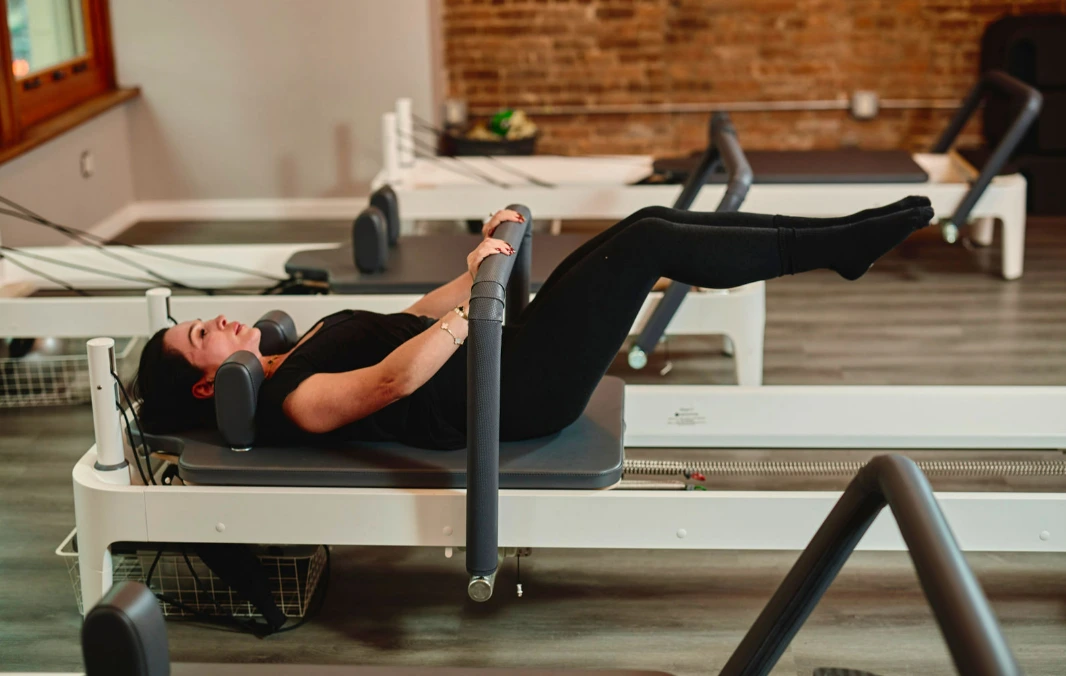
Reformer Pilates is a movement-based method of building strength that emphasizes control, alignment, breathing, and coordination. Resistance is generated through springs instead of gravity whereby muscles can be targeted deeply without causing too much joint stress.
Key characteristics of reformer Pilates include:
- Emphasis on movement quality over load
- Deep core and postural muscle engagement
- Controlled, low-impact resistance
- Highly individualized programming
- Guidance from a certified Pilates instructor trained in biomechanics
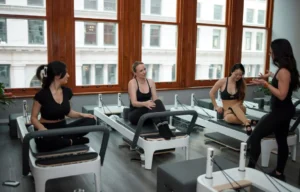
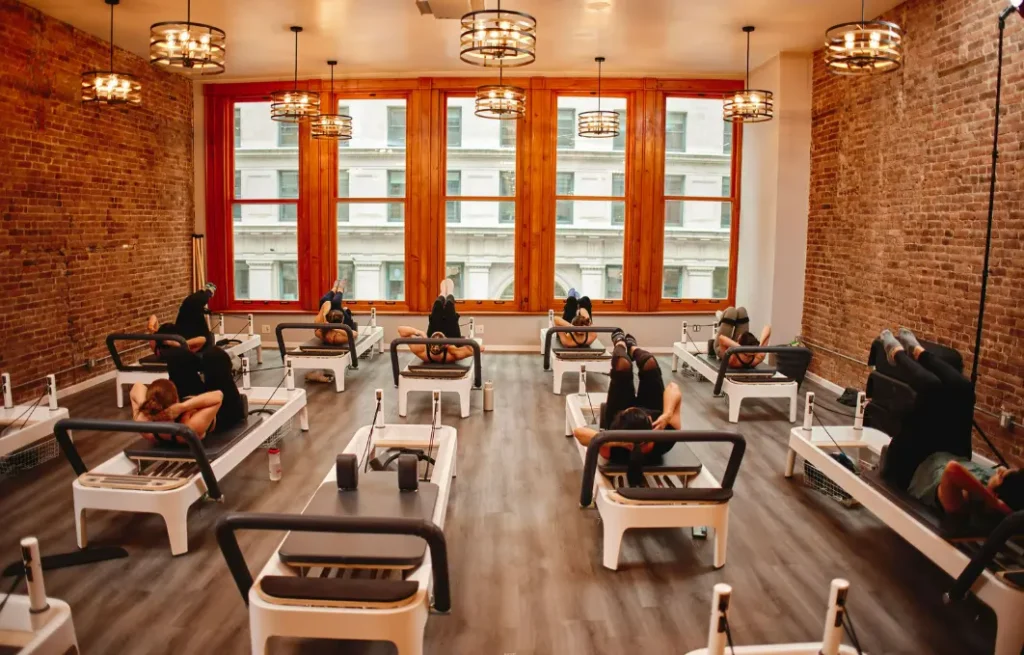
At BK Pilates, private and semi-private reformer sessions are designed to feel intentional and precise. Every movement has a purpose, and every session adapts to how your body feels that day.
“Reformer Pilates isn’t about doing less – it’s about doing smarter. We train the body to move efficiently, which is often what’s missing in traditional strength programs,”
– Instructor, BK Pilates
What Personal Training Is
In essence, personal training is done one-on-one, usually in a gym. The trainer typically uses machines, free weights, and bodyweight exercises throughout sessions, tailoring each exercise to the client’s goals. For some, that’s building strength. For others, it’s improving endurance or changing how their body looks. The structure tends to follow the goal, rather than a fixed method.
Common elements include:
- Progressive overload with external weights
- Broader exercise variety
- Performance-based tracking
- Higher physical intensity
Personal training does work – particularly when sessions are planned with care, rest isn’t treated as an afterthought, and progress follows what the body can actually handle, not what the program demands on paper.
How They Compare: Results, Goals, and Benefits
Strength and Muscle Development
When Pilates and strength training get compared, the conversation often starts in the wrong place. The real difference isn’t about building strength versus not building it. It’s about the type of strength your body learns to depend on.
In a traditional personal training setup, the focus is usually clear: lift heavier, push harder, chase visible muscle and measurable output. Reformer Pilates moves in another direction. Strength develops through control, coordination, and the ability to stay stable while the body is under load. Smaller stabilizing muscles don’t get skipped – they’re trained alongside the bigger ones, which helps protect the joints instead of constantly testing their limits.
That’s why first-time Pilates clients often walk out a little stunned. Although the exercise may not appear strenuous on the surface, it may be surprisingly difficult to maintain balance, maintain accuracy, and regulate every aspect of the movement – sometimes even more so than lifting greater weights one muscle group at a time.
Posture, Mobility, and Movement Quality
This is often where the difference becomes obvious.
Poor posture and limited mobility don’t usually stop people from training – they just quietly limit how well that training works. Over time, compensations build, movement patterns become less efficient, and progress slows. Reformer Pilates addresses these issues at the root, helping the body move better before asking it to do more.
Read more: Pilates for Posture
Injury Prevention and Long-Term Health
One of the most common reasons people search for personal training alternatives is injury – or fear of it.
Reformer Pilates is known for:
- Low-impact resistance
- Joint-friendly loading
- Controlled movement patterns
- Strong rehabilitative benefits
Organizations like the American Council on Exercise consistently point out that when resistance training is done with control and proper alignment, the risk of injury drops – and people are far more likely to stick with their routine over time.
Weight Loss and Body Composition
Sooner or later, the question comes up: is reformer Pilates actually worth it for weight loss? And the most honest answer is that it depends on what someone is hoping will change.
If people are committed, both personal training and Pilates can aid in weight loss. Calorie balance is more important than the kind of exercise you do, and your food is still the most important element. More toned muscles, improved posture, and more efficient movement are common outcomes of reformer Pilates. Higher-intensity personal training sessions may improve the amount of calories burned in real time.
The issue is that long-term outcomes aren’t always correlated with short-term intensity. Real transformation usually results from routines that people can truly keep to. Consistency often has a greater impact on body composition than increasing intensity for a few weeks, and many people find Pilates more bearable with time.
Who Benefits Most From Each Approach
Best for Beginners
Reformer Pilates is ideal if you:
- Are new to structured exercise
- Want low-impact, guided movement
- Need to learn proper technique
- Feel intimidated by gym environments
Best for Strength Seekers
Personal training may be a better fit if you:
- Enjoy lifting heavy weights
- Want visible muscle growth
- Thrive on performance metrics
- Recover well from high-intensity training
Best for Injury or Pain History
Reformer Pilates is often recommended if you:
- Have back, hip, knee, or shoulder pain
- Are returning after injury
- Experience joint discomfort during gym workouts
- Want a more rehabilitative approach
Why Some People Struggle With Personal Training (And Blame Themselves)
Many BK Pilates clients come to us feeling discouraged – not because they didn’t try hard enough, but because their training didn’t match their body’s needs.
Common reasons personal training may stall progress:
- Poor movement patterns masked by strength
- Fatigue without proper recovery
- Compensations that lead to pain
- Too much intensity, not enough coordination
This doesn’t mean personal training is ineffective. It means that movement quality often needs to be addressed first – something reformer Pilates is uniquely designed to do.
What a Session Actually Feels Like: Reformer Pilates vs Personal Training
A Reformer Pilates Session
Before:
You feel focused, curious, maybe unsure how challenging it will be.
During:
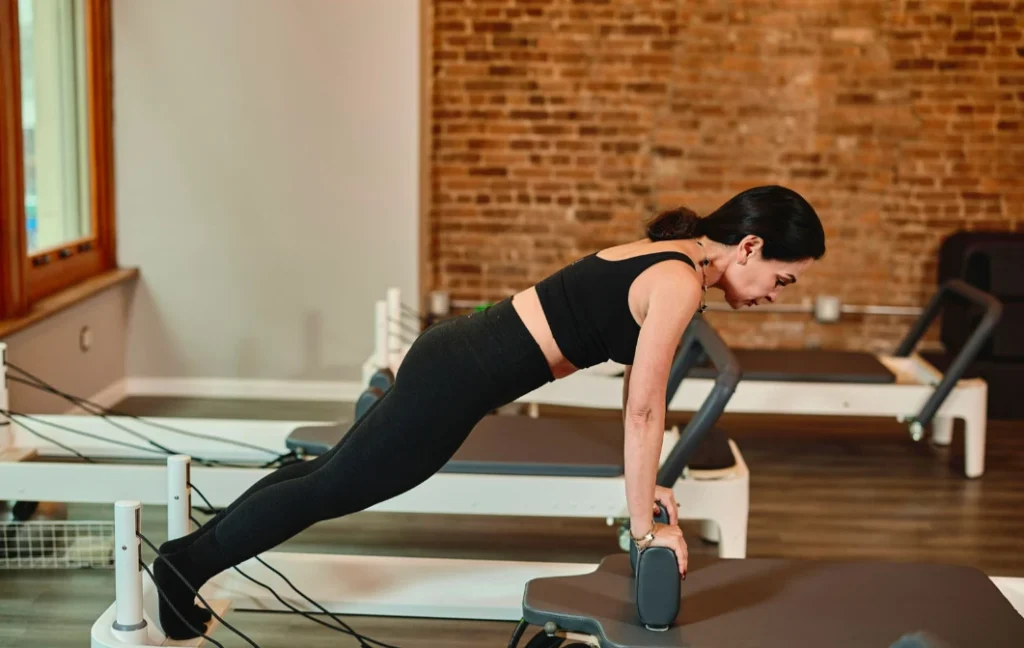
Every movement requires concentration. Muscles you didn’t know you had start working. Breathing matters. Small adjustments make big differences.
After:
You feel taller, lighter, and deeply worked – not exhausted, but energized.
A Personal Training Session
Before:
You’re mentally preparing to push hard.
During:
You focus on reps, sets, and effort. Muscles burn. Heart rate rises.
After:
You feel tired, accomplished, sometimes sore – depending on recovery.
Neither experience is “better.” They’re simply different.
Cost Comparison and Time Investment
With reformer Pilates, you’re investing in:
- Attention per repetition
- Joint health and longevity
- Movement education
- Long-term consistency
With personal training, you’re investing in:
- Load progression
- Performance benchmarks
- Physical intensity
| Factor | Reformer Pilates | Personal Training |
| Injury risk | Lower | Higher (depends) |
| Recovery demand | Moderate | High |
| Long-term adherence | High | Medium |
This context often reframes questions like is reformer pilates worth the money or is personal training worth it.
Frequently Asked Questions
Can reformer pilates replace personal training?
Sure it can for some people. It’s even truer for those with a few specific goals: posture, mobility, and sustainable strength.
Is reformer pilates better than personal training for women over thirty?
More often than not, the answer is yes. Hormones, joints, and the healing process are the new areas of focus – and Pilates will help a lot in these areas.
Can reformer pilates help break a fitness plateau?
Sure can! Perfecting and refining your movement patterns will naturally allow your body to work more efficiently and has the potential to deliver new breakthroughs.
Is reformer pilates good for men or athletes?
Whilst a Pilates instructor will have a deep understanding of anatomy, biomechanics, and various movement patterns, a personal trainer is generally more geared towards developing strength and fitness levels.
Who Reformer Pilates Is NOT Ideal For
Reformer Pilates may not be the best fit if:
- You want rapid muscle bulk only
- You dislike mindful, controlled movement
- You prioritize short-term aesthetics over long-term health
So What Actually Works?
The real answer to reformer pilates or personal training is this:
The right choice depends on your body, your goals, and your current needs.
Personal training builds power.
Reformer Pilates builds intelligent strength.
Both work – when used intentionally.
What We Recommend at BK Pilates
At BK Pilates, we don’t believe in one-size-fits-all training. Our private and semi-private reformer sessions are designed to help you move better, feel stronger, and stay consistent – without burning out.
If you’re curious which approach is right for you, we invite you to experience reformer Pilates in a supportive, expert-led environment.
Book a session at BK Pilates and discover what actually works for your body.