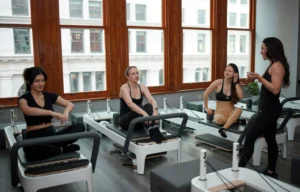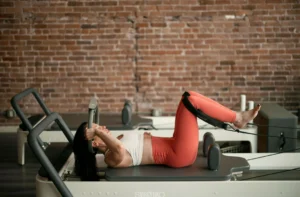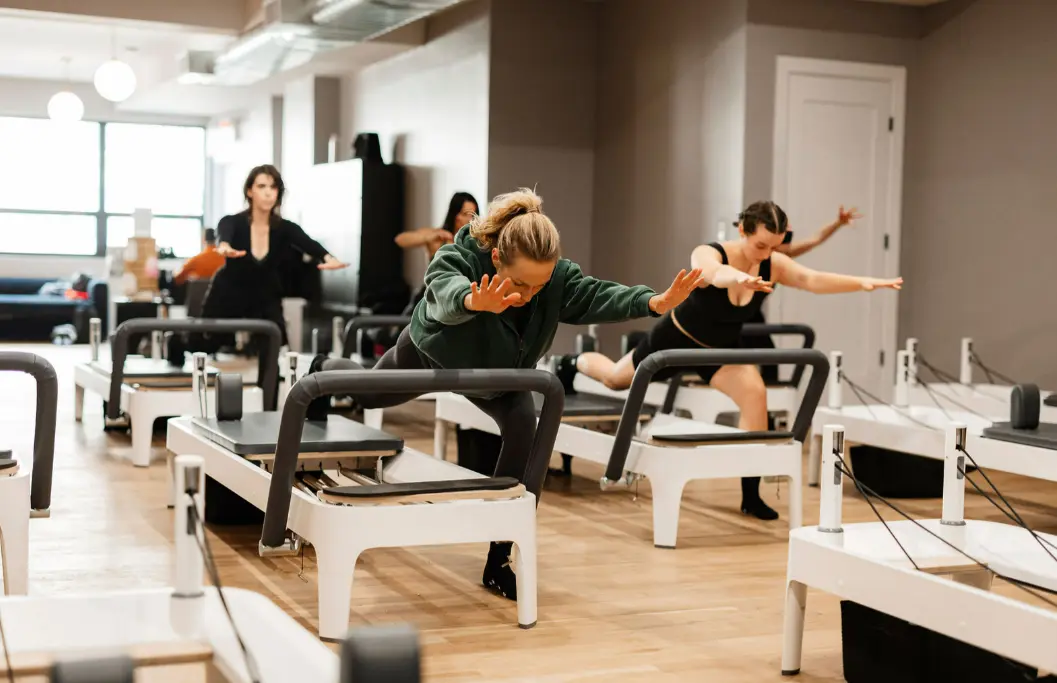
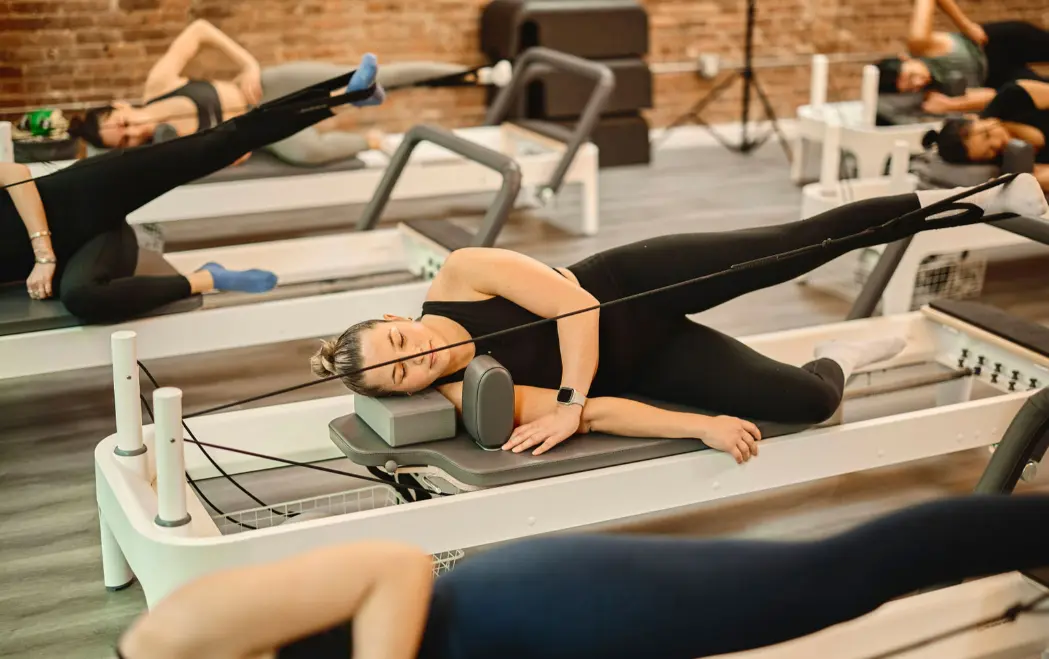
You finish your Pilates class feeling surprisingly calm. The movements were slow, controlled, almost gentle. Nothing like a heavy gym workout.
Then the next morning arrives.
You reach for your coffee, step out of bed, or walk down the subway stairs – and suddenly notice it. Your glutes feel tight. Your inner thighs are talking to you. Even small stabilizing muscles around your hips or ribs feel like they’ve been quietly working overtime.
So the question naturally comes up: why are you sore after Pilates when you didn’t lift heavy weights?
It’s something instructors at BK Pilates studios in Flatiron, NoMad, and Park Slope hear all the time. And the answer is actually one of the reasons Pilates works so well.
Instead of relying on heavy resistance, Pilates creates intensity through:
- slow, controlled movement
- deep muscle activation
- eccentric muscle work
- extended time under tension
When those muscles finally switch on, the body notices. Feeling a bit stiff afterward? Totally normal. Actually, it might just show your muscles are picking up better habits, one step at a time.
Read more How Often Should You Do Pilates?
Why Pilates Can Make You Sore Even Without Heavy Weights
Some think pain after exercise means you lifted something heavy. Yet Pilates proves effort isn’t always loud or obvious. Tiny movements, slow control – these too challenge what your body can do. Strength builds without clanging weights or grunting effort. What feels gentle might still leave you aching tomorrow.
The method relies on a few key mechanisms that make the workout more demanding than it appears.
Longer Time Under Tension
Pilates exercises are usually performed slowly and with control.
Read more about Mat Pilates vs Reformer Pilates
Instead of quick repetitions, movements often involve holding positions or moving gradually through a range of motion. This increases what trainers call time under tension – the amount of time a muscle stays activated.
When resistance stays low, extended effort still brings on clear tiredness in muscles.
Pilates might seem soft on the surface, yet bodies often protest afterward. Muscles speak up long after the session ends.
Eccentric Muscle Work
Muscle lengthening under tension plays a key role here instead.
This occurs when a muscle lengthens while still under tension – for example, when slowly lowering a leg or controlling the return phase of a movement on the reformer.
Studies show eccentric contractions are one of the main triggers of delayed onset muscle soreness because they create microscopic stress in muscle fibers. These small stresses stimulate the repair process that ultimately makes muscles stronger.
Deep Stabilizing Muscles Are Activated
Unlike many traditional workouts that focus on large muscle groups, Pilates strongly targets deep stabilizing muscles.
These include:
- deep core muscles
- hip stabilizers
- spinal support muscles
- pelvic stabilizers
Many of these muscles stay relatively inactive during daily activities – especially for people who spend long hours sitting at desks.
When Pilates finally activates them, the body notices.
Instructor Insight
“Pilates often surprises people because the challenge isn’t obvious while you’re doing it. But when deep stabilizing muscles start working, the body definitely feels it the next day.”
– Instructor, BK Pilates
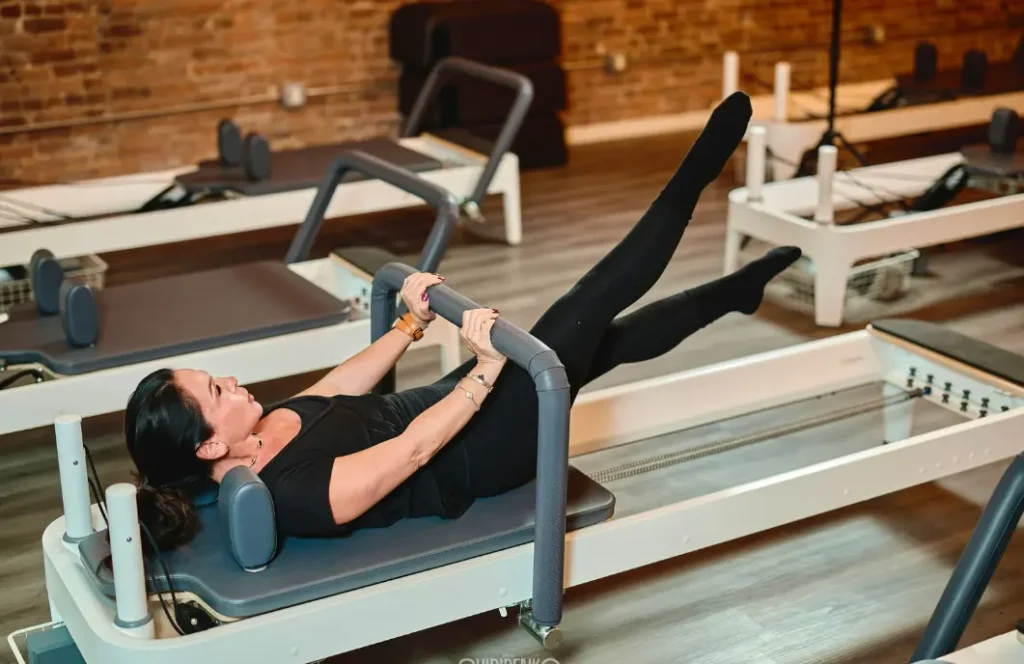
What Soreness After Pilates Usually Feels Like
Most Pilates soreness feels deep and muscular, rather than sharp or painful.
Clients often describe it as:
- tight glutes
- tender inner thighs
- mild fatigue in the deep core
- stiffness when walking or sitting down
The sensation typically appears the day after the workout, not during the class itself.
| Sensation | Normal Pilates Soreness | Possible Injury |
| Feeling | tight, dull, tired | sharp or stabbing |
| Timing | next day | during exercise |
| Location | muscles | joints |
| Duration | 1–3 days | worsening over time |
Most times when the ache seems deep in the muscle and fades slowly over days, that’s simply how the body responds to learning a different way of moving.
Why Glutes Often Feel Sore After Pilates
One of the most common things beginners notice is sore glutes after Pilates.
This occurs since the approach zeroes in on key muscles tied to pelvic control, particularly the gluteus medius.
Exercises such as:
- bridges
- side-lying leg work
- reformer footwork
activate these muscles more than many people expect.
In daily life (especially in a city like New York where many people sit for long periods) these stabilizers often become underused.
When Pilates activates them again, soreness the next day is very common.
Why Some Muscles Feel Sore Even If You Didn’t Notice Them During Class
Pilates has an interesting effect on the nervous system.
Instead of simply strengthening large muscles, the method improves neuromuscular coordination – the communication between the brain and muscles.
This means the body begins recruiting smaller stabilizing muscles that were previously inactive.
During class, these muscles may work quietly in the background. But the next morning, they can make themselves known.
So it happens that muscles ache afterward where you didn’t even know effort was going. Movement wakes up spots long ignored, quietly protesting later instead of during.
Beginners often feel more sore after pilates
When someone starts Pilates, their muscles begin learning moves they’ve never made before.
Muscles long left still might wake with just a bit of movement.
This is especially common among people who:
- work at desks
- sit for long periods
- have weak hip stabilizers
- are returning to exercise after a break
A handful of workout sessions later. People often find their muscles ache less. Sometimes it takes just three weeks before discomfort fades into background noise. Slight stiffness sticks around, yet sharp pain rarely shows up again. Most folks see changes without pushing too hard. A little time passes, then movement feels smoother than before.
What Helps Sore Muscles Recover After Pilates
Most times, the ache from Pilates fades fast. Soon enough, your body gets used to it.
Resting well helps muscles feel better. Yet movement each day keeps stiffness away. Water matters just as much as rest does. Eating foods with protein gives strength back slowly. Time moves fast when recovery feels smooth.
Gentle Movement
Walking gently gets blood moving while easing tightness in joints. A bit of motion each day keeps things flowing without strain. Moving a little breaks up stiffness before it settles in. Slow steps open pathways that stiff rest closes off.
A small stroll might loosen things up. Moving your joints through gentle motions helps too. Another light Pilates routine could speed recovery along. Some find rhythm in repetition. Relief often follows motion.
Hydration and Sleep
Rest is when muscles fix themselves.
Water helps your body bounce back when you move a lot. Rest gives it time to fix things while you’re still.
Light Stretching
Gentle stretching may reduce tightness in areas like the hips and glutes.
However, stretching should feel comfortable – aggressive stretching can actually make soreness worse.
How Long Pilates Soreness Usually Lasts
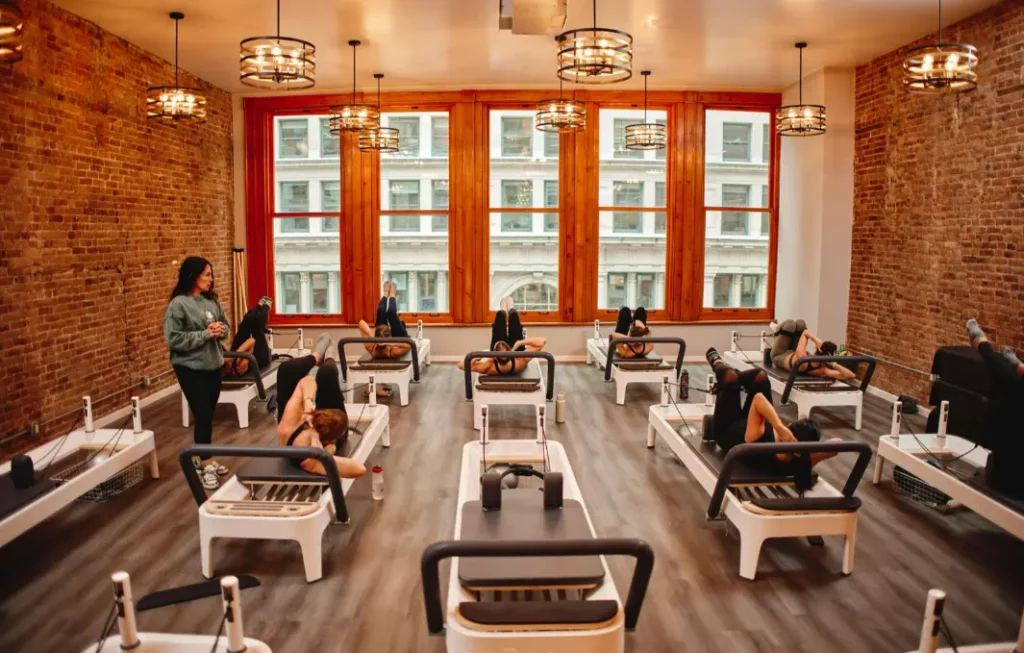
For most people, soreness after Pilates lasts between 24 and 72 hours.
The typical timeline looks like this:
| Time After Class | What Happens |
| 12–24 hours | soreness begins |
| 24–48 hours | peak stiffness |
| 48–72 hours | gradual improvement |
As the body adapts to Pilates training, soreness tends to become less noticeable.
Should You Work Out If Your Muscles Are Sore?
Mild soreness usually doesn’t mean you need to skip your next workout. Gentle movement often helps muscles recover faster.
However, it’s best to rest if soreness feels:
- sharp
- joint-related
- unusually intense
Listening to your body is always the best approach.
Why Some Pilates Clients in NYC Feel Sore at First
Lifestyle plays a big role here.
In New York, folks often sit too much – working at screens, stuck in conference rooms, riding trains for ages. Slowly, day after day, those habits take a quiet toll on key muscles near the pelvis and torso.
When someone begins taking reformer Pilates classes in NYC, those muscles finally start working again.
For new clients at BK Pilates studios in Flatiron, NoMad, Chelsea, and Park Slope, mild soreness often appears during the first few weeks. As strength and coordination improve, the body adapts quickly.
What BK Pilates Clients Say
Daniel, NoMad
“The soreness felt different from gym workouts – deeper, but more balanced across the body.”
Anna, Park Slope
“At first I noticed muscles I didn’t even know existed. Now those same areas feel much stronger.”
FAQ
Is it normal to be sore after Pilates?
True enough, a bit of soreness after Pilones happens often – especially at first. Since daily routines skip so many deep support muscles, it makes sense they’d protest when suddenly asked to work. Adjustment takes days, sometimes weeks, just like any shift in movement habits.
Why am I sore after my first reformer Pilates class?
That first ache after reformer sessions? It hits differently when quiet muscles finally wake up. Resistance moves slow but asks more than usual, especially those rarely tapped helpers around joints.
After Pilates, why are my glutes hurting?
Surprisingly, Pilates turns on muscles usually ignored in everyday workouts. On the floor, actions test the gluteus medius – vital for stable hips. Though small, this muscle gets pushed hard through slow shifts. While walking or standing does little for these fibers, controlled exercises spark engagement. Posture gets stronger when these overlooked parts start doing their job. Daily life ignores them, yet they hold alignment together behind the scenes.
Sore muscles following a Pilates session. How many days does that stick around?
One day to three is how long most aches stick around. Once your system adapts to Pilates. Sense tends to fade quite a bit.
Should I go to Pilates if my muscles are sore?
A soft touch usually brings no harm, yet gentle motion sometimes eases tension. When pain grows sharp or stiffness settles into the bones, rest may quietly become the wiser path. Stillness arrives without warning, changing what movement once promised.
Could feeling stiff show the exercise worked?
After a workout, pain can appear if the body isn’t familiar with the movements. Muscle discomfort often follows new routines. Unusual effort tends to leave its mark the next day. When activity changes suddenly, stiffness may follow. The body reacts when pushed beyond its usual limits. When doing Pilates, certain small support muscles start waking up after being quiet for too long.
Final Thoughts
Surprise aches post-Pilates? That happens. You might link discomfort only to lifting heavy loads, but movement depth counts too.
Funny thing is, it doesn’t operate like most expect. Shifting attention to accuracy instead of force, every motion demands quiet intensity – tight coordination wakes up fibers others miss.
Slowly, strength builds in the tiny muscles that hold things steady. With each motion, less effort is needed. Because of this change, workouts that used to leave you stiff start feeling fluid, almost automatic.
Pilates in New York City?
Movement takes shape slowly here, shaped by BK Pilates teachers who focus on precision. Each exercise targets the body’s inner support system, not just surface power. Strength grows from within, rooted in the core and those hidden stabilizers that hold everything together. Control defines every session, never rushed, always intentional.
Curious about smoother movement? Try a session at one of our New York City locations. See what shifts when Pilates reshapes your sense of motion.