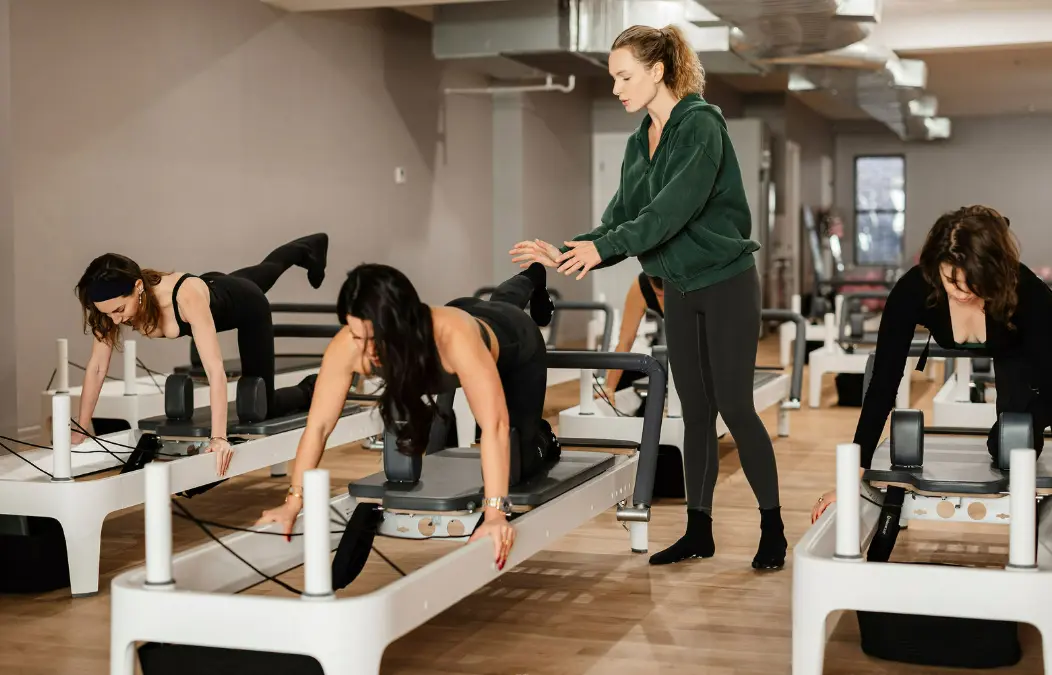

Usually, there is a dilemma confronted by most people aiming to get fit-the question of whether to spend their time doing Pilates or weight training. Some may feel that lifting weights is the only way to build real muscle and burn fat. Others are of the opinion that Pilates is the only thing his or her body needs to be sculpted and lengthened without ever having to worry about an injury. In reality, focusing on one and ignoring the other may lead to some form of imbalance. Weight training without active mobility could cause stiffness, poor posture, or back pains. On the other hand, reformer Pilates without resistance training would limit muscle growth, metabolism, and fat burning.
So, the resolution isn’t to choose Pilates versus strength training but to combine them. Together, these systems produce a body that is strong but lean and resilient. At BK Pilates, with locations in Flatiron, NoMad, and Park Slope, we work with clients of all levels across various programs that bring Pilates and strength training together. This article explores the science of the combination, its results on weight loss, posture, and back pain prevention, and some ideas on how to structure a week’s worth of workouts for you.
Why Combine Pilates and Strength Training?
Combining Pilates and strength training is more than just an approach to training. This combination gives you dramatically better results. The concept of Pilates activates deep muscle groups, while strength training in the gym engages a larger muscle group. Overall, this results in better performance with fewer injuries and long-term benefits.
According to another study of Harvard Health , resistance training improves bone density while it slows age-related muscle wasting. The Journal of Strength and Conditioning Research also states that incorporating flexibility and stability work (like Pilates for posture) into strength training improves mechanics of lifting and lessens the risk of overuse injuries.
When you combine Pilates and strength training, you achieve:
- Joint Protection Through Strengthening Muscles That Stabilize Loads
- Spine alignment and posture improvement
- More efficient calorie burn through muscle building
- Safer and more effective lifting technique
- Faster athletic performance gains
Clients frequently show up in our New York studios having hit a plateau in their gym workouts. Signing up for Pilates alongside weight lifting translates to more rapid gains and just easier movement on the street.
Pilates vs Strength Training — What’s the Difference?
What is Strength Training?
In strength training or simply weight training, resistance caused by dumbbells, kettlebells, resistance bands or bodyweight is utilized. The goals are as follows:
Build stronger, more defined muscles
Support long-term bone health
Help the body burn energy more efficiently
Develop better muscular endurance over time
Weight training builds long-term adaptations, whereas cardio mostly burns calories during the activity. It is mostly suggested weight loss and for general health because it increases the resting metabolic rate.
What is Pilates?
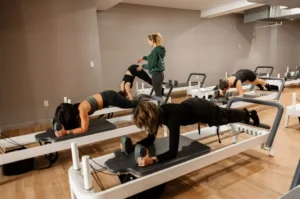
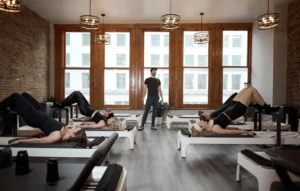
Pilates is a systematic exercise that helps strengthen the core muscles through movement and proper breathing. Pilates was created in the early 20th century, and since then it has acquired various modifications and subspecies. The two most popular are mat Pilates and reformer Pilates.
- Mat Pilates Taiwan uses gravity and body weight.
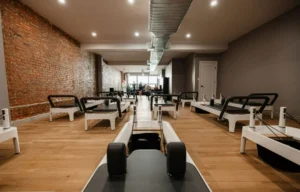
- Reformer Pilates, on the other hand, uses springs to achieve adjustable resistance, allowing one to make the springs firmer in just about any position.
Is Pilates strength training? That is often a question. Although Pilates works with resistance and seems to build strength, it is not the same thing as progressive overload weightlifting. Rather, it builds foundational-level control, alignment, and mobility-all necessary for performing gym workouts safely and effectively.
Key Differences and Myths
There are many misconceptions when it comes to Pilates vs lifting:
- “Pilates is too easy.” Advanced Pilates challenges even professional athletes by working small stabilizer muscles and demanding precision.
- “Strength training ruins posture.” Poor technique can, but Pilates corrects imbalances and teaches proper alignment.
- “You must choose Pilates or strength training.” In reality, the most effective training blends both.
Comparison Table: Pilates vs Weight Training
| Feature | Pilates | Weight Training (Strength Training) |
| Primary Focus | Core stability, flexibility, alignment | Muscle mass, power, bone health |
| Equipment | Mat, reformer, props | Dumbbells, barbells, bands, machines |
| Intensity | Low–moderate, controlled | Moderate–high, progressive overload |
| Benefits | Posture, balance, injury prevention | Strength, metabolism, endurance |
| Risks if done alone | Limited hypertrophy, calorie burn | Stiffness, back pain, joint stress |
Benefits of Combining Pilates and Strength Training
For Weight Loss
Strength training is one of the most efficient ways to raise metabolism. Building lean muscle mass means that you burn calories even while at rest. This is enhanced via Pilates, which is low impact strength training, allowing for additional calorie burning with minimal joint stress. This is why many consider the comparison between Pilates and weight training for fat loss a false one — they maximize fat loss when done safely.
For Posture and Core
Core strength is often overlooked in the gym, but not engaging it properly during heavy squats or deadlifts can lead to injury. Pilates focuses on deep abdominal activation, proper spinal alignment, and mindful breathing to keep your back protected.
Example combo: pair deadlifts (strength) with a Pilates roll-up (control) to improve spinal mobility and stability.
For Athletes and Active People
Athletes all over the world have increasingly been incorporating Pilates into their routine for purposes of improving mobility, flexibility, and recovery. The Cleveland Clinic says that Pilates increases performance by stabilizing joints and improving balance. For runners, tennis players, or dancers, this duo helps in minimizing injury and keeping the athlete longer in their career.
For Back Pain Prevention
Back pain makes many stop lifting weights. Pilates build protective muscles and retrain movement patterns. At BK Pilates, we have observed some clients returning to strength training free of pain after doing Pilates-almost some who could not even do squats or lunges previously.
BK Pilates Team Quote:
“Pilates gives your body the stability to lift safely. It’s not about choosing Pilates or strength training — it’s about combining them so you can move with power and control.”
How to Structure Your Weekly Routine
General principles of an ideal weekly training schedule:
- Begin with Pilates activation before strength work.
- Alternate your workout days. Pilates for muscle activation, strength training in the gym for muscle gain.
- Also, don’t forget about rest days, which are essential for recovery and greater productivity.
Sample Weekly Plan
| Day | Workout |
| Monday | Strength (Upper Body) + 15 min Pilates core |
| Tuesday | Reformer Pilates (Flexibility and alignment) |
| Wednesday | Strength (Legs & Glutes) |
| Thursday | Pilates (Stretch & Balance) |
| Friday | Rest or light cardio |
This balance ensures both progress in the gym and longevity in training.
How to Adjust for Beginners vs Advanced
- Beginners: Alternate strength training and Pilates 4 days per week. Emphasis on gradual progression and technique.
- Advanced: You can combine Pilates and strength exercises in one session. For example: push-ups and spinal stretches
Best Exercises to Combine Pilates and Strength Training
Upper Body
- Push-ups + Pilates spine stretch
- Dumbbell rows + Pilates shoulder bridge
Lower Body
- Squats + Pilates leg circles
- Lunges + Pilates side kicks
Core & Stability
- Deadlift + Pilates teaser
- Plank variations + Reformer Pilates pike
Stretch & Recovery
- Foam rolling + Pilates stretching series
- Pilates reformer long stretch for full-body recovery

Common Mistakes to Avoid
Even motivated clients make errors when mixing Pilates and strength training. The most common include:
- Overtraining by doing too much of both without rest
- Neglecting rest days, leading to fatigue and injuries
- Performing Pilates after heavy lifts while exhausted, resulting in poor form
- Failing to progress gradually in strength training
How to avoid mistakes:
- Balance training volume with recovery
- Prioritize quality of movement over load
- Use Pilates before lifting for activation, not after exhaustion
Client Testimonials:
“I used to think Pilates was too light. But once I added it to my weight lifting at BK Pilates Flatiron, my strength skyrocketed — and I finally fixed my posture.” – Emily, Flatiron client
FAQs — Pilates and Strength Training
Are either of them better for losing weight-Pilates or strength training?
Neither by itself is superior. Pilates builds endurance and increases calorie burning. Strength training in the gym improves a fast metabolism. And together they give the best result. Read our in-depth comparison: Pilates body vs gym body.
Can Pilates replace strength training?
Not completely. Pilates builds control and mobility, but one must have progressive overload for significant muscle mass to develop.
How often should I do Pilates if I do weight training?
Usually speaking, it is these two-four sessions of Pilates and two-four sessions of strength that constitute the excellent equilibrium for most people.
Pilates or strength training? Which should I do first?
It is worth starting with Pilates. It helps to activate the core, address alignment issues, and prevent injury during heavy lifts.
Can beginners combine Pilates and strenght training?
Yes — and that’s one of its biggest advantages. Pilates gives beginners time to learn proper alignment and breathing, which can make strength training feel less overwhelming and more approachable from the start.
Learn more in our Pilates FAQ
Achieving Balance for Maximum Results
Long-term fitness isn’t about simply choosing Pilates or weights; it must be a combination leading to a body with strength, mobility, and freedom from pain. At BK Pilates, our trainers develop well-designed, safe, motivating programs that combine Pilates with strength training that work at every level.
If you want to obtain all the benefits from both, try any of our studios in Flatiron, NoMad, or Park Slope. Come discover how strength training with Pilates can transform your body and mind!
Would you like to incorporate Pilates and strength training into a single routine?
First, you come to BK Pilates to schedule your class and then seize that wonderful feeling of wellness that sets in after only a few visits. An expert ensemble will train you in virtues that match your goals and lifestyle.
👉 Book Now