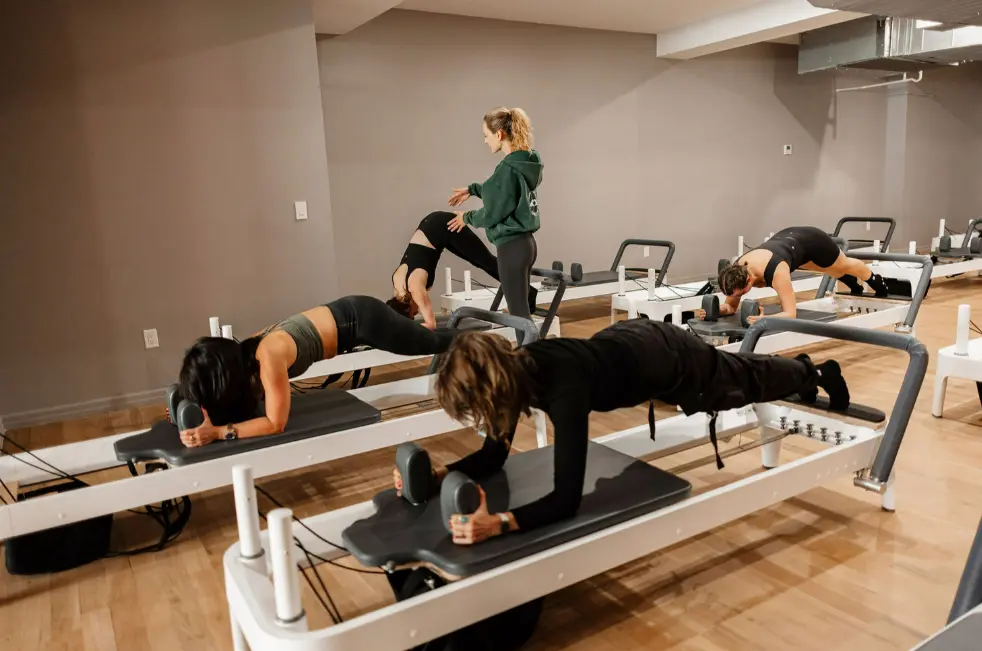
Reformer Pilates myths are everywhere and if you’ve ever hesitated to try a class, chances are one of them got to you. Maybe it looked too easy to be effective. Maybe the machine felt intimidating. Or maybe you’ve heard it’s “not a real workout.”
The truth? Most reformer pilates misconceptions come from judging it through the wrong lens.
As reformer Pilates has become more popular, the number of misunderstandings has grown just as fast. It looks slow, controlled, even gentle – which leads many to question: is reformer pilates effective?
This article resets that perception. Because once you understand what’s actually happening in a reformer class, everything changes – from your expectations to your results.
Why Reformer Pilates Is So Often Misunderstood
At its core, reformer Pilates is misunderstood because people evaluate it using gym logic.
In a traditional gym workout, intensity is measured by:
- Heavier weights
- Faster reps
- Visible fatigue
Pilates flips that completely.
Here, intensity comes from:
- Control
- Precision
- Tempo
- Time under tension
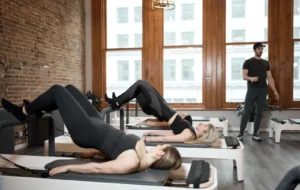
Slow doesn’t mean easy. In fact, moving slowly removes momentum—forcing your muscles to work harder, not less.
This is why many people initially think: “Why pilates seems easy?”
And then, halfway through their first properly instructed class, realize the opposite.
“The moment you take away speed and momentum, your body has nowhere to hide. That’s where real strength begins.” – Instructor BK Pilates.
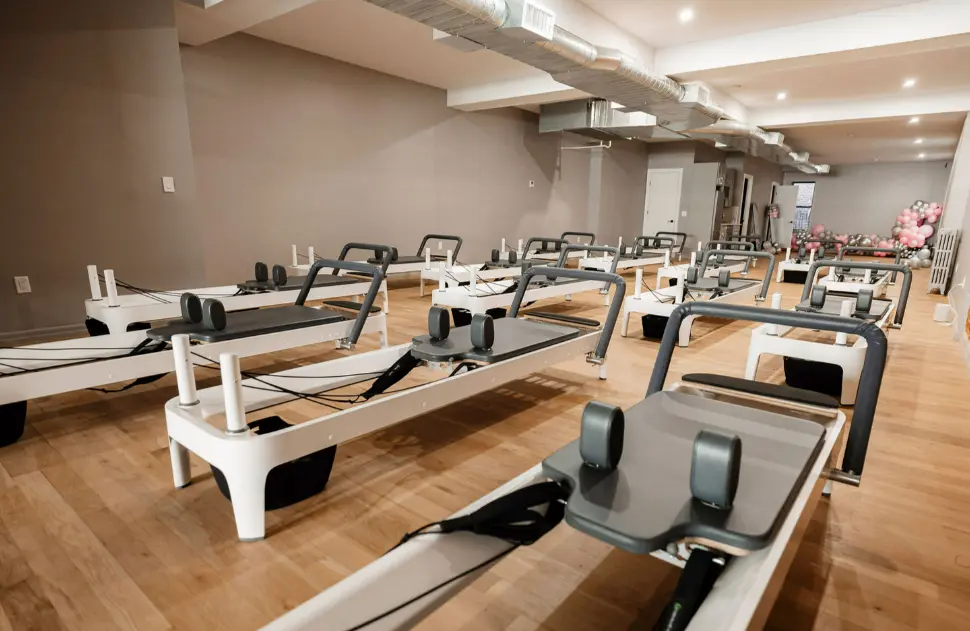
Myth 1: Reformer Pilates Is Too Easy to Be Effective
This is one of the most persistent reformer pilates myths.
Why people believe it:
- Movements look smooth and controlled
- There’s no heavy lifting
- You don’t leave drenched in sweat
What’s actually happening:
Reformer Pilates removes momentum. That means:
- Your muscles stay under constant tension
- Stabilizers (deep muscles) do most of the work
- Every rep requires full-body coordination
So, is pilates too easy? Not when done correctly.
And yes – is reformer pilates effective? Absolutely.
Read more: Grip Socks — The Must-Have Accessory for Reformer Pilates in NYC 2025
Myth 2: It’s Just Stretching
Why people believe it:
- Movements look fluid
- There’s a visible flexibility component
What’s actually happening:
Reformer Pilates uses spring resistance, turning every movement into strength work.
Think of it as:
- Strength + mobility
- Resistance + control
This is where the confusion around pilates stretching vs strength comes from.
Does reformer pilates build strength? Yes, especially in:
- Core stabilizers
- Glutes
- Postural muscles
And unlike traditional lifting, it trains how your body moves – not just how much it can lift.
Myth 3: You Need to Be Flexible to Start
Why people believe it:
- Pilates is associated with long, lean bodies
- Social media highlights advanced flexibility
What’s actually happening:
Flexibility is a result, not a requirement.
Reformer Pilates actually supports beginners by:
- Guiding movement with the machine
- Reducing joint strain
- Allowing gradual progression
If you’ve ever wondered:
Do you need to be flexible for Pilates? The answer is no.
Client Review:
“I avoided Pilates for years because I couldn’t touch my toes. After a month at BK Pilates, I’m stronger and more flexible and I actually enjoy the process.” – Sarah, 34
Myth 4: Reformer Pilates Is Only for Beginners
Why people believe it:
- Intro classes are widely marketed
- Movements look simple
What’s actually happening:
Reformer Pilates scales through:
- Precision
- Control
- Range of motion
- Tempo
Not just weight.
This means:
- Beginners can start safely
- Advanced clients can be constantly challenged
So if you’re asking: Is Pilates for beginners or advanced? It’s both.
Read more: Why You’re Sore After Pilates (Even Without Heavy Weights)
Myth 5: It’s Not Real Strength Training
Why people believe it:
- No barbells or heavy dumbbells
- Less visible strain
What’s actually happening:
Reformer Pilates builds strength differently:
| Traditional Gym | Reformer Pilates |
| External load | Internal resistance |
| Big muscle focus | Deep stabilizers |
| Momentum allowed | Momentum eliminated |
| Short tension | Long time under tension |
Does reformer pilates build muscle? Yes – especially functional, balanced strength.
It also improves:
- Joint stability
- Injury prevention
- Performance in other sports
This is why athletes increasingly integrate Pilates into training.
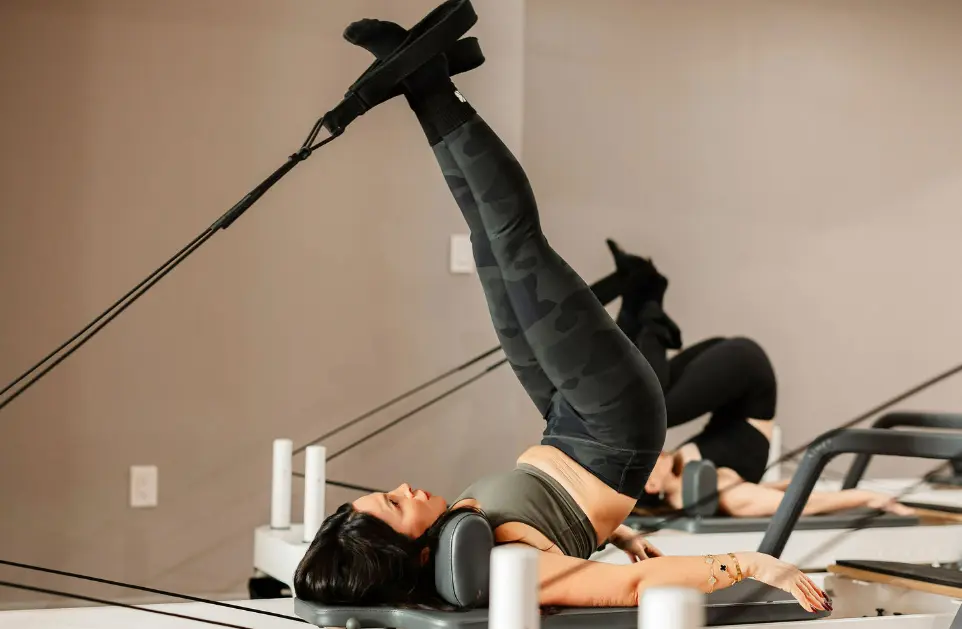
Myth 6: It’s Mostly for Women
Why people believe it:
- Studio demographics
- Marketing imagery
What’s actually happening:
Pilates was originally developed by Joseph Pilates for:
- Soldiers
- Injured men
- Rehabilitation
Today, it’s widely used by:
- Professional athletes
- Runners
- Strength trainers
So, is reformer pilates good for men? Absolutely.
Client Review:
“I came from a heavy lifting background and thought Pilates would be easy. It humbled me in the best way.” – Alex, 29
Myth 7: The Machine Makes It Complicated (or Unsafe)
Why people believe it:
- The reformer looks technical
- There are springs, straps, moving parts
What’s actually happening:
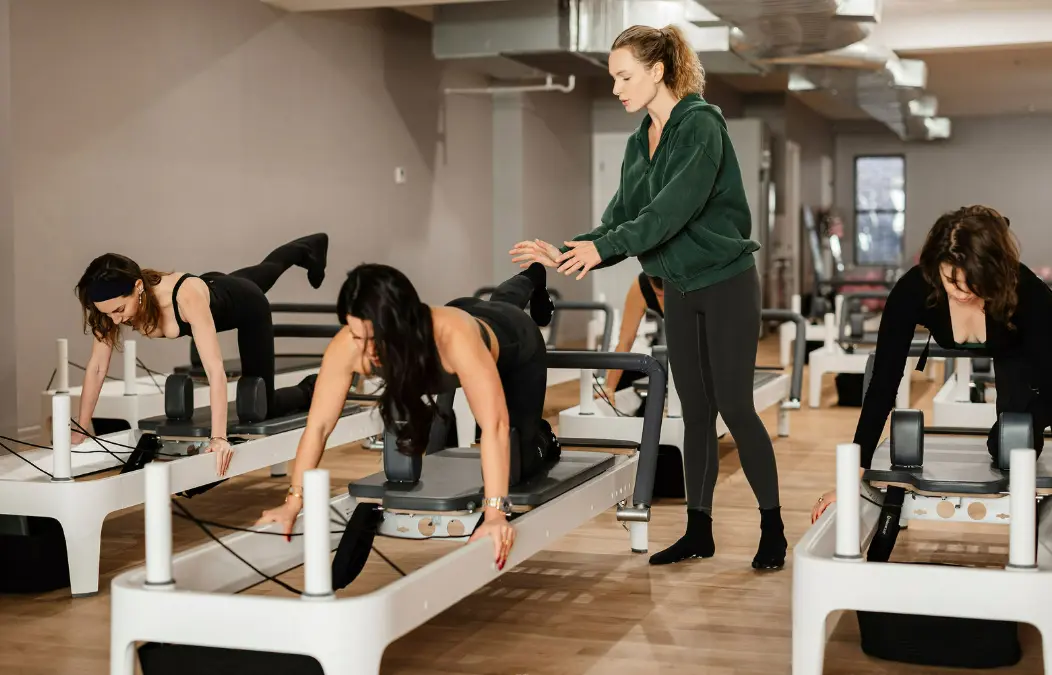
The reformer actually supports movement.
It:
- Guides alignment
- Assists control
- Reduces impact
In many cases, it’s easier than mat Pilates for beginners.
So:
- Is reformer pilates safe? Yes, with proper instruction
- Is reformer pilates hard to learn? Not with guidance
Myth 8: If You’re Not Sore, It Didn’t Work
Why people believe it:
- Gym culture equates soreness with results
What’s actually happening:
Pilates works heavily with the nervous system.
That means:
- Improved coordination
- Better muscle activation
- Efficient movement patterns
This doesn’t always create soreness (DOMS).
So if you’re wondering:
- Why pilates doesn’t make you sore?
- Pilates no soreness = no results?
The answer is no. You’re still building strength – just differently.
FAQ
Does Pilates live up to its reputation for being hard?
Because it removes momentum and demands full-body control.
Is reformer pilates hard?
It can be depending on how it’s taught and progressed.
Pilates vs gym workout – which is better?
They serve different goals. Pilates is for control and longevity; the gym typically focuses on load and volume.
When will I see results from doing reformer Pilates?
Most people see results in 4–6 weeks, with 2–3 classes per week. You will benefit most by being consistent rather than intense.
Can reformer Pilates help me with my back pain?
Most definitely! You will build a strong deep core, improve your spinal alignment and thus, make yourself less likely to suffer from injury.
What should I expect for my first class?
Expect slower, more controlled movements, detailed instruction, and a surprising level of muscle engagement – even without heavy weights.
Final Thoughts: The Right Expectations Change Everything
Most reformer pilates myths exist because people expect it to feel like something else.
But once you shift your perspective, the benefits become clear:
- Smarter strength
- Better movement
- Long-term results
So, is reformer pilates worth it?
Yes. Especially when taught well.
“It’s not about doing more. It’s about doing it better. That’s where transformation happens.”– Instructor BK Pilates
Ready to Experience It Yourself?
Try a class at BK Pilates and feel the difference that precise, intelligent training can make.
Focus on quality instruction, stay consistent, and give your body time to adapt – you might be surprised by how strong you become.