Marathon training blocks, back-to-back HIIT classes, five days a week on concrete sidewalks — most serious athletes are logging more impact than their joints can quietly absorb. Even a session built around low impact cardio, like a bike ride or a swim, gets crowded out by higher-intensity work. The training itself isn’t the problem. The absence of anything to balance it out is.
Low impact training isn’t a consolation prize for people who can’t handle intensity. It’s a deliberate tool that keeps high-output athletes training consistently instead of cycling through injury, burnout, and forced time off. This piece breaks down what it actually does, why it matters more in a city built on hard pavement, and how to fit it into a week that’s already full.
What Low Impact Training Actually Means
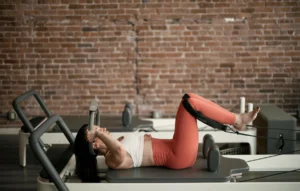
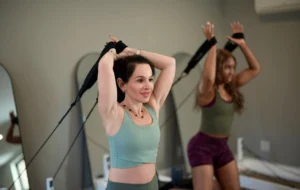
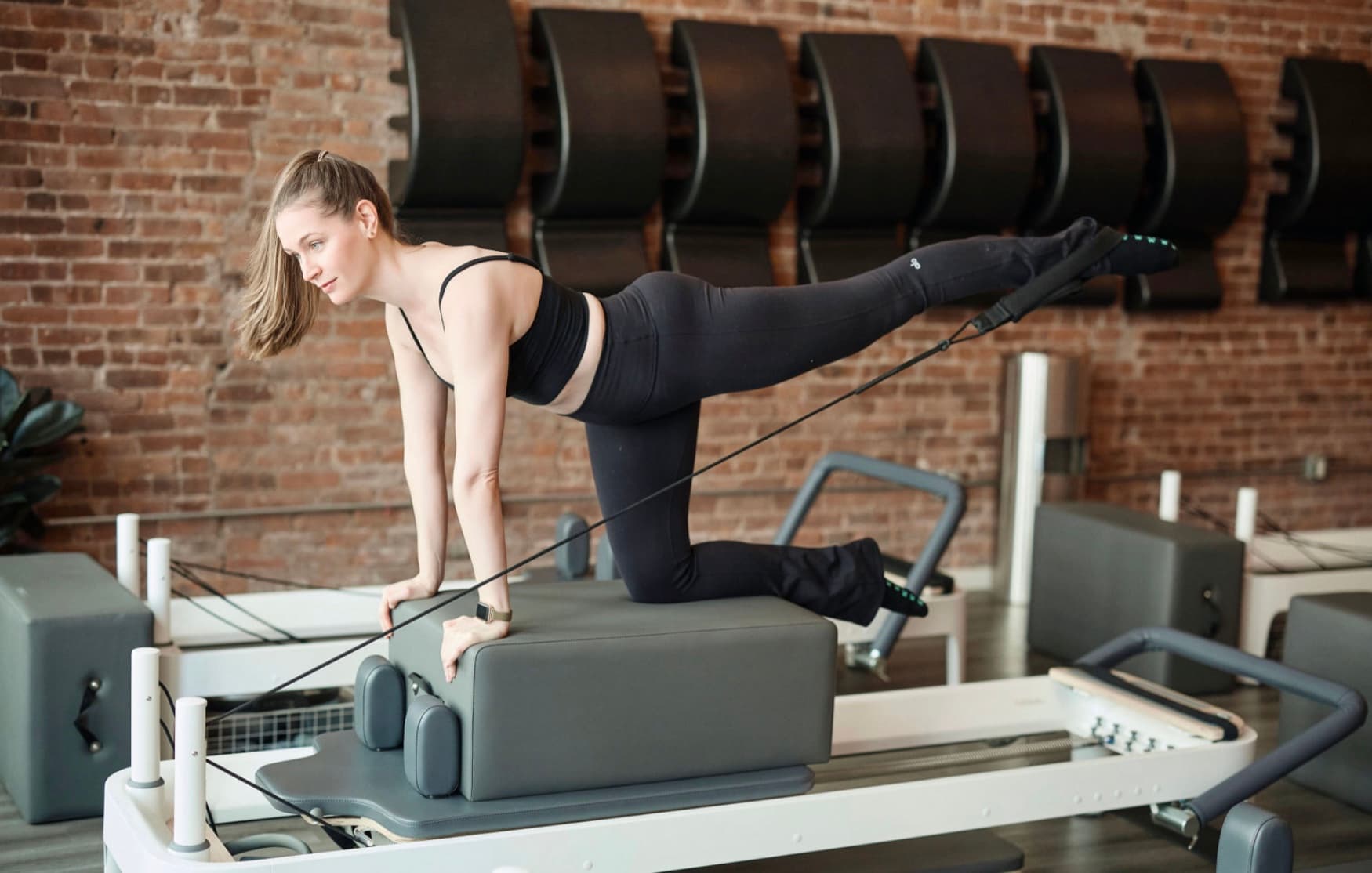
Low impact exercise is any movement that keeps at least one foot in contact with the ground, avoiding the repeated jarring force that running, jumping, and plyometric work put through the joints. That definition covers a wide range: swimming, cycling, resistance training on a reformer, and controlled bodyweight work all qualify.
What is considered low impact exercise often gets confused with “easy” exercise, and that’s where athletes lose interest before giving it a real shot. Low impact strength training can be just as demanding as a hard interval session — the difference is where the demand goes. Instead of loading joints with repeated ground-strike force, it loads muscles under continuous, controlled tension.
Why City Living Makes This Even More Important
Training in a city adds a layer most fitness content ignores. Runners in dense urban areas log miles almost exclusively on concrete and asphalt — some of the hardest surfaces available, with none of the give a trail or track provides. Add in stairs, daily commuting, and a walking-heavy (or sitting-heavy, if you’re driving everywhere) lifestyle even on rest days, and the cumulative impact load stacks up well before a single workout begins.
This is exactly why Pilates studios have seen demand climb among competitive runners, cyclists, and CrossFit athletes over the past few years — not as a replacement for their sport, but as the counterbalance it was never getting. A reformer Pilates session doesn’t compete with a training block; it protects the athlete’s ability to keep showing up for it.
The Real Benefits of Low Impact Training
Is low impact training effective for people who are already fit? The evidence, and what shows up in practice, says yes — for reasons that have little to do with intensity.
- Joint longevity. Repeated high-impact loading without recovery time is one of the most common paths to overuse injury; low impact sessions give joints a chance to recover while the athlete keeps training.
- Improved mind-muscle control. Low impact strength work removes momentum from the equation, forcing the exact muscle group to do the work instead of letting speed cover for weak form.
- Active recovery without detraining. An active recovery workout keeps blood flow and mobility up on rest days without adding to the fatigue a hard session already created.
- Injury prevention training built in. Many of the muscles that stabilize joints during high-impact sport — deep hip rotators, the transverse abdominis, the muscles around the shoulder blades — rarely get trained directly during the sport itself.
Cross training benefits. A structured cross training day gives the cardiovascular system a break from repeated impact — this is where cross training for athletes earns its keep, keeping conditioning intact without adding to the joint tally.
Building It Into an Athlete’s Week
A full low impact full body workout doesn’t need to replace a training day — it fits into the gaps most athletic schedules already have. Here’s a simple way to build the week around it:
- Two high-impact sessions — running, jumping, sport-specific training at full intensity.
- One low impact strength session — reformer or bodyweight work targeting stabilizers and core.
- One cross training day — swimming or cycling to maintain cardiovascular output without joint strain.
- One active recovery workout — light mobility, breathing-focused movement, low-intensity stretching.
- One full rest day — no structured training at all.
- Two sport-specific sessions — sprint work, scrimmage, or event-specific practice.
This structure isn’t rigid — the point is that low impact training occupies real, planned slots in the week rather than getting squeezed in only when something already hurts.
Low Impact Training vs. High Impact Training: What Each One Builds
Athletes rarely need to choose one over the other — the two are meant to work together. Here’s how they actually compare.
| Low Impact Training | High Impact Training | |
| Primary benefit | Joint-friendly strength, control, recovery | Power, speed, sport-specific conditioning |
| Recovery demand | Low — can be done on adjacent days | High — needs 24–48 hours before repeating |
| Injury risk | Minimal | Higher, especially without adequate recovery |
| Best frequency | 2–3x per week | 2–4x per week, sport-dependent |
| Cross training benefits | Maintains fitness while reducing joint load | Builds the specific adaptations the sport requires |
| Who it’s for | Every athlete, regardless of sport | Athletes actively training for performance or competition |
The takeaway: high-impact training builds the performance an athlete competes with; low impact training is what keeps that athlete healthy enough to keep competing.
Common Mistakes Athletes Make with Recovery Training
Even experienced athletes get this wrong in predictable ways:
- Treating low impact days as optional. The first thing to get cut from a busy week is usually the session that feels least urgent — which is exactly the one protecting the joints doing all the other work.
- Confusing low impact with low effort. A well-programmed low impact strength training session can leave muscles genuinely fatigued; the absence of impact doesn’t mean the absence of intensity.
- Skipping it until something already hurts. Injury prevention training works best as a habit, not a reaction — by the time pain shows up, the imbalance has usually been building for months.
- Ignoring the cumulative toll of city living. Athletic training in any city has to account for miles logged just getting around, not only structured workouts — that baseline impact adds up whether or not it’s tracked.
Frequently Asked Questions
Is Pilates good for athletes, or is it too gentle for serious training? Pilates for athletes has grown for a reason — the controlled, resistance-based movement builds the stabilizing strength that sport-specific training rarely targets directly, without adding impact stress.
Is Pilates good for runners specifically? Yes. Pilates for runners strengthens the hips, glutes, and core in ways that directly support running mechanics, and several running clubs now recommend it alongside standard low impact exercises for runners as a standing part of marathon training blocks.
How often should athletes do low impact training? Two to three sessions a week is typical, though the right amount depends on total training volume and how much high-impact work is already on the schedule.
Can low impact training build muscle the way traditional strength training does? Yes, particularly with resistance-based formats like reformer Pilates, where continuous tension replaces the momentum that heavier free weights often rely on.
What’s the best low impact workout for someone recovering from injury? The best low impact exercises for recovery are typically the gentlest ones — pool-based work, reformer Pilates, or guided mobility work — and anyone recovering from a specific injury should confirm exercises with a doctor or physical therapist first.
Train Hard. Recover Smarter.
The athletes who stay in the game longest aren’t necessarily the ones training the hardest — they’re the ones who built recovery into the plan instead of treating it as an afterthought. Low impact training is how that actually happens week to week.
If your training schedule is missing that piece, book a session at one of our NYC or North Carolina studios and see what a reformer can do for the body that’s carrying you through everything else. Searching for the best Pilates studio near you, or just a low impact workout athletes actually trust — either way, that’s what this training is built for.