Most pilates abs work has nothing to do with chasing a six-pack. Pilates core exercises target the deep stabilizing muscles — the transverse abdominis wrapped around your midsection like a corset, plus the obliques and pelvic floor — that hold your spine steady during literally everything else you do. Get that layer strong, and a pilates ab workout starts paying off well beyond how your stomach looks: better posture, less lower back strain, cleaner form in every other exercise you attempt.
This list is organized by difficulty on purpose. Pilates exercises for core strength — and these pilates abs exercises specifically — build on each other, so jumping straight to advanced moves before your deep core can hold a neutral spine just means your hip flexors or lower back take over instead, which defeats the entire point.
Level 1: Foundational Core Pilates Exercises
Start here regardless of your fitness background. These pilates abdominal exercises teach the engagement pattern everything else depends on.
- Dead Bug (Pilates Dead Bug). Lying on your back, arms reaching up and knees at tabletop, slowly extend one arm and the opposite leg toward the floor without letting your lower back arch off the mat. It looks almost too simple, which is exactly why it’s such a reliable teacher — if your back lifts, you’ve found your current limit. 8 reps per side.
- Toe Taps (Pilates Toe Taps). From the same tabletop position, lower one foot to lightly tap the floor, then switch, keeping your core engaged the entire time so your pelvis doesn’t rock. A great warm-up before anything more demanding. 10 reps per side.
- Plank (Pilates Plank). Forearms or hands on the mat, body in one straight line from shoulders to heels. Less about how long you can hold it and more about whether your hips stay level the whole time — a shaking plank with good form beats a longer one with a sagging lower back. Hold 20–30 seconds, 2–3 rounds.
Level 2: Building Real Strength
Once the moves above feel stable, these pilates core exercises for beginners graduate into slightly more demanding territory.
- Leg Lowers (Pilates Leg Lowers). Both legs extended toward the ceiling, slowly lower them together while keeping your lower back pressed into the mat, then raise back up. Stop the descent at whatever point your back wants to arch — that range will extend naturally with practice. 8–10 reps.
- Double Leg Stretch (Pilates Double Leg Stretch). Knees hugged to your chest, head and shoulders lifted, extend both arms and legs away from your body at the same time, then circle your arms back around to hug your knees again. A classic pilates abs workout move that challenges coordination as much as strength. 8 reps.
- Side Plank (Pilates Side Plank). On one forearm with your body in a straight line, hips lifted off the mat. This one shifts the work to your obliques specifically, which the moves above don’t hit directly. Hold 15–20 seconds per side.
Level 3: Where It Gets Fun
- Criss Cross (Pilates Criss Cross). Hands behind your head, rotate your torso to bring one elbow toward the opposite knee while the other leg extends out, then switch sides in a smooth rhythm. This is one of the better pilates exercises for abdominal muscles because it trains rotation under control, not just flexion. 8–10 reps per side.
Classic mat staples like the Hundred, Roll Up, and Teaser round out a full pilates core workout too — if you haven’t built a foundation with those yet, our beginner pilates guide walks through them individually.
Reformer Pilates for a Stronger Core
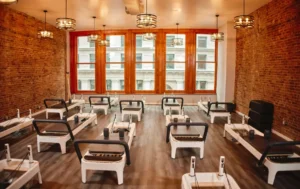
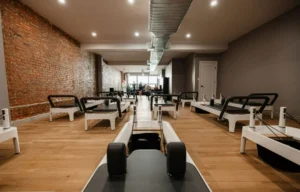
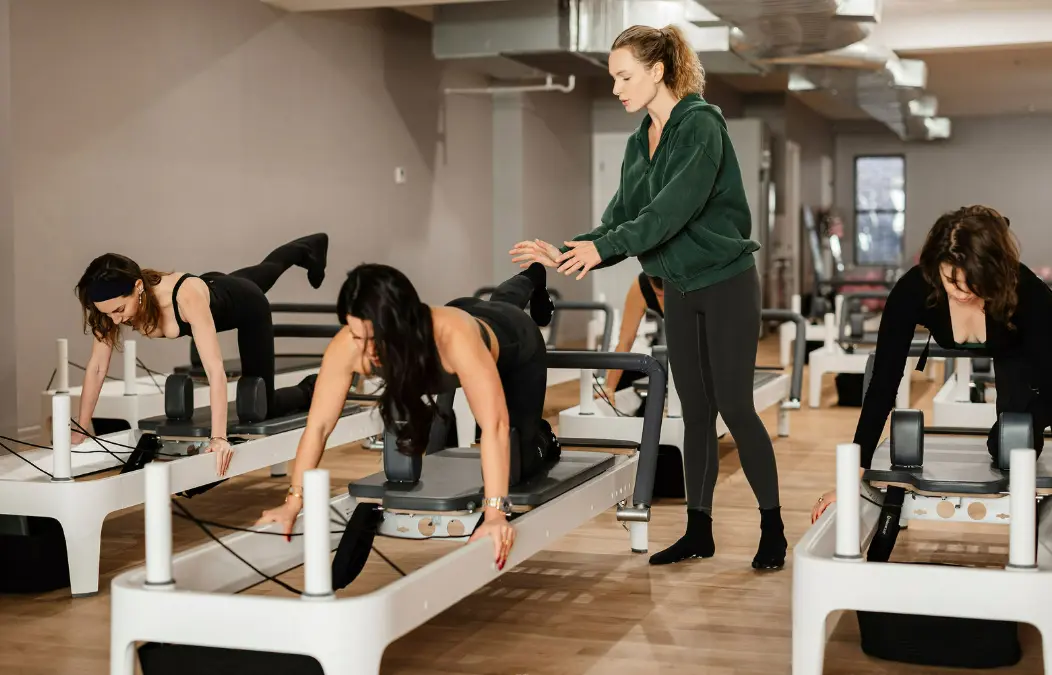
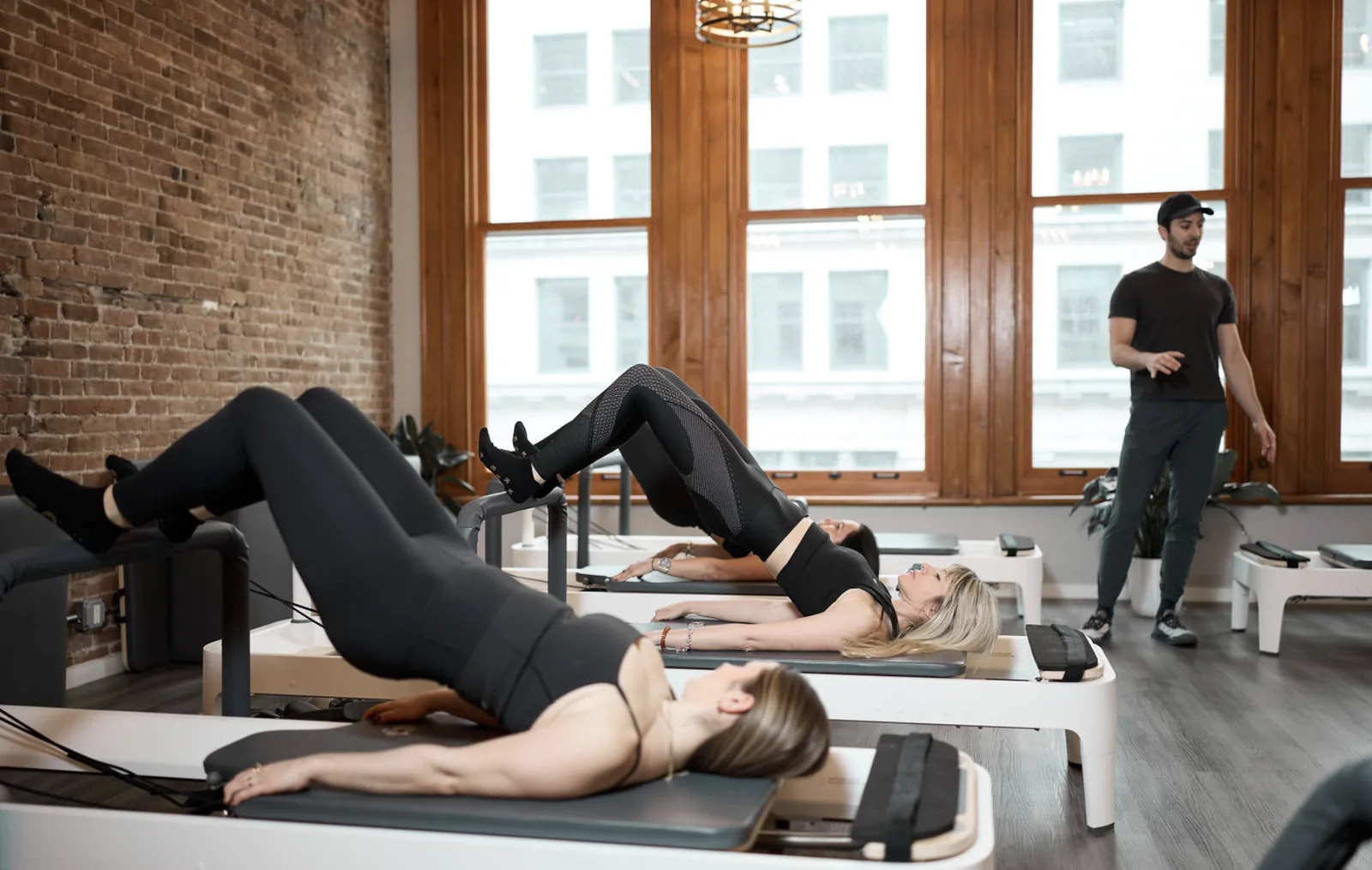
A reformer pilates core workout adds resistance that mat work simply can’t replicate, since the carriage and springs let you load movements in ways your bodyweight alone doesn’t allow — see our mat vs. reformer comparison if you’re deciding which to prioritize. Reformer pilates abs work often includes footwork variations that challenge your core to stabilize while your legs do the moving, plus exercises like the roll-back and short spine that would be much harder to control safely on a mat. Reformer pilates core exercises also tend to expose weaknesses faster than mat versions — the moving carriage doesn’t let you cheat the way a stable floor sometimes does.
If your studio offers it, a reformer abs workout is worth mixing into your routine every week or two, even if most of your practice happens on a mat. A reformer pilates abs workout isn’t strictly better than mat work — it’s a different stimulus, and your core benefits from both.
Turning This Into a Core Workout Pilates Routine
A pilates workout for abs doesn’t need every move on this list every session. A pilates workout for core strength that actually sticks usually looks like three or four exercises from different levels, done with full attention to form, two to three times a week. As a beginner pilates core workout, start with all of Level 1 plus one or two moves from Level 2; once those feel controlled rather than shaky, rotate in Level 3.
Pilates to strengthen core muscles works best paired with the moves you’re not doing enough of elsewhere — most people over-train flexion (crunching forward) and under-train the stabilizing, anti-rotation work that Side Plank and Criss Cross provide. The best pilates core strengthening exercises, the kind that deliver real pilates for core strengthening over months rather than one good session, mix several patterns rather than repeating one. A pilates core workout for beginners that only hits one pattern repeatedly will plateau faster than one that mixes several.
Frequently Asked Questions
What are the best pilates exercises for abs if I only have ten minutes? Dead Bug, Toe Taps, and Leg Lowers cover the foundation in under ten minutes and are safe to do daily without overtraining anything.
Are these the best pilates core exercises, or should I look into equipment-based work too? Mat work covers the fundamentals completely fine on its own — equipment like the reformer adds variety and resistance later, but it’s not required to get real results.
How long before pilates core exercises actually change how my core feels? Most people notice better stability and less lower back tension within two to three weeks of consistent practice, three times a week.
Can beginners do core pilates exercises safely without an instructor? Yes, starting with Level 1 moves — they’re designed to expose form issues gently rather than punish them, which makes them safe to learn on your own. That said, a private session early on is a fast way to confirm your form is on track before you add more load.
A stronger core changes more than how your midsection looks — it’s the difference most people feel first in their posture and lower back. Check our class schedule to find a session that works for you.