Quick answer: Often, yes. For many people with everyday lower back pain, reformer Pilates is one of the more effective, lower-risk options out there. The spring resistance and carriage support let you build real strength through a controlled range of motion, without the compressive load that unsupported floor work can put on an already irritated spine. It’s not instant, and it’s not a fix for every diagnosis, but for the tightness, weakness, and poor-posture discomfort most people deal with, it can help a lot.
A quick note: if you have a back injury, a diagnosed condition, or pain that is sharp, radiating, or getting worse, check with your doctor or physical therapist before starting, and tell your instructor so they can adapt the class.
Why Reformer, Specifically, for a Bad Lower Back
Pilates for back pain generally works by strengthening the deep stabilizing muscles – the transverse abdominis, multifidus, and pelvic floor – that keep your spine from doing more work than it should. The reformer just makes that process safer and easier to feel. The carriage moves along a track under spring tension, so your body gets support through the full range of motion instead of relying on your own control alone. That’s the core difference between Pilates reformer for back pain and the same exercises done on a mat – if you’re curious how the two compare beyond just back pain, our mat vs. reformer breakdown covers it in more depth. Less compressive load, more assisted stability – especially useful in the early weeks when your back is still touchy.
This is also why reformer Pilates back pain routines tend to show up as the first recommendation instructors reach for, rather than jumping straight into unsupported floor work. Reformer Pilates for lower back pain in particular benefits from this setup, since the lumbar spine is exactly where unsupported floor work tends to load the most. It’s not that mat Pilates doesn’t help – it does – it’s that the reformer removes one variable (having to stabilize your own bodyweight through every movement) while you rebuild the strength that was missing in the first place. Can Pilates help back pain without any equipment at all? Sure, but the reformer version tends to get people there with less trial and error.
Does Pilates Help Lower Back Pain, or Just Mask It?
This is worth answering directly, because it changes what you should expect. Does Pilates help back pain by numbing it temporarily, or by fixing something underneath? It’s the second one, gradually. Pilates to strengthen lower back muscles works by building genuine load tolerance in your core and glutes – the muscles that, when weak, force your lumbar spine to compensate for stability it was never built to provide alone. That’s a slower process than a massage or a heating pad, but it’s the difference between relief that lasts a few hours and Pilates for back strength that actually changes how your back feels day to day.
Can Pilates help lower back pain that’s chronic, not just from a recent tweak? Often yes, though the timeline is gradual rather than dramatic – most people notice a real shift after several weeks of consistent practice, not after one session.
Reformer Exercises for Back Pain We Actually Recommend
Not every reformer exercise belongs in a back-pain routine – some load the spine in ways that aren’t ideal early on. These are the ones instructors reach for most often when someone comes in specifically for lower back relief:
- Footwork with a neutral pelvis – builds leg and glute strength while the carriage supports your spine, a gentle entry point before anything more dynamic.
- Pelvic curl on the reformer – a supported version of a bridge, using the carriage’s resistance to strengthen glutes without straining the lower back.
- Supported spinal rotation – a gentle twist with the carriage taking some of the load, improving mobility without the compression of an unsupported floor twist.
- Short spine (modified) – done carefully and usually later in a program, this decompresses and mobilizes the spine when the surrounding muscles are ready.
- Long stretch series (light spring, controlled range) – builds core and shoulder stability while keeping the spine supported through the movement.
These count as some of the best Pilates exercises for lower back pain, and among the best Pilates exercises for back pain generally, specifically because the equipment does part of the stabilizing work for you while you build strength, not because they’re inherently better than mat versions of the same movements. If you don’t have reformer access, plenty of these same principles apply to reformer exercises for lower back pain done in modified mat versions, just with more emphasis on control since you lose the spring support.
What This Looks Like If You’re Starting From Zero
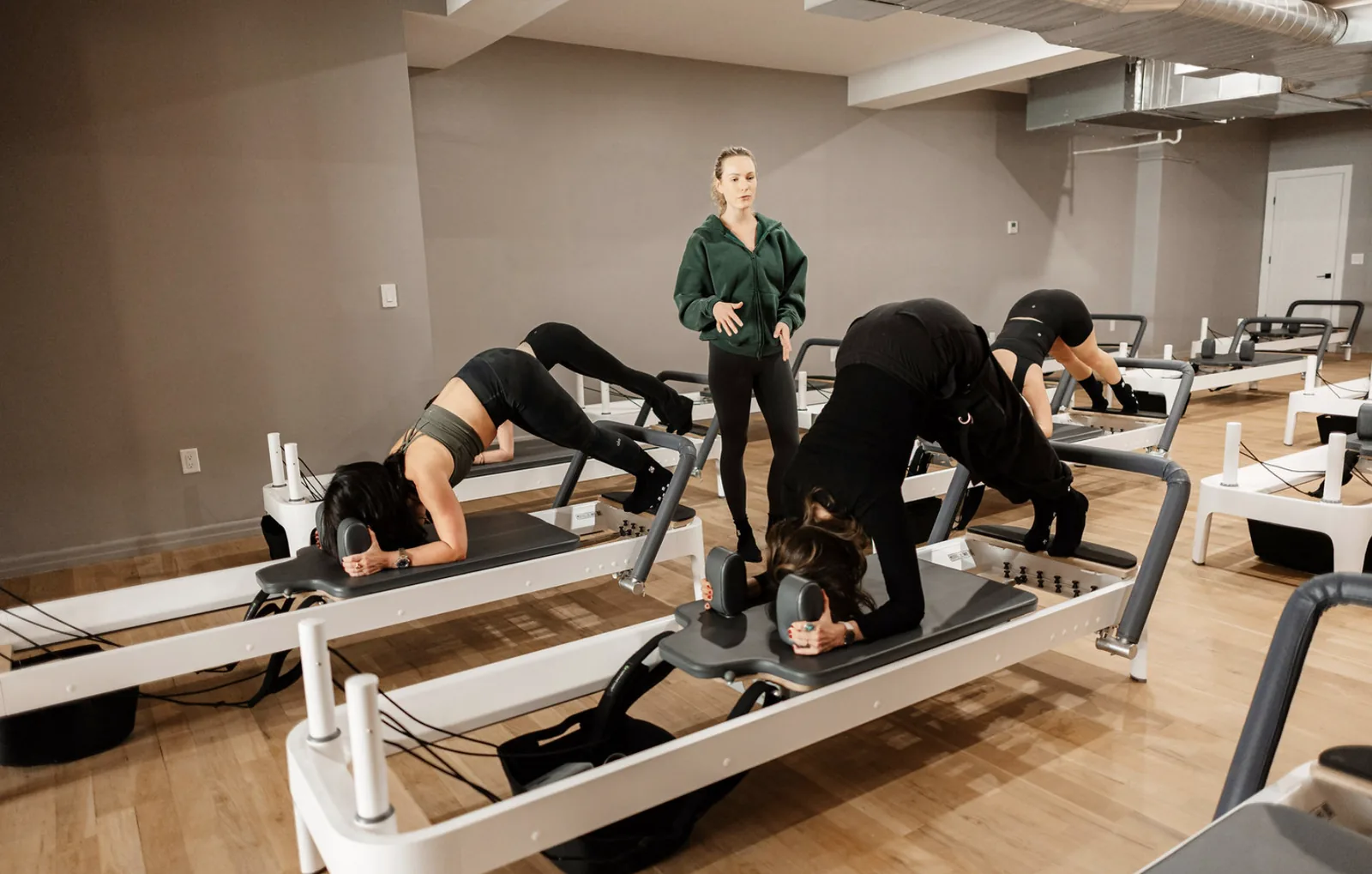
Pilates for back pain beginners is a slightly different conversation than Pilates for back pain in general, because form matters even more when your back is already sensitive. If you’re new to both Pilates and dealing with back pain, a private or small-group session is worth the extra cost upfront – an instructor can watch your specific movement patterns and catch compensations a group class format doesn’t have time for. Mentioning your pain clearly before your first session, rather than trying to push through and stay quiet about it, changes what gets modified from the very first exercise.
Turning This Into an Actual Routine
A Pilates workout for back pain doesn’t need to be complicated to be effective. Two to three sessions a week, mixing the reformer exercises above with some Pilates stretches for lower back pain – think gentle spinal twists, knee-to-chest holds, and child’s pose variations – tends to be the combination instructors recommend most. A Pilates workout for lower back pain built this way addresses both sides of the problem: strengthening the muscles that are too weak, and releasing the ones that have gotten too tight from compensating.
Pilates exercises for back pain relief work best as part of that kind of consistent pattern rather than an occasional session when the pain flares up. Most people practicing two to three times weekly notice meaningfully less stiffness and fewer flare-ups within four to six weeks – Pilates for spine health is a cumulative project, not a one-time fix. Since a weak core is often part of what’s straining the back in the first place, our guide to Pilates for core strength pairs well with this routine.
When to Get Medical Clearance First
Reformer Pilates is one of the gentler options for back pain, but a few situations call for a doctor’s sign-off before you start:
- A diagnosed herniated disc, spinal stenosis, or other structural spine condition
- Pain that radiates down one or both legs, or comes with numbness or tingling
- A recent back surgery you haven’t been cleared to exercise after
- Sudden, severe pain, or pain tied to a specific injury rather than gradual onset
If any of that applies, get clearance first, then mention it clearly when you book. And if your situation is more specifically sciatica, scoliosis, or pain that’s been chronic for years, our broader guide to Pilates and back pain breaks those down individually rather than trying to cover everything here.
Common Questions
Is reformer Pilates better than mat Pilates for lower back pain specifically? For most people dealing with acute or moderate lower back pain, yes – the equipment’s support reduces spinal load while you rebuild strength, which mat work asks your body to manage on its own from day one.
How fast does Pilates for back pain relief actually work? Expect gradual change over four to six weeks of consistent practice, not an immediate fix – though many people notice less stiffness within the first couple of weeks.
Can I do reformer Pilates for back pain without ever having done Pilates before? Yes, and it’s actually one of the more beginner-friendly ways to start, since the carriage does some of the stabilizing work a mat class would ask you to do unsupported.
Back pain is specific enough that a generic routine rarely fits perfectly – what helps depends heavily on where the pain is coming from and what’s already been ruled out. Once you’ve got clarity on your specific situation, check our class schedule to find a session that works before your back has a chance to talk you out of it.