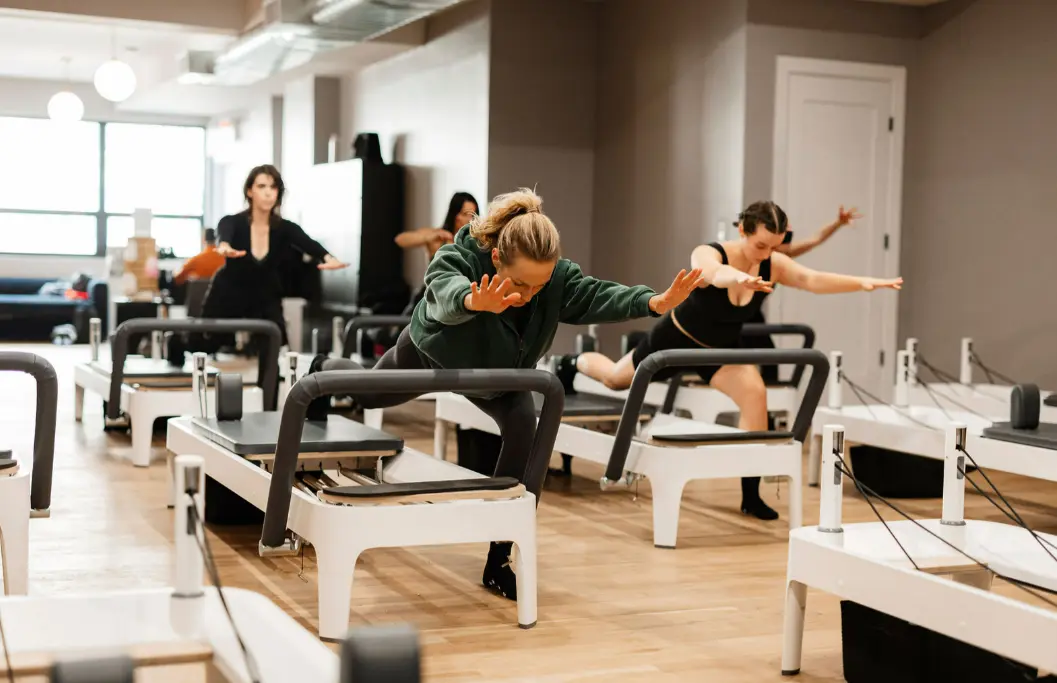
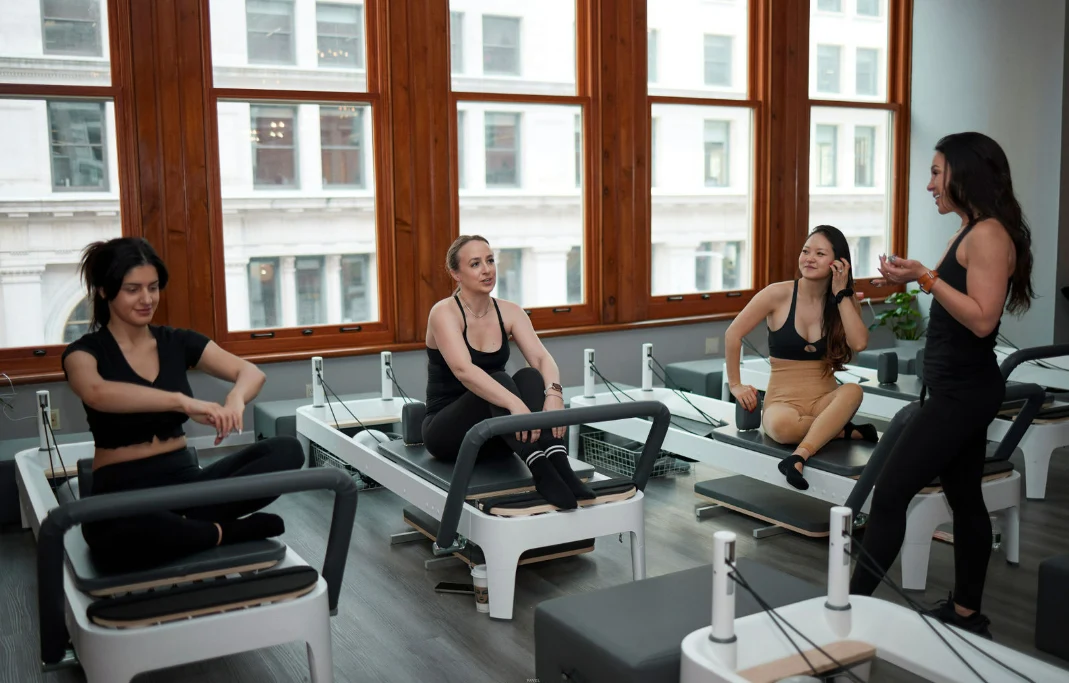
If you run in New York, you know how the city shapes your stride: the long climbs in Central Park, the speed you naturally pick up on the West Side Highway, the winding shade of Prospect Park that feels like a reward after a long workday. Running here is energizing – and at the same time, demanding. Eventually most runners, even experienced ones, begin to notice tight hips, cranky knees, a lower back that complains after longer miles, or a stride that just doesn’t feel as smooth as it once did.
Pilates has become a quiet hero for many NYC runners. It’s not just stretching, and it’s not about becoming “more flexible”. Pilates helps runners move better – with more integrity, more stability, and more ease. It builds the core strength essential for an efficient stride, ensures your hips and knees track correctly, and fundamentally prepares your structure to withstand the heavy load of road running. When you’re pushing mileage around Central Park, this stability is what allows you to finish strong, not injured.
Why Runners Need More Than Just Running
Runners are creatures of habit – same loops, same shoes, same playlists. But running alone develops strength in only certain patterns, while others weaken. Running, day after day, forces your body into predictable compensation patterns: your hip flexors lock up, your quads take over the work of the glutes, and your ankles lose essential mobility. This is amplified by our city lifestyle – desk jobs, commutes, and constant tension. For runners pushing their limits, these imbalances become obvious: a lack of glute power, mid-run stiffness, and chronic shoulder tension:
- A stride that collapses a little on one side
- Knees drifting inward during landing
- Limited hip mobility that makes speedwork feel “blocked”
- Lower back tension that appears late in long runs
Pilates for runners delivers exactly what running often strips away. It forces the body to move through the rotational and lateral planes that linear running neglects, knowingly stirring the stabilizing muscles into work. This practice not only strengthens the deep core but provides immediate access to superior alignment and smoother, more powerful mechanics. For anyone logging serious mileage in Central Park or Prospect Park or preparing for the NYC Marathon (learn more on the official TCS New York City Marathon website), this fundamental balance translates to tangible results instantly.
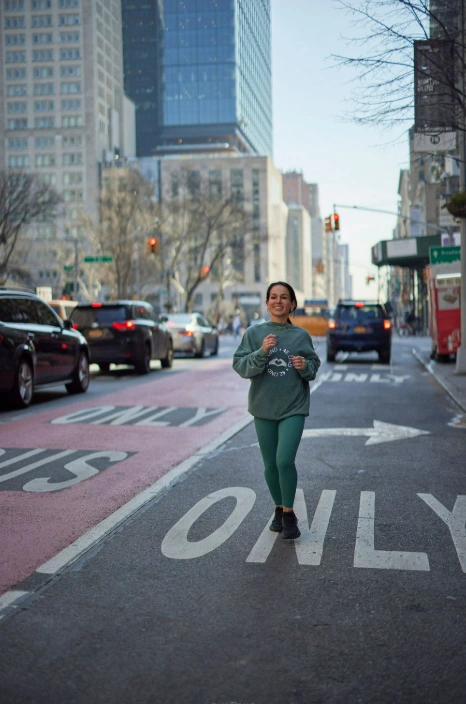
The Most Common Running Issues Pilates Can Help Improve
Many runners assume discomfort is part of the sport. But most “runner pains” are simply signs that your body is compensating somewhere. Pilates helps uncover – and correct – these patterns.
Knee Pain
A weak glute area and unaligned hips are, in most cases, the root of all the issues. Pilates targets the muscles that facilitate proper knee alignment.
IT Band Syndrome
A weak outer hip means that the IT band has to work even harder. This, in turn, means that an effectively developed lateral hip stability through Pilates exercises becomes a vital part of IT band relief.
Tight Hips
Running reinforces a forward, compressed posture. Pilates helps open the hips, restore rotation, and improve extension so your stride feels freer.
Lower Back Discomfort
Often a sign of weak deep abdominals or over-recruiting the lower spine. Pilates teaches the core to support the pelvis so the lower back can stop doing all the work.
Collapsing Knees or Overpronation
Pilates improves foot mechanics, strengthens the arches, and teaches the hips to stabilize the legs properly – a game-changer for runners who struggle with knee drift.
How Pilates Helps Runners Perform Better
A Stronger Core Means a More Efficient Stride
A runner’s core is not about “six-pack strength.” It’s about the deep muscles that keep the pelvis steady so every step lands cleanly. When this system works well, the knees and lower back stop absorbing unnecessary shock, and the stride becomes lighter and more economical.
“When runners learn to organize their movement from the deep core, everything becomes more efficient – the landing, the push-off, even the breath,”
– Instructor, BK Pilates
Better Alignment, Better Running
When the body is aligned, running feels natural again. Pilates exercises can help even out right and left sides, fine-tune small misalignments, and promote a flowing motion. Small corrections in degrees can make distance running much easier.
More Hip Mobility and Real Glute Activation
Most runners don’t realize how much power they lose from stiff hips or sleeping glutes. Pilates helps restore hip rotation, open the front of the body, and activate the muscles that drive speed and stability – especially important for hills and intervals.
Breathing That Supports Your Pace
Pilates breathing isn’t just a technique – it’s a practical tool for endurance.
Runners, as a result of improved rib movement and more complete lung expansion, are often able to maintain a more even pace, benefit from a more efficient oxygen supply, and their tiring sensation significantly decreases during the last stages of their long runs.
If you want to learn more about breathwork, check our Pilates Breathing guide.
Why Pilates Is So Effective for Injury Prevention
Pilates is gentle on the body but requires great focus from the practitioner. Instead of the body being pushed to deliver more power, the body is instructed to perform the movements in a more intelligent way. This is the main reason why it is so great for runners. The work is slow and controlled, allowing you to retrain your mechanics without the noise of impact. Better strength, cleaner patterns, more mobility – all of this adds up to fewer injuries and more consistent training.
Best Pilates Exercises for Runners (And What They Help Improve)
| Exercise | Benefits for Runners |
| Footwork on Reformer | Builds balanced leg strength, supports healthy knee tracking, improves foot stability. |
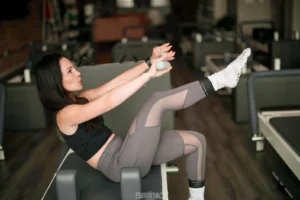
| Single/Double Leg Stretch | Reinforces deep core stability, essential for protecting the lower back and pelvis during running. |
| Bridging Variations | Activates glutes and hamstrings, supports powerful hip extension, reduces reliance on quads. |
| Side-Lying Leg Series | Teaches lateral hip control, key for preventing IT band issues and knee drift. |
| Knee Stretch Series | Improves coordination between core and legs, enhances stride control. |
| Long Stretch | Builds integrated, full-body strength and shoulder stability. |
| Mermaid / Side Bends | Opens the rib cage, promotes thoracic mobility, and supports improved breathing. |
Each exercise develops skills runners rely on: stability, mobility, and clean mechanics.
Reformer Pilates vs. Mat Pilates: Which One Is Best for Runners?
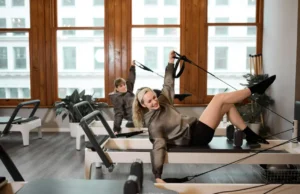
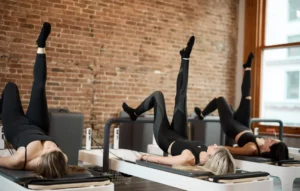
While both have merits, Reformer Pilates for runners is more effective, and that is a primary concentration of our NYC pilates studio.
- Reformer Pilates: Runners consistently gravitate towards the Reformer. Its spring-based resistance provides a dynamic environment, offering both targeted support and a controlled challenge. This allows our instructors to guide your alignment precisely, rapidly building the balanced strength that’s difficult to isolate otherwise. Many runners report feeling faster, more tangible results on the Reformer compared to other cross-training methods.
- Mat Pilates: Mat work remains simple, portable, and surprisingly powerful. It is unparalleled for establishing profound deep core control, refining body awareness, and mastering mindful movement – all essential factors for maintaining strong form during the final miles of a long run or a race.
- At BK Pilates, we believe the perfect approach blends the structured precision and spring resistance of the Reformer with the consistent support and accessibility of Mat Pilates. This combination helps you build a truly resilient body.

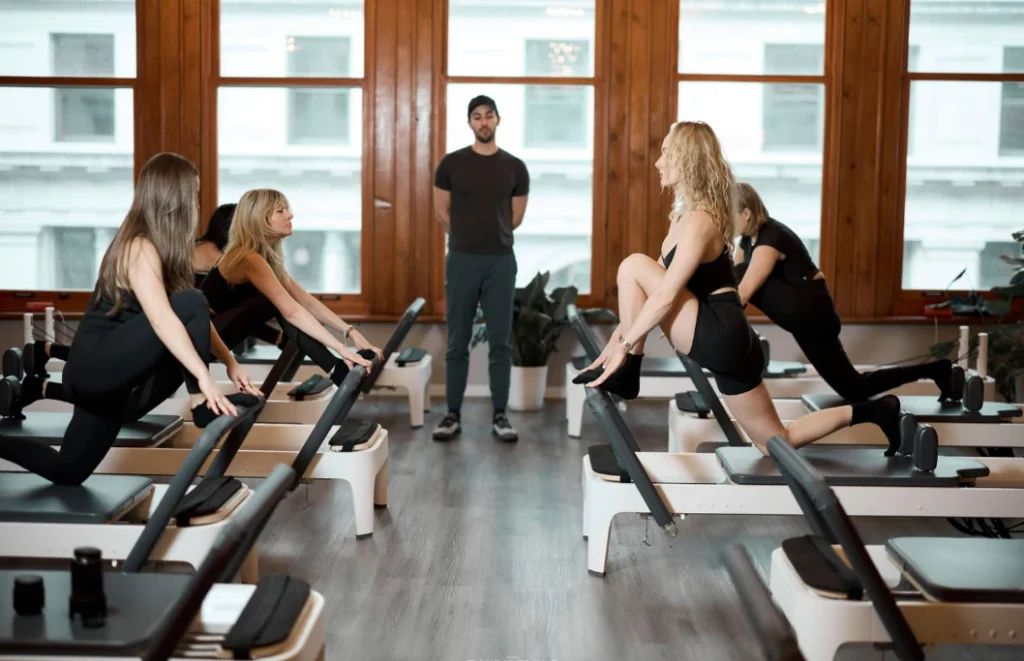
How Often Should Runners Do Pilates?
- Injury prevention and maintenance are great once or twice a week.
- If you’re training for a half marathon or marathon, the frequency should be up to two to three times a week.
- Lighter Pilates sessions can support recovery during peak mileage weeks.
- During off-season or recovery weeks, Pilates helps rebuild alignment and strength.
Even 1–2 well-led sessions per week can make running feel dramatically different.
What to Expect at BK Pilates (Especially If You’re a Runner)
Runners often find a sense of relief at BK Pilates – as if someone finally understands why their right hip always tightens first or why their pace drops after hills. The studio’s approach is personal, precise, and grounded in years of experience helping runners move better.
Experienced Instructors
Sessions are tailored to the movement patterns runners tend to struggle with: hip stability, core connection, alignment, and force distribution.
Focus on Technique
Expect detailed cues and hands-on corrections that help you understand where your body is compensating – and how to fix it.
Small Groups
Classes stay intentionally small, creating space for safe, slow, precise work.
Welcoming for Beginners
You don’t need Pilates experience. All you need is your running body exactly as it is.
To get a sense of how we work with different types of movers, you can also explore our detailed guide on Pilates for Seniors, which explains how alignment-focused teaching supports long-term mobility and balance.
Client Testimonials
Emily, Manhattan
“I added Pilates during my Brooklyn Half training, and it changed everything. My knee pain disappeared, and my stride finally felt smooth again.”Michael, Brooklyn
“I didn’t realize how disconnected my core was until I started Pilates. My pace improved even though I didn’t add mileage.”
FAQ
Is Pilates good for runners?
Yes – and not just in a small supplementary way. Pilates helps to strengthen the inner core, brings flexibility to the hip joint, and through proper body alignment, movement becomes more energy-efficient, especially running. The majority of runners cannot feel the change in the gym but experience it in their very next run.
Can Pilates replace traditional strength training?
For some runners, it can – especially beginners or those coming back from injury. But in most cases, Pilates works best alongside strength training. It fills in the gaps traditional workouts don’t catch: stabilizers, mobility, balance, breath control.
How soon do runners usually feel the benefits?
Often surprisingly fast. Most report that they have less tightness and more control after just 2-4 sessions. You can, however, usually notice changes in your stride, posture, or comfort around the knee within a few weeks of sticking to some sort of regular practice.
Which is better for me to start with: Mat or Reformer Pilates?
For runners, Reformer Pilates is highly recommended, especially at BK Pilates. The Reformer uses springs for resistance and assistance, which helps you achieve proper alignment and provides the targeted feedback necessary to strengthen the deep stabilizing muscles (like those needed for IT band syndrome exercises and hip mobility). Mat Pilates is a great supplement but the Reformer offers more control and support.
Pilates Makes Running Feel Better
That is what every runner dreams of, a stride that is powerful, rhythmic and simply enjoyable, not a perpetual battle with tightness. Think of Pilates as your long-term investment. It equips your body with the balanced strength and superior mechanics needed to handle high mileage. BK Pilates helps ensure that whether you’re chasing finish lines or simply love your runs in the park, your body remains your greatest asset.