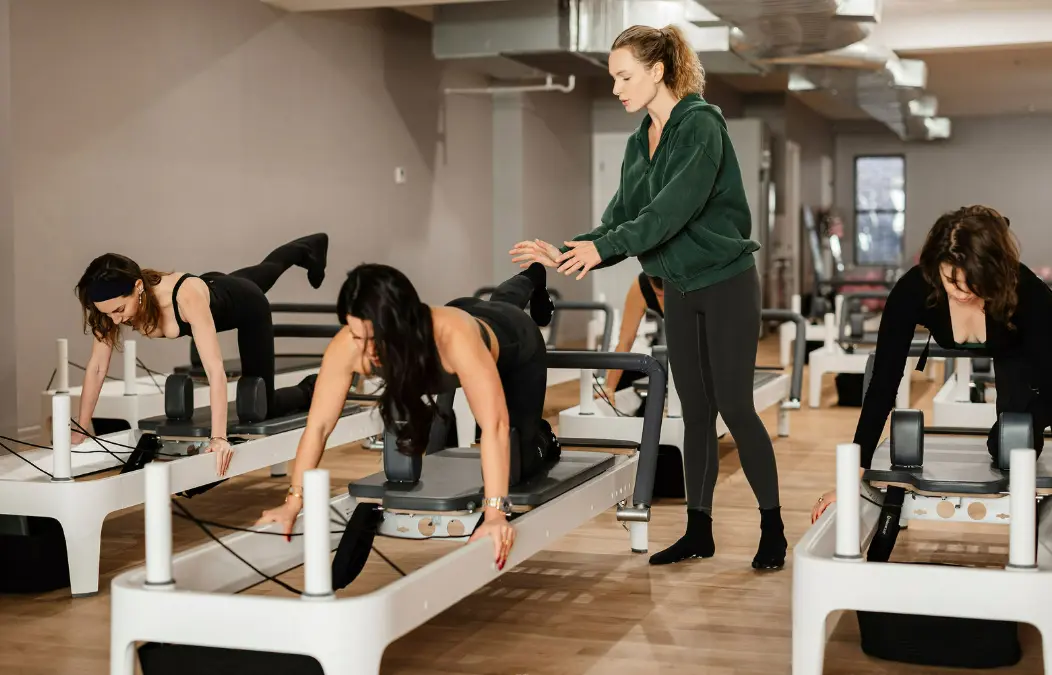
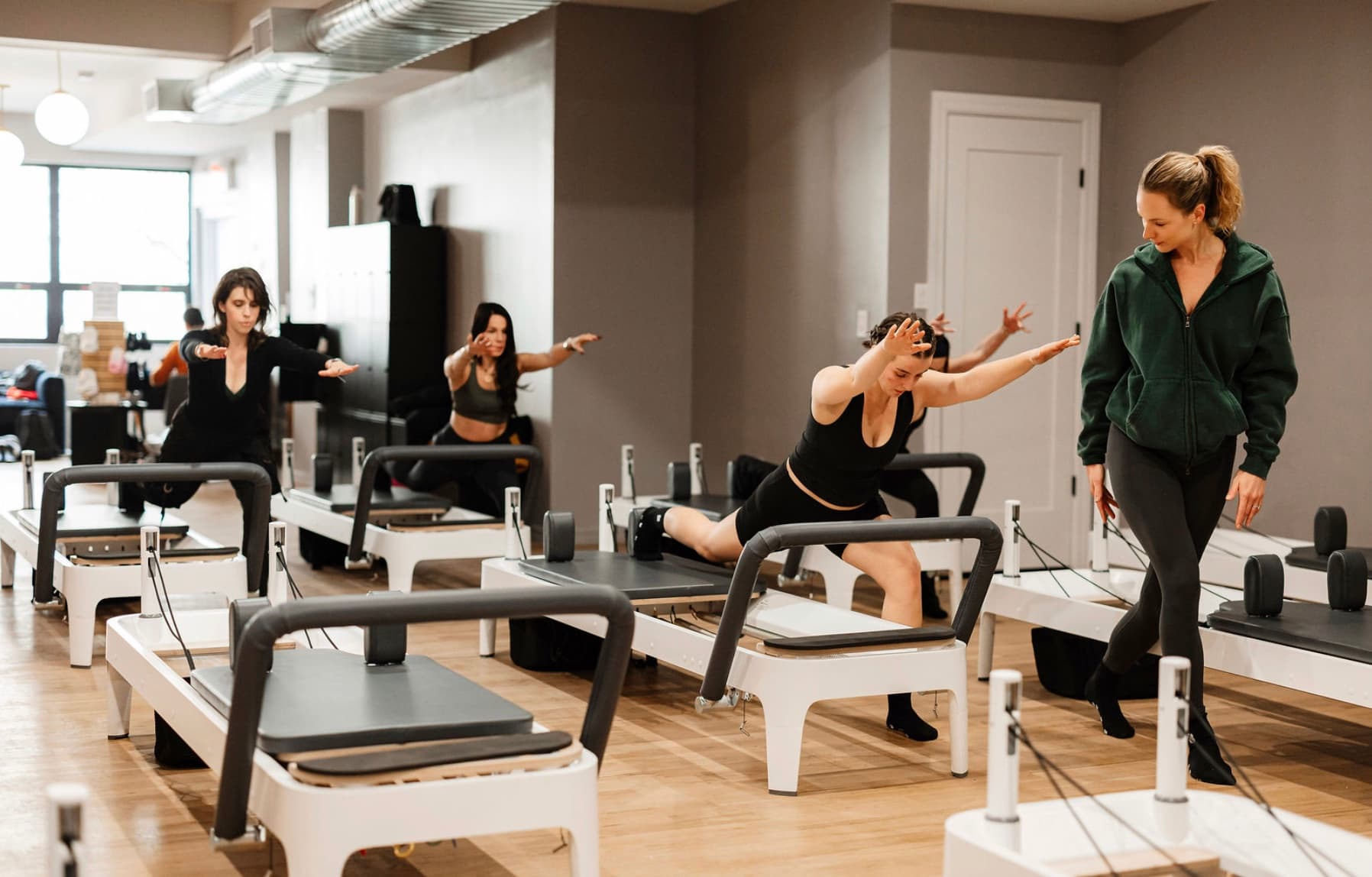
If you’ve stood in front of a class schedule trying to decide between Pilates and yoga, you’re not alone — it’s one of the most common questions we hear from new clients walking into our Flatiron and Park Slope studios for the first time. The short answer: Pilates is a core-focused strength system built around controlled, repeatable movement (often on equipment like the reformer), while yoga blends breathwork, stretching, and held poses aimed at flexibility and mental stillness. Neither one is “better” across the board — they’re built for different things, and a lot of people end up doing both. Here’s how they actually compare, so you can figure out which one (or which combination) makes sense for your body and your goals.
What’s the Actual Difference Between Pilates and Yoga?
At a glance, the two can look similar — mats on the floor, slow controlled movement, a room full of people breathing deliberately. But the difference between Pilates and yoga comes down to what each practice is built around.
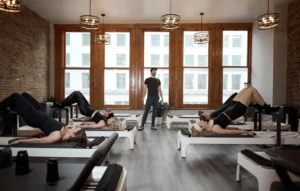
Pilates was developed by Joseph Pilates in the early 20th century as a rehabilitation and strength system. Every exercise is engineered around the core — the deep abdominal, back, and pelvic floor muscles — and movements are precise, repeated in controlled sets, and often performed with resistance from springs (on a reformer) or your own body weight (on a mat). There’s very little “holding” in Pilates; you’re almost always moving.
Yoga, by contrast, comes out of a much older tradition rooted in breath, meditation, and stillness. Physical yoga (asana practice) involves holding poses, often for several breaths at a time, working on flexibility, balance, and body awareness while also training the nervous system to slow down. Some styles (like Vinyasa) move quickly between poses; others (like Yin or restorative) barely move at all.
If you’re the kind of person who wants a workout that feels like strength training with a mental-focus bonus, Pilates tends to click faster. If you’re looking for something that centers breath and stillness as much as movement, yoga usually feels more natural.
Is Pilates a Form of Yoga?
No — this is a common mix-up, but Pilates and yoga are two completely separate disciplines with different origins, different goals, and different founders. They get lumped together because both are low-impact, both use a mat, and both show up in the same “mind-body” category at most gyms. But the actual mechanics — what your muscles are doing, how your breath is used, and what the exercise is trying to accomplish — are quite different. Pilates is closer in spirit to functional strength training than it is to yoga.
Pilates vs Yoga for Weight Loss
This is probably the single most common reason people ask us to compare the two, so let’s be straightforward about it: neither Pilates nor yoga is a high-calorie-burn workout on its own, and if pure calorie burn is your only goal, both will lose to something like running or HIIT training.
That said, they don’t work the same way. Pilates, especially reformer Pilates, builds lean muscle through resistance and repetition, which raises your metabolic rate over time — you’re not necessarily torching hundreds of calories in a single class, but you’re doing something that changes your body composition. A 50-minute reformer class typically burns somewhere in the range of 250-400 calories depending on intensity and your own body weight, which is comparable to a moderate-paced yoga flow.
Yoga’s relationship to weight loss depends heavily on style. A slow Hatha or Yin class burns relatively little; a fast-moving Vinyasa or Power Yoga class can get your heart rate up closer to a light cardio session. Neither style builds muscle the way Pilates resistance work does.
If weight loss is genuinely the goal, the honest answer is that Pilates has a slight edge because of the muscle-building component, but the bigger factor is what you’ll actually do consistently. A workout you enjoy and stick with three times a week beats a “better” workout you do once a month. Whichever way you frame it — Pilates vs yoga for weight loss or yoga vs Pilates for weight loss — the calorie math ends up close enough that your actual habits matter more than the label on the class.
Which Is Harder: Pilates or Yoga?
This depends entirely on style, level, and what “hard” means to you.
Pilates, especially on the reformer, can feel deceptively intense — small, controlled movements against spring resistance fatigue muscles fast, and a well-designed 50-minute class will leave your core shaking by the last set. It’s not cardio-hard, but it’s strength-hard in a way that surprises a lot of first-timers who expect something gentle.
Yoga’s difficulty swings widely by style. A restorative or gentle Hatha class is genuinely easy in the traditional sense. A Vinyasa or Ashtanga practice, on the other hand, demands serious strength, balance, and stamina — arm balances and inversions are no joke.
If you’re comparing a typical beginner Pilates reformer class to a typical beginner yoga class, most people find Pilates more physically demanding in the moment, simply because there’s rarely a break — you’re moving through sets with short rest, whereas yoga naturally builds in stillness between more intense poses.
Pilates vs Yoga for Beginners
New to both? Here’s the honest breakdown of what to expect walking into your first class of each.
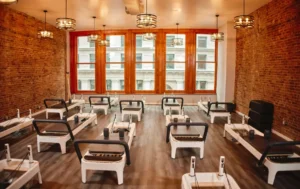
Pilates classes, particularly reformer–based ones, are usually easier to follow as a total beginner because the equipment itself provides structure — springs support and guide your movement, and instructors are constantly cueing form and adjusting resistance for you. At BK Pilates, every class is designed with modifications built in, so a first-timer and someone five years into their practice can be in the same room.
Yoga can feel more intimidating at first because pose names, sequencing, and breath cues (Sanskrit terms, in some studios) take time to learn, and there’s more emphasis on independently finding your own alignment. That’s not a bad thing — plenty of people love that learning curve — but it does mean the on-ramp can feel steeper.
Which Is Better for Beginners?
Neither is objectively “better” for beginners, but if you tend to like being guided step-by-step through a structured routine, Pilates (especially reformer) usually feels more approachable out of the gate. If you’re drawn to a slower, more exploratory practice and don’t mind a learning curve on terminology and poses, yoga can be just as good a starting point — you’ll just spend your first few classes getting oriented rather than immediately feeling the burn.
Pilates vs Yoga for Flexibility
Yoga has a real reputation advantage here, and it’s earned — the practice is built around sustained stretching, and holding poses for multiple breaths genuinely does improve range of motion over time, especially in the hips, hamstrings, and shoulders.
Pilates improves flexibility too, but through a different mechanism: dynamic stretching combined with strength. Rather than holding a static stretch, Pilates moves your body through a full range of motion under control, which builds flexibility and stability at the same time. Many dancers and athletes actually prefer this approach because it builds flexibility that’s usable under load, not just passive range of motion.
If flexibility is your single biggest goal — say, you’re working toward touching your toes or improving hip mobility specifically — yoga will likely get you there a bit faster. If you want flexibility that comes paired with strength and control, Pilates gets you most of the way there while also building your core.
Pilates vs Yoga for Core Strength
This one isn’t close. Pilates was designed around the core — literally every exercise, from footwork on the reformer to a basic hundred on the mat, is built to engage your deep abdominal muscles, obliques, and lower back. If core strength — or overall toning — is your primary goal, Pilates is the more direct route; when people ask us about Pilates vs yoga for toning specifically, this is usually where we point them.
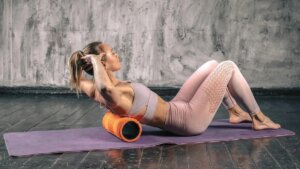
Yoga absolutely engages your core, especially in poses like plank, boat pose, or any balance-based posture, but it’s a byproduct of the practice rather than the central organizing principle the way it is in Pilates.
Pilates vs Yoga for Back Pain
Both practices are commonly recommended for back pain, but they help in slightly different ways. Pilates strengthens the deep stabilizing muscles that support the spine — the transverse abdominis, multifidus, and pelvic floor — which can reduce strain on the lower back over time. Because reformer work lets you build strength with support from the springs, it’s often gentler on an already-irritated back than floor-based exercises.
Yoga can help with back pain through improved flexibility and reduced tension, particularly in the hips and hamstrings, which often contribute to lower back discomfort when they’re tight. Certain poses (cat-cow, child’s pose, gentle twists) are commonly used specifically for this.
If you’re dealing with an existing back issue, always loop in your instructor before class so they can guide you toward the right modifications — and check with your doctor first if the pain is severe or persistent.
Can You Do Both? Combining Pilates and Yoga
Yes, and a lot of our regulars do exactly this. There’s no rule that says you have to pick one — Pilates and yoga combined is a completely normal way to train. The two complement each other well: Pilates builds the strength and core stability that makes your yoga practice more controlled, and yoga’s flexibility and breathwork can make your Pilates sessions feel more connected and less mechanical.
A common approach we see work well: two to three Pilates sessions a week for strength and core work, with one or two yoga classes layered in for flexibility and recovery. There’s no requirement to do them on separate days, either — some people do a shorter yoga flow as a cool-down after a Pilates class, though most prefer to keep them on different days so neither practice feels rushed.
Pilates vs Yoga for Seniors and for Men
Two groups ask us this comparison more than almost anyone else, so it’s worth addressing directly.
Pilates vs Yoga for Seniors
Both are excellent low-impact options for older adults, but Pilates has a particular advantage for anyone managing balance concerns, joint issues, or a history of falls — the reformer provides support and controlled resistance that makes strength-building safer than free-standing exercises. A private session is often the easiest way to ease into this safely for the first time. Yoga is equally valuable for seniors, especially gentle or chair-based styles, and its flexibility and balance work pairs well with Pilates strength training. Many of our older clients do both, alternating throughout the week.
Pilates vs Yoga for Men
Pilates still carries a reputation as a “women’s workout” in a lot of people’s minds, which is outdated — it was originally developed by a man, for athletes and boxers, and plenty of our male clients come in specifically for the core strength and injury-prevention benefits that carry over into running, lifting, and other sports. Yoga has a similar (also outdated) reputation gap. In reality, both practices are used heavily by male athletes at every level, from casual gym-goers to professional teams, specifically because of what they do for mobility, core control, and recovery.
Pilates vs Yoga: Side-by-Side Comparison
| Category | Pilates | Yoga |
|---|---|---|
| Primary focus | Core strength, controlled movement | Flexibility, breath, stillness |
| Typical equipment | Reformer, mat, springs, small props | Mat, sometimes blocks/straps |
| Calories per 50 min (approx.) | 250–400 | 150–350 (varies widely by style) |
| Builds muscle | Yes, through resistance | Minimal, unless fast-paced style |
| Improves flexibility | Moderate (dynamic) | High (static holds) |
| Beginner-friendly | Yes, especially reformer with instructor cueing | Yes, with a learning curve on poses/terms |
| Best for | Core strength, posture, injury prevention | Flexibility, stress relief, mindfulness |
| Can be combined | Yes — many people do both in the same week for a well-rounded routine | |
How to Decide Which One to Try First
If you’re still not sure, here’s a simple way to work through it:
- Ask what you actually want out of the workout — strength and toning point toward Pilates, flexibility and stress relief point toward yoga.
- Think about how you respond to structure — if you like being guided through set movements, start with Pilates; if you like exploring at your own pace, try yoga.
- Consider any injuries or limitations, and mention them before class so your instructor can modify appropriately.
- Try one class of each before committing to a package — most studios, including ours, make it easy to sample a single session first.
- Give it three to four sessions before deciding — the first class of either practice rarely feels like your best one.
- If you can’t choose, don’t. Alternate between both for a few weeks and see which one you find yourself looking forward to.
Choose Pilates If…
- You want to build visible core strength and improve posture
- You’re recovering from an injury and need supported, controlled movement
- You prefer a workout that keeps you moving with minimal downtime
- You like the idea of equipment (like the reformer) guiding and challenging your form
- You want a low-impact strength workout that complements running, lifting, or other sports
Choose Yoga If…
- Flexibility is your primary goal, especially in the hips and hamstrings
- You’re looking for stress relief and a mental reset as much as a physical workout
- You enjoy breathwork and meditation as part of your movement practice
- You want a practice you can also do on your own with minimal equipment
- You’re drawn to the mind-body philosophy behind the practice, not just the physical benefits
Frequently Asked Questions
Should I do Pilates or yoga?
It depends on your primary goal. If you want core strength, muscle tone, and structured movement, Pilates is the better starting point. If flexibility, stress relief, and breathwork matter more to you, yoga is the better fit. Many people eventually do both.
Is Pilates better than yoga?
Neither is objectively better — it depends entirely on what you’re training for. Pilates is better for core strength, muscle tone, and structured, equipment-guided movement. Yoga is better for flexibility, stress relief, and breath-centered practice. When clients ask us, point-blank, “Pilates or yoga, which is better?” — the honest answer is: try both and see which one you actually want to come back to.
Is Pilates or yoga better for weight loss?
Neither burns dramatically more calories than the other, but Pilates has a slight edge because it builds lean muscle, which raises your resting metabolic rate over time. For real weight loss results with either practice, consistency matters more than which one you choose.
Can I do Pilates and yoga on the same day?
Yes. Many people pair a Pilates class with a shorter yoga flow, often using yoga as a gentler cool-down after a more intense Pilates session. Just make sure you’re not overtraining the same muscle groups back to back if both sessions are intense.
Is Pilates harder than yoga?
It depends on the style of each. A typical reformer Pilates class tends to feel more physically demanding moment-to-moment because there’s little rest between movements, while yoga’s difficulty ranges from very gentle (restorative) to extremely demanding (Ashtanga, Power Yoga).
Is Pilates a form of yoga?
No. They’re separate disciplines with different founders, different histories, and different core principles, even though both are low-impact and mat-based in some forms.
What’s better for beginners, Pilates or yoga?
Both work well for beginners, but reformer Pilates tends to feel more approachable at first because the equipment and instructor cueing provide built-in structure. Yoga has a slightly steeper learning curve around pose names and alignment, though it rewards patience.
Is Pilates good for back pain, the same way yoga is?
Yes, both are commonly recommended for back pain, just through different mechanisms — Pilates strengthens the deep stabilizing muscles around the spine, while yoga improves flexibility and releases tension in areas (like tight hips) that often contribute to back discomfort.
Which is better, Pilates or yoga, for men specifically?
Neither is gender-specific in practice — both are widely used by male athletes for core strength, mobility, and recovery, regardless of the “women’s workout” reputation either practice sometimes carries.
Ready to Try It for Yourself?
Reading about the difference only gets you so far — the real answer shows up once you’re actually on the reformer or the mat. If you’re curious how Pilates feels in your own body, our studios across NYC offer classes for every level, with instructors who’ll walk you through your very first session step by step. Not sure where to start? Our beginner’s guide covers exactly what to expect walking in the door.