Walk into any studio schedule and you’ll see both mat and reformer classes listed side by side, and it’s a fair question: reformer vs mat Pilates, what’s actually different, beyond one happening on the floor and one on a machine? The short answer is that mat Pilates uses your own body weight for resistance, while reformer Pilates adds spring-based resistance through a sliding carriage, which changes the intensity, the muscle engagement, and honestly the whole feel of the workout. Neither one is the “real” Pilates and the other a knockoff — they’re both built on the same core principles, just delivered through different tools.
What’s the Actual Difference Between Mat and Reformer Pilates?
Mat Pilates is exactly what it sounds like — a series of controlled exercises performed on a mat, using your own body weight as resistance. It’s portable, doesn’t require equipment beyond the mat itself, and focuses heavily on core control, breath, and precision of movement.
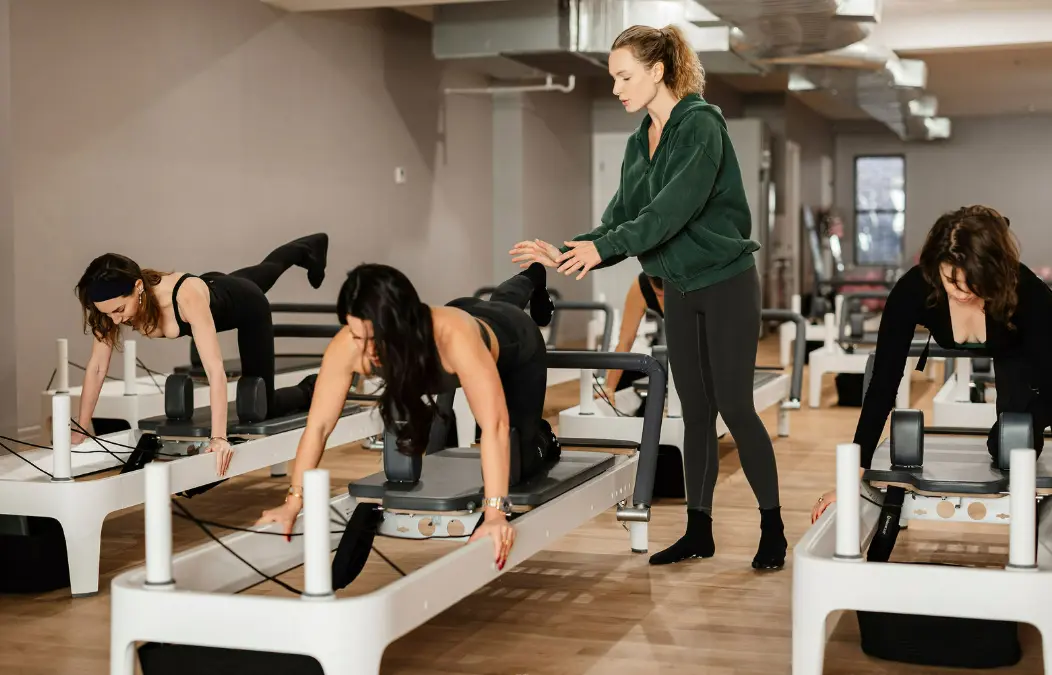
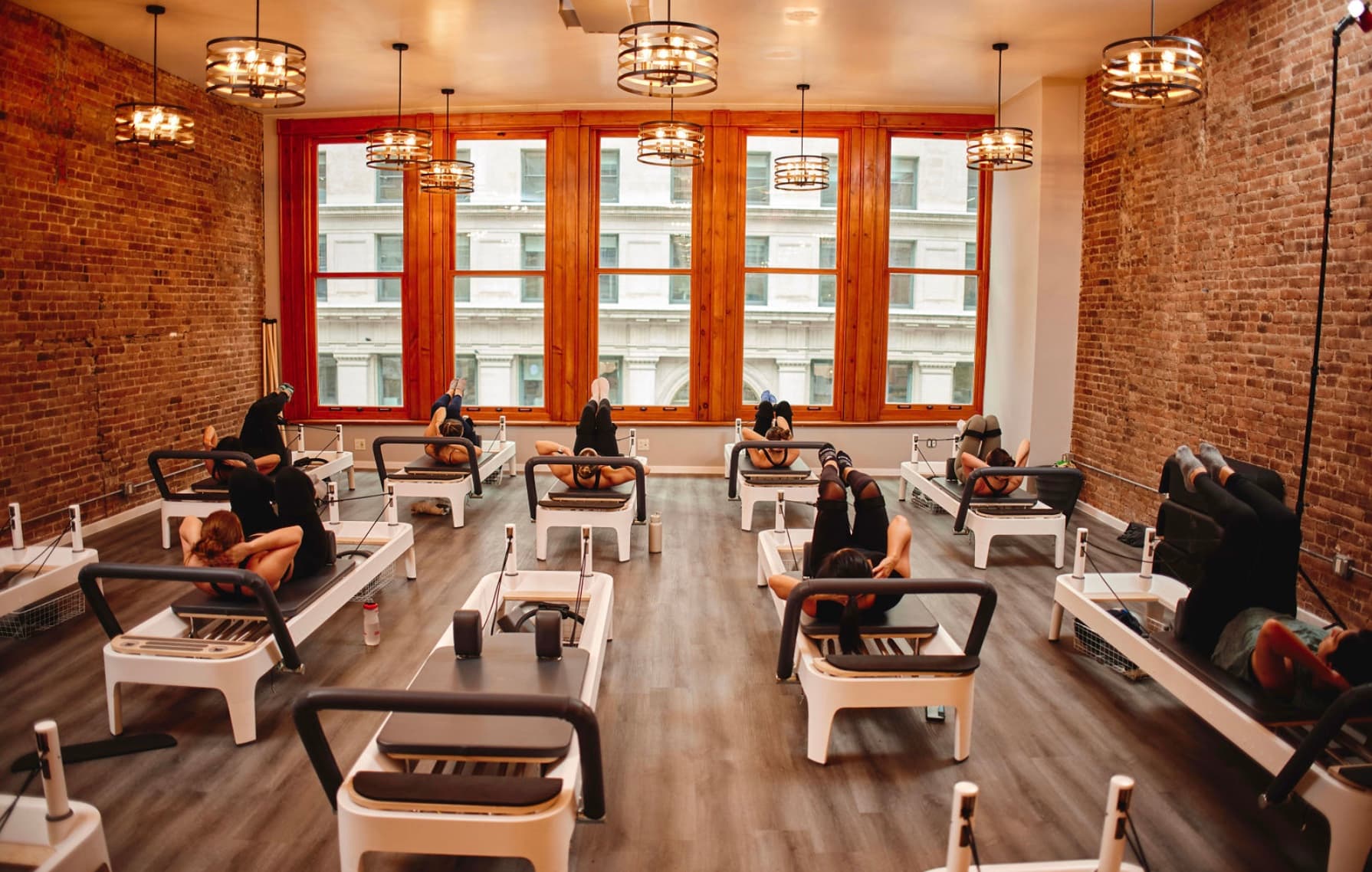
Reformer Pilates uses a machine with a sliding carriage, adjustable springs, and various straps and bars, all of which let an instructor fine-tune resistance for nearly every exercise. The difference between mat and reformer Pilates really comes down to that added resistance and support — the reformer can make certain movements more challenging by adding resistance, or more accessible by providing support you don’t get lying flat on a mat.
Both work the same core muscles and follow the same underlying method, developed by Joseph Pilates nearly a century ago. The reformer was actually one of his original inventions, built to rehabilitate injured dancers — it’s not some modern spinoff of “real” Pilates, it’s part of the original system.
Is Reformer Pilates Easier Than Mat, or Harder?
This is genuinely one of the most common questions we get, and the honest answer is: it depends on the exercise and how the springs are set.
Is Reformer Pilates Easier Than Mat?
In some ways, yes. The reformer’s carriage and straps provide support that a flat mat simply can’t — if you struggle with certain mat exercises because you don’t have the core strength yet to control your own body weight, the reformer can make the same movement pattern more accessible by adjusting spring tension to assist you. For people managing injuries, joint issues, or general beginner-level strength, reformer work often feels more approachable at first.
Is Reformer Pilates Harder Than Mat?
At the same time, reformer Pilates can certainly be harder than mat when the springs are set to add resistance rather than support. A well-designed reformer sequence can fatigue muscles fast, especially in the core and legs, in a way that a comparable mat sequence might not — because the resistance is constant throughout the movement, not just from gravity and your own body weight. The honest answer: reformer isn’t universally easier or harder, it’s more adjustable, which is exactly what makes it useful for such a wide range of fitness levels in the same room.
Mat Pilates vs Reformer for Beginners
If you’re brand new to Pilates entirely, both formats work, but they get you there a little differently. Mat Pilates vs reformer for beginners often comes down to what kind of guidance and structure you personally respond to.
Mat classes require you to control your own alignment and pacing more independently — there’s no machine cueing your form for you, so it leans more on the instructor’s verbal guidance and your own body awareness. Reformer classes, by contrast, have the equipment itself doing some of that work; the straps and carriage naturally guide your range of motion, which a lot of first-timers find easier to follow.
Can beginners do reformer Pilates without any prior experience? Yes, absolutely — you don’t need a mat Pilates background before trying the reformer. Most studios, ours included, design beginner reformer classes specifically for people who’ve never touched the machine before, with instructors adjusting resistance and offering modifications throughout. If you want to see what that actually looks like before committing, our instructors are happy to walk new students through the equipment before their first class starts.
Is Reformer Pilates Worth It?
Given that reformer classes typically cost more than mat classes and require the equipment (and usually a studio membership), is reformer Pilates worth it? For most people chasing visible strength gains, better body awareness, or working around an injury, yes — the added resistance and support meaningfully speed up results compared to mat-only practice, and the constant feedback from the springs teaches better form faster than gravity alone typically does. Our Flatiron studio runs both formats side by side during the week, so it’s easy to compare the two directly instead of guessing from a blog post. If budget is the deciding factor and you’re consistent with a home mat practice, mat Pilates alone can still deliver real results — it just takes a bit more self-discipline and time.
Is Reformer Pilates Actually Better Than Mat?
Is reformer Pilates better than mat, in a general sense? Not exactly — “better” depends entirely on your goals. Reformer tends to build strength faster because of the added resistance, and it’s often gentler on joints because the carriage supports your body throughout movements. Mat Pilates builds a different kind of strength — one that relies purely on your own body control, without a machine assisting or resisting you — and that raw body-weight control transfers directly into everyday movement and other sports.
What’s better, mat or reformer Pilates, honestly comes down to what you’re training for and what keeps you coming back consistently. The “best” workout is the one you’ll actually do three times a week, not the one that wins on paper.
Mat vs Reformer: Side-by-Side Comparison
| Category | Mat Pilates | Reformer Pilates |
|---|---|---|
| Resistance source | Your own body weight | Adjustable springs |
| Equipment needed | Mat only | Reformer machine |
| Beginner accessibility | Relies on body awareness and instructor cueing | Equipment guides form and range of motion |
| Adjustability mid-class | Limited — mostly your own effort | High — springs adjusted per exercise |
| Portability | Can practice anywhere | Studio-based only |
| Typical cost per class | Lower | Higher, due to equipment and smaller class sizes |
| Good starting point if | You want a portable, equipment-free practice | You want guided, adjustable resistance from day one |
What Mat Pilates Requires (And What It Doesn’t)
- Requires: a mat, comfortable clothing, and enough floor space to stretch out fully
- Requires: a willingness to control your own pacing without equipment guiding you
- Doesn’t require: any special equipment, membership, or access to a studio to practice at home
- Doesn’t require: prior Pilates experience — most classes are designed to be entry-level friendly
- Doesn’t require: adjusting anything mid-class — the resistance is simply your body weight throughout
Common Myths About Reformer Pilates
- “You need mat experience first.” Not true — plenty of people start directly on the reformer with no prior Pilates background at all.
- “It’s only for advanced athletes or dancers.” Reformer classes are taught at every level, with beginner-specific sessions designed around teaching the equipment itself.
- “Reformer Pilates is always harder than mat.” Resistance is fully adjustable, so a reformer class can be gentler or more intense than mat, depending entirely on how it’s set up.
- “It’s not a real workout because you’re lying down a lot.” Plenty of reformer exercises are performed standing, kneeling, or in plank-style positions that challenge balance and core control significantly.
- “You can’t build real strength without free weights.” Spring resistance builds legitimate strength — it’s simply a different resistance curve than a dumbbell or barbell.
What to Expect at Your First Reformer Class
- Arrive 10-15 minutes early so your instructor can walk you through the machine before class starts.
- Wear grip socks — most studios require them, and they keep your feet from slipping on the carriage.
- Expect your instructor to adjust spring resistance for you throughout class, especially in your first few sessions.
- Don’t worry about keeping up with more experienced classmates — modifications are normal and expected.
- Ask questions mid-class if something feels unclear; reformer setups can look confusing before you’re used to them.
- Give yourself two or three classes before judging how it feels — the first session is mostly about learning the equipment, not the workout itself.
Frequently Asked Questions
What’s the real difference between mat and reformer Pilates?
Mat Pilates uses your body weight for resistance and requires no equipment, while reformer Pilates uses a machine with adjustable springs that can add resistance or support depending on the exercise, making it more adaptable per movement.
Is reformer Pilates easier than mat?
In some ways, yes — the equipment can provide support that makes certain exercises more accessible than doing them unsupported on a mat, which is part of why it’s popular with beginners and people managing injuries.
Is reformer Pilates harder than mat?
It can be, depending on how the springs are set. When resistance is increased, reformer work often fatigues muscles faster than an equivalent mat sequence because the resistance is constant throughout the full range of motion.
Can beginners do reformer Pilates without mat experience first?
Yes. There’s no requirement to “graduate” from mat to reformer — most studios offer beginner-level reformer classes designed for people trying the equipment for the very first time.
Is reformer Pilates worth the extra cost compared to mat?
For most people focused on visible strength gains or working around an injury, yes — the adjustable resistance and equipment support tend to accelerate results. If budget matters more and you’re consistent, mat Pilates alone still delivers real results over time.
Is reformer Pilates better than mat overall?
Not universally — reformer builds strength faster with equipment support, while mat builds pure body-weight control that transfers well into everyday movement. The better choice depends on your specific goals.
What’s actually better, mat or reformer Pilates, for someone just starting out?
Either works well as a starting point. If you like structured, equipment-guided movement, start with reformer. If you’d rather build body awareness independently and practice anywhere, start with mat.
Curious Which One Fits You?
Reading about the difference is one thing — feeling it in your own body is another. Try one class of each and see which one you actually look forward to coming back to. Most people know within their first two or three sessions which format clicks for them, and there’s no wrong answer either way.