Most people meet a foam roller for back or leg soreness first, rolling out a tight quad after leg day while gritting their teeth. That’s a real use for it — but it’s only half the story. Turned on its side and used differently, the same tool becomes one of the more effective ways to build core stability without a single crunch.
The instability of a round roller under your spine or hips forces small stabilizing muscles to fire constantly just to keep you balanced. That’s the mechanism behind every move below: foam roller exercises that build strength precisely because the surface refuses to stay still. Used this way, a foam roller for core training and a foam roller for abs work overlap almost completely — both rely on the same instability principle.
What Foam Rolling Actually Does (Beyond Sore Muscles)
What does foam rolling do besides working out a knot in your calf? Used for mobility work, it releases fascia and reduces short-term muscle tightness. But used for stability work — which is the focus here — it does something different entirely: it exposes exactly which core muscles are doing their job and which ones have been coasting.
Is foam rolling good for you as a stability tool? For most people, yes, and the foam rolling benefits go beyond the physical. Because the roller demands constant small adjustments, your attention narrows to the present moment almost automatically — which is exactly why people also reach for foam rolling for relaxation and foam rolling for stress relief, even outside of a core-focused session. The same effect people chase in a slow Pilates class comes from a $15 piece of foam.
The 5 Moves: Building Core Stability with a Roller
Each of these doubles as a foam roller core workout and a nervous-system reset. Move slowly, breathe through the instability instead of fighting it, and resist the urge to rush.
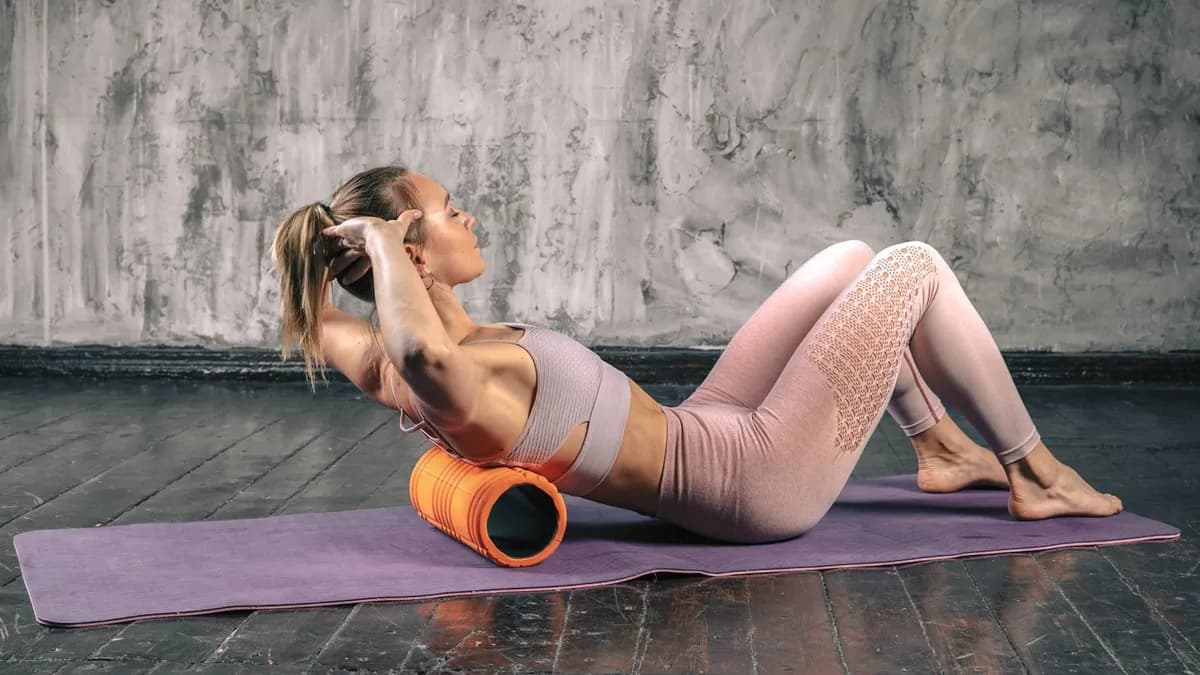
- Supine Roller Balance Lie lengthwise along the roller so it supports your entire spine and head, feet flat on the floor. Simply breathe here for 60 seconds, letting your shoulder blades soften toward the floor. This is the foundational move in nearly every foam roller for beginners routine — it teaches your core to stabilize without any visible movement at all. Hold: 60 seconds, 2 rounds.
- Roller Dead Bug In the same lengthwise position, lift one arm overhead and extend the opposite leg straight, keeping your lower back gently pressed into the roller. Alternate sides slowly. This move is a staple of foam roller exercises for core work because the instability makes it nearly impossible to cheat with momentum — every rep is controlled or it doesn’t happen. Perform: 8–10 reps per side.
- Kneeling Plank with Roller Place your forearms on the roller and hold a plank position, letting the roller’s slight roll challenge your shoulders and core together. This is one of the more demanding foam roller ab workout moves on this list — expect your deep abdominals to fire within the first ten seconds. Hold: 20–30 seconds, 3 rounds.
- Seated Roller Balance with Twist Sit on the roller placed horizontally, feet lifted slightly off the floor, and rotate your torso side to side with control. This move belongs in any foam roller core exercises routine aimed at rotational strength, and it doubles as a foam roller for hips move since the twist loosens the hip rotators along the way — the kind of strength that shows up in everyday movement far more than a straight-ahead crunch ever will. Because it also draws the shoulders back and the chest open, this move doubles as one of the better options for foam rolling for posture. It’s also gentle enough to fit into a foam rolling for back pain routine, since the seated position keeps the spine supported throughout. Perform: 10 twists per side.
- Roller Glute Bridge Lie on your back with heels resting on top of the roller, knees bent, and lift your hips into a bridge. As a foam roller for glutes move, the unstable surface under your heels recruits the glutes and deep core harder than a bridge done on flat ground — a small change that makes a noticeable difference by the second set. Perform: 12–15 reps.
Your Full Foam Roller Core Workout
Once you’ve practiced each move on its own, string them together into one short session. This foam roller workout takes about 10–12 minutes and hits the entire core, front to back:
- Supine Roller Balance — 60 seconds (warm-up)
- Roller Dead Bug — 10 reps per side
- Kneeling Plank with Roller — 3 rounds of 25 seconds
- Seated Roller Balance with Twist — 10 twists per side
- Roller Glute Bridge — 15 reps
Repeat the full sequence twice if you have the time. Most people notice the balance component getting easier — and their breath staying calmer through it — within the first two weeks of doing this three times a week.
Foam Rolling vs. Stretching vs. Pilates: Which One Builds What
These three tools get reached for interchangeably, but they’re not solving the same problem. Foam roller vs stretching is a common point of confusion, so here’s how each one actually breaks down.
| Foam Rolling (Stability Focus) | Static Stretching | Pilates / Reformer Work | |
| Primary effect | Builds core stability through instability | Lengthens muscle, calms tension | Builds strength through full range |
| Mental effect | High — forces present-moment focus | Moderate — slow breathing helps | Moderate to high |
| Best for | Deep core activation, balance | Daily flexibility maintenance | Long-term strength + mobility |
| Equipment | Foam roller | None | Reformer or mat |
| Session length | 10–12 minutes | 10–15 minutes | 45–60 minutes |
| Limitation | Doesn’t build max strength | Doesn’t build strength at all | Requires studio time or equipment |
The takeaway: foam rolling for core work sits in a useful middle ground — more activating than a passive stretch, more accessible than a full reformer session, and genuinely calming as a side effect of the focus it demands.
Common Mistakes People Make with Core-Focused Foam Rolling
A tool this simple still gets misused in a few predictable ways:
- Rushing through the reps. The instability is the point — moving fast defeats the purpose and just turns the exercise into flailing.
- Holding your breath during the hard parts. Just like foam rolling for muscle recovery on a tight muscle, holding your breath here tightens everything else along with the target muscles.
- Skipping the warm-up hold. The first move on this list isn’t filler — it’s what teaches your nervous system to trust the unstable surface before you ask it to move on top of one.
- Confusing this with traditional foam rolling. Rolling out a sore calf and using the roller for stability work are different practices; don’t expect the same sensation from both.
Frequently Asked Questions
How often should you foam roll for core work? Two to three times a week is enough to see a real improvement in balance and control, since these moves rely on skill and coordination as much as strength.
Does foam rolling help with soreness the same way it helps with core strength? Not quite — traditional foam rolling for muscle recovery targets tight tissue after a workout, while the core-focused moves here are closer to a stability workout than a recovery session.
Is foam rolling before or after workout better for these moves? Either works, but doing them as a standalone session — rather than squeezed before or after a harder workout — tends to produce better focus and form. Building this into a dedicated foam rolling routine two to three times a week works better than bolting it onto an existing session.
Can foam rolling replace Pilates core exercises? No, but it’s a strong complement. Foam rolling builds stability and body awareness; Pilates core exercises add resistance and progressive loading that a roller alone can’t provide.
Is foam rolling good for you if you have lower back issues? Many of these moves are gentle enough to help, but anyone with an existing back condition should confirm specific exercises with a doctor or physical therapist first.
When Your Core Is Ready for More
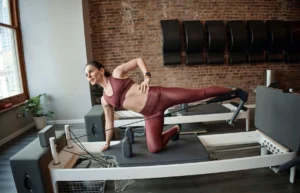
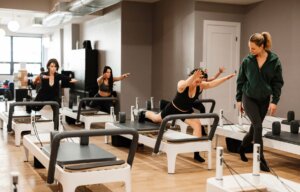
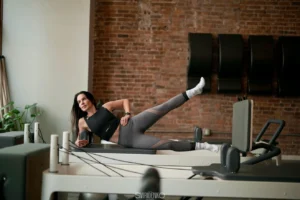
These five moves build a level of core control that a roller, on its own, will eventually stop challenging. That’s exactly the gap reformer Pilates for core work is built to fill — the same instability-driven stability training, but with resistance that increases as your control does.
If these moves start feeling easy, that’s not a sign to stop — it’s a sign you’re ready for the next level. Book a session at BK Pilates and see what core work looks like with real resistance behind it.
Try Reformer Pilates at BK Pilates in NYC
Put this into practice in a class at one of our five New York City studios: reformer Pilates in Flatiron, NoMad, Chelsea, Park Slope and Sheepshead Bay, Brooklyn. New to BK Pilates? Start with Camp Pilates: 7 days of unlimited classes for $89.