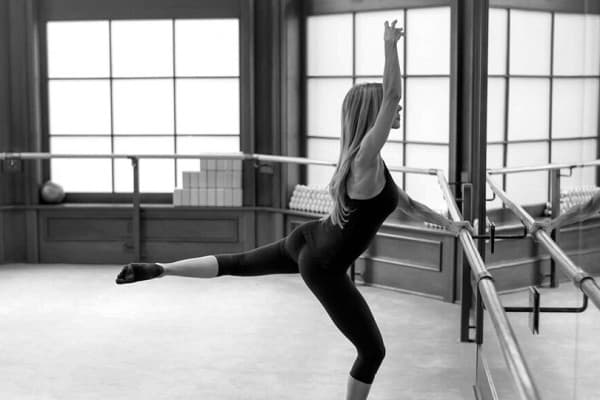
Watch a professional dancer stand still and you’ll notice something most fitness routines never build: effortless posture, long lean muscle, and a kind of full-body control that looks almost weightless. That look isn’t genetics. It’s the direct result of decades of small, precise, repeated movement — the same principle a barre class distills into an hour anyone can walk into, regardless of age or dance background.
You will never need a leotard or a childhood spent at the ballet barre to get real value from this training. What you need is an understanding of what a barre workout is actually doing to your body, and why barre fitness works as well for a 65-year-old beginner as it does for a former competitive dancer.
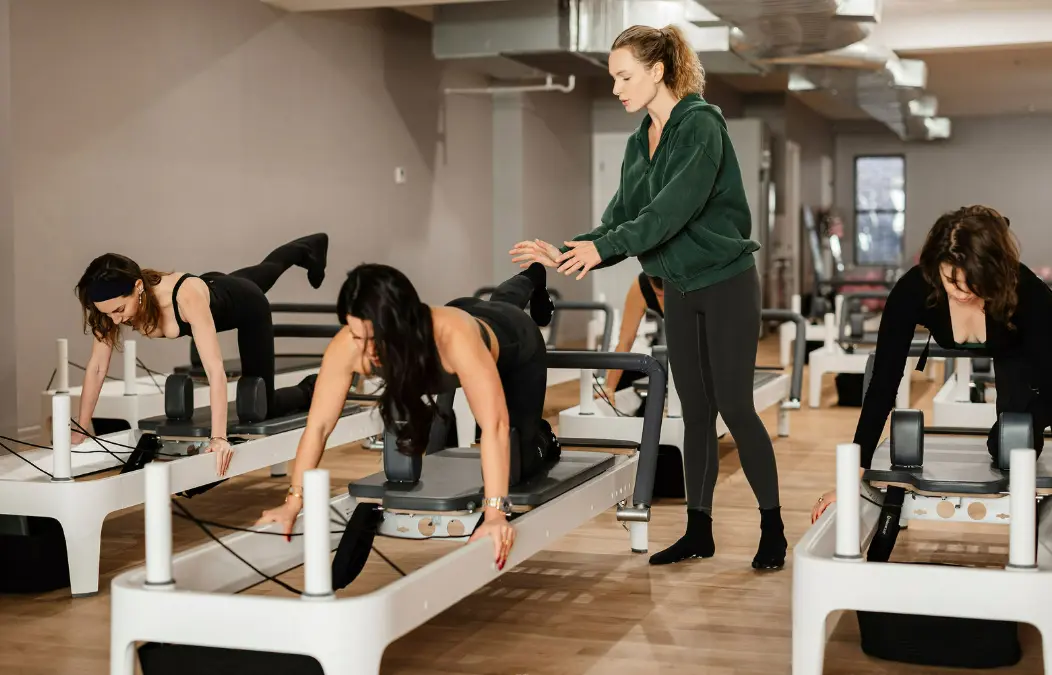
A quick note on where we’re coming from: BK Pilates is a reformer pilates studio, not a barre studio, so we don’t have a dog in this fight — which is exactly why we can walk through what barre actually does, honestly, before circling back to where reformer work fits into the picture.
What Is Barre Workout, Really?
What is barre workout at its core? It’s a hybrid — small isometric holds borrowed from ballet technique, combined with the controlled, muscle-isolating philosophy of pilates, all performed using a stationary barre for balance. There’s no jumping, no impact, and very little that resembles a traditional dance class beyond the posture and the music.
The format traces back to ballet-inspired workout methods developed decades ago by dancers recovering from injury — an early ballet inspired workout built specifically for rehabilitation — which explains why barre exercises look deceptively gentle while delivering a genuine muscular burn within minutes. Small ranges of motion, held under constant tension, fatigue muscle fibers that larger, faster movements typically skip entirely.
What a Dance Workout Actually Builds in the Body
A dance workout trains the body differently than a typical gym session. Dancers rarely move through huge ranges at high speed — instead, they hold positions, control tempo, and repeat small isolations until the supporting muscles genuinely fatigue. That training pattern is exactly what a barre class recreates, and it produces results in three specific areas.
- Postural strength. The deep postural muscles along the spine rarely get direct attention in traditional strength training; barre training targets them specifically through sustained holds.
- Muscular endurance over raw strength. A barre workout won’t build a one-rep max, but it builds the kind of endurance that keeps muscles firing correctly through an entire day, not just a single lift.
- Balance and proprioception. Small, controlled movements at the barre sharpen the body’s sense of where it is in space — a skill that declines with age faster than raw strength does, and one of the real barre workout benefits for older adults specifically.
Barre Workout for Every Age and Ability
One of the more overlooked barre workout benefits is how well the format scales. A barre workout for beginners looks nearly identical in structure to an advanced class — smaller range of motion, lighter resting position, fewer repetitions — while covering the exact same movement patterns.
This is also why a barre workout for seniors has become one of the more common referrals from physical therapists. The low impact dance workout format builds strength and balance without the joint stress of traditional cardio, which matters enormously for fall prevention and long-term mobility. Is barre good for beginners with no dance background at all? Genuinely yes — most studios design the first class assuming zero prior experience.
The Movements That Show Up in Nearly Every Class
While formats vary by studio, most barre exercises fall into a few recognizable categories:
- Knee Bends at the Barre — small knee bends in a wide stance that target the inner thighs and glutes through sustained tension.
- Barre leg exercises (leg lifts and pulses) — small, controlled lifts held just past the point of fatigue, isolating the outer hip and glute.
- Seated or standing core work — pilates-influenced holds that build the same deep core stability found in a mat-based session.
- Arm sequences with light weights — high-repetition, low-weight movement that builds muscular endurance in the shoulders and arms.
- Stretch and release segments — closing sequences that lengthen the muscles just worked, echoing the same slow, controlled quality as the rest of the class.
Barre vs. Pilates: What’s the Real Difference?
This comparison comes up in nearly every first-timer’s search, and for good reason — the two disciplines share a lot of DNA. Understanding barre vs pilates helps decide which one (or both) fits your goals.
| Barre | Pilates / Reformer | |
| Primary focus | Small isometric holds, postural endurance | Controlled full-range strength, core stability |
| Equipment | Ballet barre, light weights, sometimes a mat | Mat or reformer with spring resistance |
| Movement style | Tiny pulses, sustained holds | Slower, fuller range of motion |
| Best for | Muscular endurance, balance, toning | Deep core strength, rehabilitation, progressive resistance |
| Class energy | Upbeat, music-driven | Calmer, breath-focused |
| Who it suits | Anyone wanting a dance-inspired burn | Anyone wanting strength that scales with resistance |
Pilates vs barre isn’t really a competition — barre and pilates complement each other well, with barre building postural endurance and pilates adding the progressive resistance that keeps building strength over time.
Common Mistakes First-Timers Make Early On
Even a well-designed class gets undermined by a few predictable habits:
- Chasing full range of motion. The tiny pulses are intentional — going bigger just relieves the muscle tension the move is designed to create.
- Locking the knees during holds. This shifts strain onto the joint instead of the muscle, and it’s the single most common form correction instructors give in a first class.
- Skipping the warm-up. Cold muscles going straight into isometric holds increases strain for very little benefit.
- Assuming it’s “too easy” based on the range of motion. Is barre effective for real strength gains? Most first-timers underestimate it until the shaking starts around minute fifteen.
Frequently Asked Questions
Is barre good for weight loss? Barre alone burns a moderate number of calories per session, similar to a low-intensity strength class — the bigger impact on weight tends to come from the muscular endurance it builds, which raises resting metabolic demand over time.
How often should you do barre? Two to three sessions a week is a common starting point, giving muscles time to recover between the isometric-heavy sessions.
Is barre good for beginners with tight hips or limited flexibility? Yes — most classes build flexibility gradually through the format itself, and instructors regularly offer modifications for anyone starting with limited range of motion.
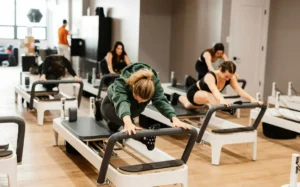
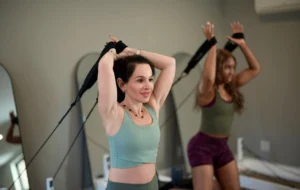
What’s the difference between reformer pilates vs barre for building strength? Reformer pilates vs barre comes down to resistance style: a reformer adds adjustable spring tension for progressive overload, while barre relies on bodyweight and small pulses to fatigue muscle through repetition rather than added resistance.
Is a barre pilates studio the same as a reformer studio? Not quite. A lot of people search for a barre pilates studio expecting to find both formats under one roof, but they’re typically separate specialties. BK Pilates focuses on reformer work rather than barre, so if the ballet-barre format itself is what you’re after, look for a studio that teaches it directly — and if you land here instead, we’re happy to show you what the reformer version of this training looks like.
The Next Step: Adding Resistance to the Pattern
A barre-inspired workout builds exactly the kind of postural strength and balance that dance training is known for — but like most bodyweight formats, it eventually plateaus without added resistance. That’s the natural next step for anyone who’s been consistent with barre and wants to keep progressing.
If barre has you hooked on the format but ready for more resistance, book a reformer session at BK Pilates and feel what the same isometric philosophy does with real spring tension behind it.