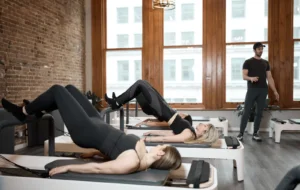
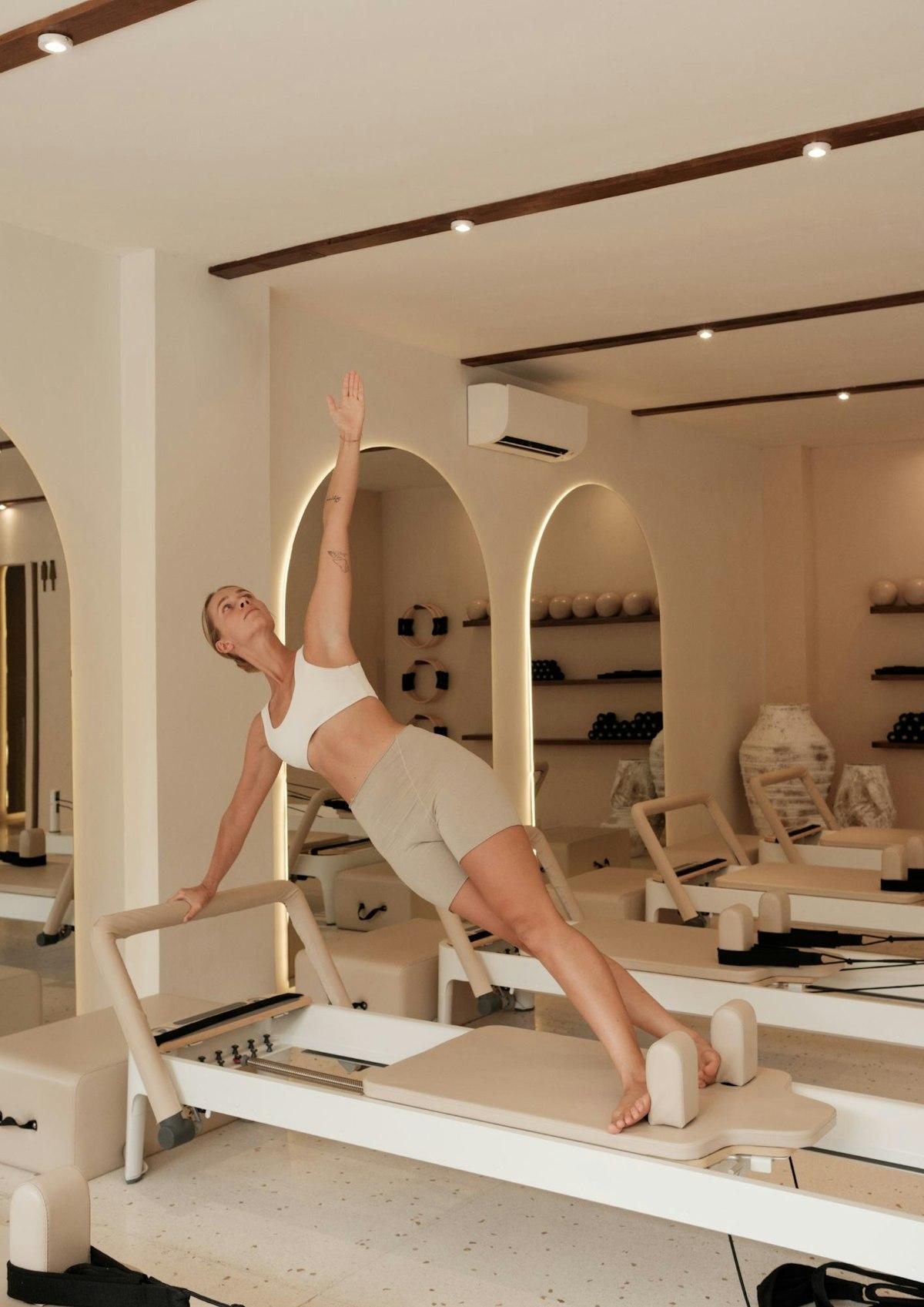
We get asked about Solidcore at the front desk almost every week. It usually goes like this: “My friend swears by Solidcore Pilates, I tried one class and couldn’t walk down the subway stairs for three days – is your class like that?” Fair question. From the doorway, the machines look nearly identical. Both have a sliding carriage, springs and a platform at each end. But the workouts are built on different ideas, and if you pick the one that doesn’t suit your body, you’ll probably stop going within a couple of months.
So here’s how we explain it in the studio. We’re not trying to talk anyone out of Solidcore – some of our clients do both and love it.
What Is Solidcore?
Solidcore is a branded fitness studio chain that started in Washington, D.C. and now has locations all over New York. A Solidcore class runs about 50 minutes on the brand’s own reformer-style machine.
The whole Solidcore workout rests on one idea: slow, grinding reps that take each muscle all the way to failure. Not just tired. You shake, you can’t hold the position anymore, and only then does the coach move you to the next block.
If you’ve never been, picture this. The lights are low and blue, the music is loud. You might spend eight or nine minutes on lunges for one leg, each rep taking about four seconds up and four down. Then the other leg. Then a long ab series people talk about afterwards the way they talk about marathons. It’s hard, and plenty of people love it exactly for that.
The Solidcore Machine vs the Pilates Reformer
The Solidcore machine looks like a reformer at first glance, and that’s where most of the “Solidcore Pilates” confusion starts. There are a few practical differences, though:
- Built for one style. The Solidcore machine is designed for slow, heavy, time-under-tension work and long blocks on one muscle group. A Pilates reformer is a general-purpose apparatus used for hundreds of different exercises.
- Springs as load vs springs as feedback. At Solidcore, springs are mostly about making the work heavier. On a reformer, springs can make an exercise harder or support you, which is why the same machine works for beginners, rehab and advanced clients.
- Straps, footbar, headrest. A Pilates reformer has adjustable straps, footbar and headrest that let the instructor change angles and leverage for each body.
Is Solidcore Pilates?
Short answer: not really, even though people often call it Solidcore Pilates or “Pilates on steroids.” Solidcore borrows the reformer idea, but the classical Pilates principles – breath, centering, precision, flow – aren’t what a class is organized around. Time under tension and muscle fatigue are.
Lagree is the closer relative. It’s also slow and intense, just on a different machine called the Megaformer. Solidcore vs Lagree mostly comes down to which studio, music and coaching style you prefer – the training philosophy is similar. If you’re comparing all three, our Lagree vs Pilates breakdown covers that side. For the different styles within Pilates itself, see our guide to types of Pilates.
Solidcore vs Pilates: Side by Side
If you only remember one line, make it this: Solidcore trains you to fatigue, Pilates trains you to control. Here’s Solidcore vs reformer Pilates in one table:
| Solidcore | Reformer Pilates | |
|---|---|---|
| Machine | Solidcore’s own reformer-style machine | Classic or contemporary reformer |
| A “good” class feels like | Shaking, muscles giving out | Worked, but moving better than when you came in |
| Tempo | Very slow, long blocks on one area | Controlled, exercises change often |
| Core | Lots of abs and obliques | Deep core and stabilizers in almost every move |
| Intensity | High, every class | From gentle to very hard, depending on springs and level |
| Class length | About 50 min | 45-55 min at most studios |
| Coaching | Motivation, pushing through | Form corrections and individual modifications |
One difference matters a lot in real life: in Pilates, your instructor can change your springs or swap an exercise mid-class. Knee bothering you today? No problem. In a fatigue-based format you can rest, but the class plan doesn’t really bend around you. So when people ask us about pilates vs Solidcore for a body with a history of injuries, this is usually the deciding point.
Solidcore Results: What Changes (and What Before-and-After Photos Don’t Show)
Search “Solidcore before and after” and you’ll find plenty of dramatic photos. Some are real, but they rarely show the whole picture – lighting, posture, timing and diet all play a part.
Here’s what we’d realistically expect from consistent training two to four times a week:
- Strength and tone. Solidcore results tend to show first in the legs, glutes and abs, because those get the longest blocks. Pilates spreads the work more evenly and also trains the small stabilizers around hips, spine and shoulders.
- Posture. This is where reformer Pilates usually shows up first. Clients rarely mention their abs in the first month – they say “I sit up straighter at work” or “my back stopped bugging me.”
- Weight loss. Neither is a weight-loss machine. Solidcore probably burns a little more per minute, but fat loss depends mostly on food, sleep, daily steps and months of consistency. We dig into the numbers in how many calories Pilates burns.
- The long game. Because you can dial Pilates up or down on any day, it’s easier to keep going for years without burning out or developing cranky knees and a tight lower back.
The workout you’ll still be doing in six months will beat the “better” one you quit after five weeks. We’ve seen that more times than we can count.
Which One Fits You?
Beginners. If you’re new to exercise or coming back after a long break, we’d point you to reformer Pilates first. You’ll learn neutral spine, breathing under load and how to find your deep core, and springs get set for your level. Plenty of beginners survive a Solidcore class – just know the format expects a lot from day one.
Back pain. Long sets to failure are exactly when form slips, and the lower back is usually the first thing to step in and “help.” If your back has a history, the alignment-first approach of Pilates is the safer bet. More in reformer Pilates for back pain.
Postpartum. After a baby, the priority is rebuilding deep core and pelvic floor step by step. Big ab-burnout blocks can wait – see our postpartum Pilates guide.
If you have an injury, a spine condition or you’re only a few months postpartum, check with your doctor or physical therapist before starting either workout.
How Much Do Solidcore and Pilates Cost in NYC?
Both sit in the boutique-fitness price range in New York, so single drop-ins are pricey everywhere; packs and memberships bring the per-class cost down a lot. Prices change often, so check each studio’s site for current rates. Ours are on the BK Pilates pricing page, and we explain what drives the cost in how much a Pilates class costs.
Can You Do Both?
Yes. Mixing Pilates reformer, Solidcore and walking into one week is something many of our clients already do. If you were searching “pilates reformer Solidcore” to figure out whether the two clash – they don’t. It works because each covers what the other misses: Solidcore brings intensity, Pilates brings control, mobility and better recovery. A week that tends to work:
- Monday: reformer Pilates
- Tuesday: a walk or easy bike ride
- Wednesday: Solidcore
- Thursday: rest or a short mobility session
- Friday: reformer Pilates
- Weekend: one active day, one real day off
Just don’t stack two to-failure sessions on the same muscles back to back – give them a couple of days.
FAQ
Is Solidcore harder than Pilates?
A standard Solidcore class is usually more intense than a standard reformer class. An advanced reformer class with heavy springs can get close – the difference is that Pilates lets you scale.
Is Solidcore Pilates good for toning?
Yes, it tones the big muscle groups well. Pilates builds more balanced strength, including posture muscles. Consistency and gradually adding resistance matter more than the logo on the door.
How long until I see Solidcore results?
Most people feel stronger within a few weeks; visible changes typically take two to three months of regular classes plus supportive habits outside the studio.
How often should I go?
Two to four times a week suits most people. Leave a recovery day between Solidcore sessions. Pilates you can do more often – here’s our take on how often you should do Pilates.
Is Solidcore the same as Lagree?
No. Similar philosophy, different machines and class formats.
Come Try a Class
If you want to get properly strong without your joints and lower back paying for it, start with reformer Pilates – or add it next to the high-intensity training you already love. Book a class at any BK Pilates studio in Brooklyn or Manhattan and see how a small, coached session feels.